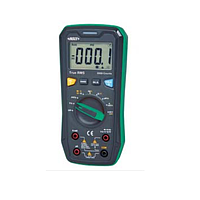
Multimeter
Electrical troubleshooting, preventive maintenance, and lab verification all depend on one tool that can answer many basic measurement questions quickly: the multimeter. Whether the task is checking voltage on a control panel, confirming continuity during installation, or validating current and resistance in a test setup, choosing the right meter has a direct impact on safety, speed, and confidence in the result.
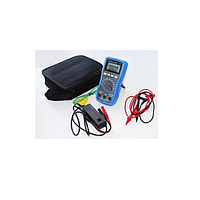
This category brings together multimeters for different working styles, from compact field instruments to higher-resolution digital models used on benches and in technical environments. It also includes selected accessories and communication modules that support calibration, data transfer, and integration into broader measurement workflows.
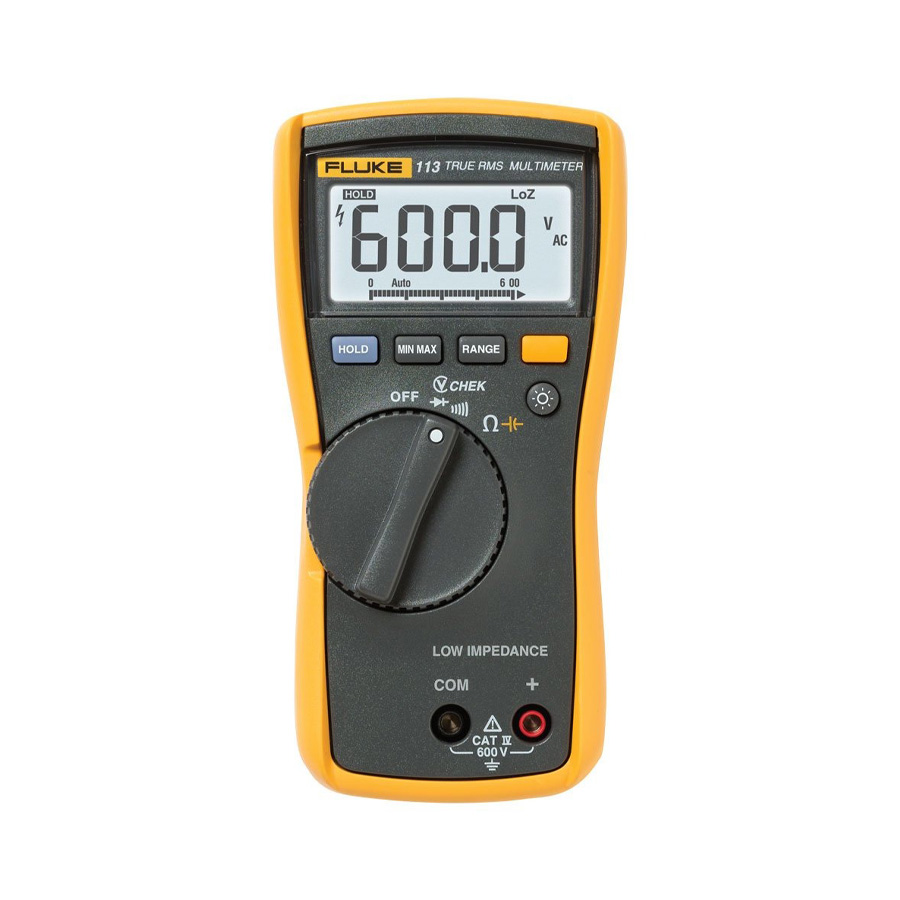
Multimeters for field work, maintenance, and lab measurement
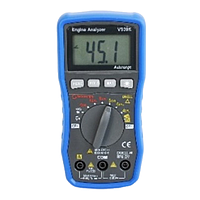
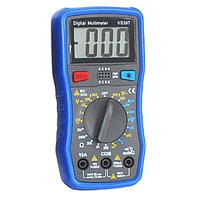
In industrial and technical B2B environments, a multimeter is rarely a one-size-fits-all device. Field service teams often need a rugged handheld unit with fast response, clear display visibility, and practical functions such as continuity, current, voltage, and frequency measurement. In contrast, laboratories and production test stations may prioritize higher resolution, better basic accuracy, data logging, and communication interfaces.
That is why this category covers more than simple entry-level meters. You will find practical handheld solutions, advanced True RMS models, and bench-oriented instruments that fit calibration, electronics testing, and documentation-heavy workflows. For users working around grounding systems or protection diagnostics, related tools such as an earth resistance tester or a ground fault locator may also be relevant alongside a multimeter.
Common measurement functions that matter in real applications
The core value of a multimeter lies in combining several electrical tests into one instrument. Typical functions include AC/DC voltage, AC/DC current, resistance, continuity, diode test, frequency, and in many models, capacitance and temperature. For maintenance teams, these functions help isolate wiring issues, verify supply conditions, and confirm component behavior without switching between multiple tools.
In more demanding environments, features such as True RMS, higher count displays, low-pass filtering, min/max capture, and data storage become more important. These are especially useful when measuring variable loads, working near drives, or documenting unstable conditions. For production and R&D users, communication options and faster reading rates support integration with test software and automated workflows.
Examples from leading manufacturers
Several established brands appear in this category, including FLUKE, KEYSIGHT, KEITHLEY, FLIR, and Chauvin Arnoux. Each brand is typically associated with different usage priorities, such as portable maintenance, bench measurement, graphical display, or accessory support for data connectivity and calibration.
For on-site troubleshooting, the FLUKE FLK-3000FC Series Wireless Multimeter illustrates how modern handheld devices can support more flexible measurement workflows. The FLUKE-87V-MAX Digital Multimeter is another example aimed at users who need a durable True RMS instrument with broad measurement capability. In compact electrical verification tasks, models such as the FLUKE-T130 or FLUKE-T150 voltage and continuity testers may be considered when the priority is fast checking rather than full bench-style analysis.
On the bench side, the KEYSIGHT 34465A Digital Multimeter and KEYSIGHT 34450A Digital Multimeter show the direction of higher-resolution and more connected measurement systems. The KEITHLEY DMM6500 Touchscreen Multimeter is also relevant for users who value a more visual interface and broader data presentation. For users who still prefer analog indication in certain training or service contexts, the Chauvin Arnoux C.A 5003 Analog multimeter offers a different operating style from modern digital meters.
How to choose the right multimeter
A practical selection process starts with the working environment. If the meter will be used in electrical maintenance, panel inspection, or mobile field service, portability, safety category, housing protection, and ease of use are often more important than ultra-high resolution. In these cases, a handheld multimeter with dependable basic functions and clear overload protection is usually the better fit.
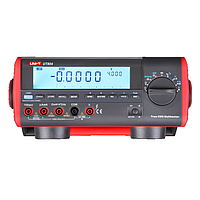
If the instrument will be used at a workstation for electronics validation, incoming inspection, or repeated measurement tasks, resolution, accuracy, stability, and interface options deserve closer attention. Bench-oriented digital multimeters are better suited for this role because they support more repeatable measurement conditions, easier data capture, and often better visibility during long test sessions.
It is also important to match the meter to the signals you actually measure. For general power and control work, voltage, continuity, resistance, and current are the essentials. For electronics development or troubleshooting on mixed systems, capacitance, frequency, temperature, and higher sensitivity at low current or low voltage ranges may be just as important.
Safety, durability, and measurement confidence
For industrial users, safety ratings are not just a specification line. They help indicate whether a meter is appropriate for the installation category and electrical environment in which it will be used. When working on distribution panels, machinery, or higher-energy circuits, choosing a model with an appropriate CAT rating is a fundamental step in reducing risk.
Durability also affects long-term value. Features such as IP-rated housings, robust test leads, impact resistance, and clear input warnings are especially relevant for technicians who carry instruments between sites or use them daily in production and service conditions. A reliable meter should not only measure correctly, but also remain practical under the realities of industrial work.
Accessories, interfaces, and system integration
Not every item in this category is a standalone meter, and that is useful to understand when building a complete measurement setup. Some products support multimeter operation indirectly, such as the KEYSIGHT 3446GPBU GPIB interface module for Truevolt series DMMs, the KEYSIGHT 34172B Calibration Short for Digital Multimeters, or the KEITHLEY KTTI-GPIB communication module. These items matter when a multimeter becomes part of a documented test system rather than a simple handheld troubleshooting tool.
For many labs and production teams, the ability to transfer readings, support calibration routines, or connect into existing instrument networks is a major purchasing factor. This is where the difference between a basic field meter and a bench digital multimeter becomes more apparent. If your workflow includes automated measurement, reporting, or remote control, interface support deserves attention early in the selection process.
Which users typically need each type?
Maintenance engineers, MRO teams, building technicians, and electrical contractors typically focus on portability, fast continuity response, current measurement, and robust safety design. Models like the FLIR DM64 TRMS Digital Multimeters or selected FLUKE handheld instruments align well with those needs when mobility and day-to-day diagnostics are the priority.
Quality control teams, calibration technicians, training centers, electronics labs, and test engineers often require higher accuracy, wider function depth, and better data visibility. Instruments such as the KEYSIGHT 34465A or KEITHLEY DMM6500 are more aligned with those applications, where the meter is part of a repeatable measurement process rather than only a quick go/no-go check.
Find the multimeter that matches your workflow
The right multimeter depends less on headline specifications alone and more on how the instrument will be used in practice. A field technician, an automation maintenance team, and a lab engineer may all need voltage and resistance measurement, but they will not necessarily benefit from the same form factor, safety profile, or level of measurement detail.
By comparing application needs, required functions, and integration requirements, it becomes easier to narrow the selection to a model that supports daily work efficiently. This category is designed to help that process, whether you are looking for a durable handheld meter, a higher-performance bench instrument, or the accessories needed to support calibration and data communication.
Get exclusive volume discounts, bulk pricing updates, and new product alerts delivered directly to your inbox.
By subscribing, you agree to our Terms of Service and Privacy Policy.
Direct access to our certified experts