Current
Accurate current measurement and control are essential in many industrial and test environments, especially where sensors, actuators, drives, and loop-powered devices need dependable signal handling. In modular data acquisition systems, current I/O modules help engineers capture process signals, monitor load behavior, and generate controlled output for simulation or closed-loop control tasks.
This Current category focuses on NI C Series modules designed for current input and current output applications within CompactDAQ, CompactRIO, and selected sbRIO platforms. Whether the job involves reading 4–20 mA style process signals, monitoring higher-current channels, or sourcing output current to external devices, this range supports flexible integration in measurement and automation systems.
Where current I/O modules fit in a measurement system
Current-based signaling remains common in industrial automation because it is practical for long cable runs and more resistant to electrical noise than many low-level voltage signals. In test benches, machine monitoring, and process control setups, current modules are often used to acquire transmitter outputs, monitor equipment current, or drive controlled current signals into external instruments and control devices.
Within an NI-based architecture, these modules become part of a wider measurement and control platform that may also include voltage measurement modules, switching, communication, and logic-level interfacing. This makes them suitable not only for standalone measurements, but also for synchronized systems that combine sensor acquisition, controller communication, and output generation.
Current input and current output serve different roles
A practical way to select from this category is to separate current input and current output needs. Current input modules are used when the system must read an incoming signal from a transmitter, shunt-based circuit, or monitored load. Current output modules are used when the system must source a defined current to a receiving device, often for control, simulation, or validation tasks.
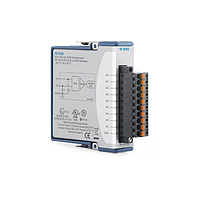
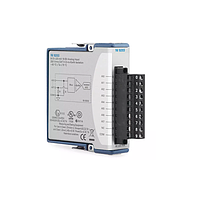
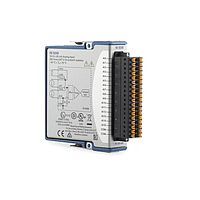
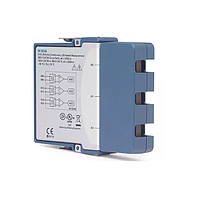
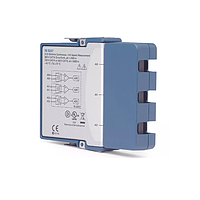
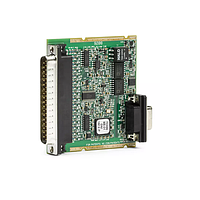
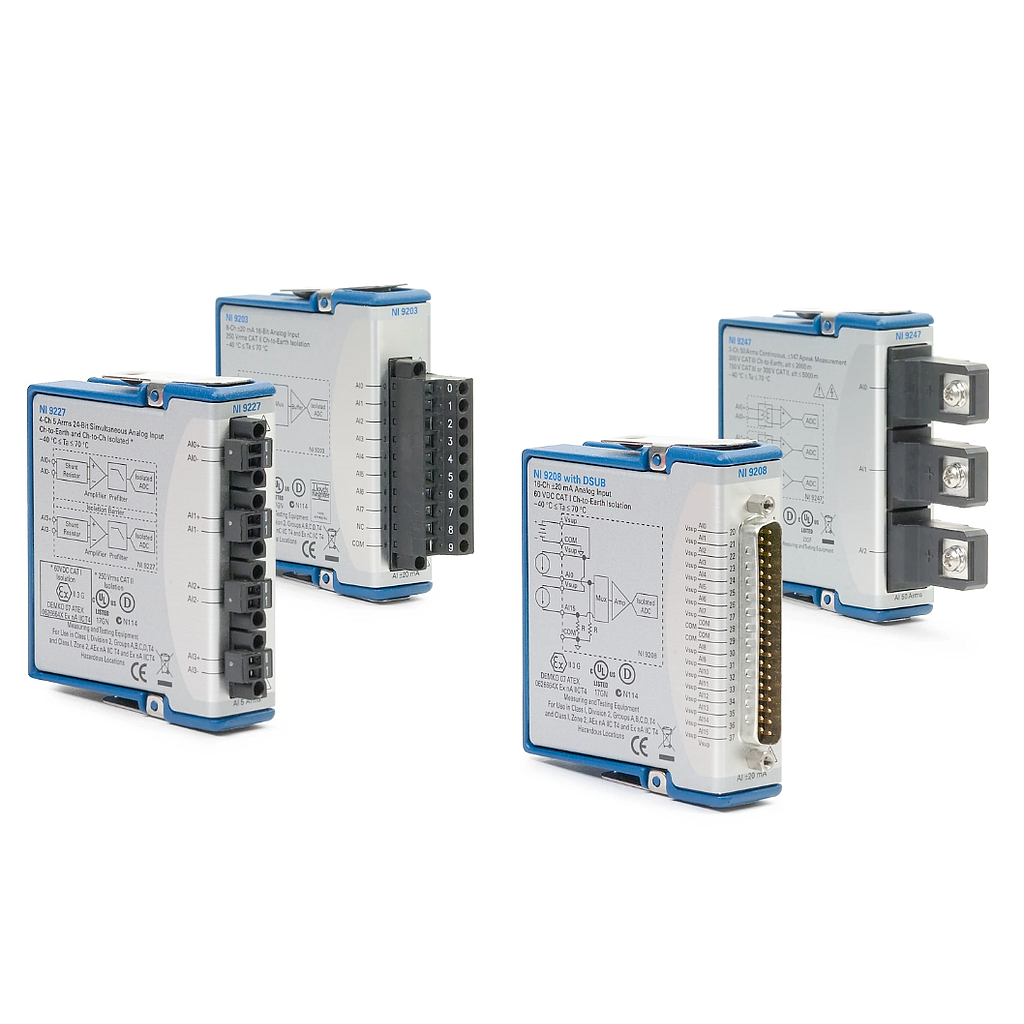
For example, NI-9253 and NI sbRIO-9253 modules are oriented toward precision current measurement with high resolution and per-channel sampling capability suited to dynamic signals. NI-9208 is more aligned with multi-channel current acquisition at lower sample rates, which can be useful in slower process monitoring applications. On the output side, NI-9265 and NI-9266 modules provide controlled current generation for systems that need deterministic analog actuation or signal emulation.
Representative NI modules in this category
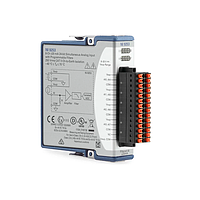
NI offers several C Series options in this range, and the differences are meaningful when matching a module to the application. The NI-9265 family provides 4 current output channels with higher update performance, making it a strong fit when output speed matters. Variants are available with screw terminal or spring terminal connections, and some versions include conformal coating for harsher environments.
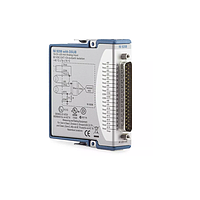
The NI-9266 family expands output density to 8 channels and is available in D-SUB and screw terminal formats. For input, NI-9253 modules support differential current measurement with high resolution and channel-to-channel isolation characteristics that are useful in demanding test setups. The NI-9208 provides a higher channel count for lower-speed current measurements, while NI sbRIO-9227 addresses current input in applications involving Arms measurement rather than standard milliamp process loops.
If your project combines multiple signal types, it may also be helpful to review multifunction I/O options for mixed acquisition and control requirements.
Key selection criteria before choosing a module
The first decision is usually the signal type and direction: are you measuring current or generating it? After that, channel count, update or sample rate, connection style, and platform compatibility typically become the main filters. A lab automation task may prioritize higher per-channel speed, while a plant monitoring cabinet may prioritize channel density and straightforward field wiring.
Terminal style also matters in real installations. Screw terminal versions are often preferred for secure field connections, spring terminal versions can speed up wiring and maintenance, and D-SUB versions may simplify integration with prewired harnesses or panel assemblies. Enclosed versus non-enclosed construction, along with conformal coating options, can also influence long-term suitability depending on cabinet conditions and environmental exposure.
Platform support should be checked carefully as some models are listed for CompactDAQ and CompactRIO, while others are intended for sbRIO implementations. If the wider control system also needs logic signals or machine interfacing, digital I/O modules may be relevant alongside current modules.
Common application scenarios
One common use case is process signal acquisition, where modules read transmitter outputs in ranges such as 0 to 20 mA or bipolar current measurements. This is typical in water treatment, energy systems, skid-based equipment, and industrial process development, where current loops remain a standard signal format for pressure, temperature, flow, and position instrumentation.
Another scenario is hardware-in-the-loop or system validation, where current output modules emulate field signals or drive downstream devices during test sequences. In machine development, engineers may combine current output channels with controller logic and communication interfaces to simulate operating conditions and verify response under controlled conditions. For distributed systems, related industrial communication buses can support data exchange between acquisition hardware and the broader automation network.
Why isolation, resolution, and speed matter
In current measurement, specifications such as isolation, resolution, and throughput are not just technical details; they directly affect data quality and system robustness. Higher resolution can be valuable when small current changes carry process meaning, while channel isolation helps reduce measurement interference and improves protection in multi-channel systems connected to different field points.
Sampling and update rate become especially important when signals are changing quickly or when outputs must respond smoothly in control and simulation workflows. A module such as the NI-9265, with higher update performance, may be more appropriate for responsive output tasks, while a model like the NI-9208 may be better suited to slower monitoring jobs where channel count is more important than speed.
Choosing the right module for your integration approach
For control panels and industrial cabinets, users often look for enclosed modules, practical connector styles, and variants with conformal coating when environmental resilience is a concern. For embedded designs built around sbRIO, dedicated sbRIO-compatible current modules can provide a more direct fit for compact control architectures. Matching the module to the platform early helps avoid unnecessary redesign later in the project.
It is also useful to think beyond the single module and consider the full signal chain: sensors, wiring method, controller platform, software environment, and future expansion. A good selection is not only about electrical range, but about how well the module supports installation, maintenance, and scaling over time.
Final considerations
This category brings together NI current input and current output modules for modular data acquisition and control systems, covering a range of channel counts, connection options, environmental variants, and hardware platform support. From slower multi-channel monitoring to higher-speed output generation, the available models address different integration priorities without forcing a one-size-fits-all approach.
If you are comparing options, focus on the real operating need: input versus output, required channel count, signal dynamics, wiring preference, and target platform. That approach will make it easier to narrow the right current module for your CompactDAQ, CompactRIO, or sbRIO-based system.
Get exclusive volume discounts, bulk pricing updates, and new product alerts delivered directly to your inbox.
By subscribing, you agree to our Terms of Service and Privacy Policy.
Direct access to our certified experts