Temperature
Accurate temperature data is essential in test benches, process monitoring, machine validation, and environmental measurement. When the application involves thermocouples or RTDs, the quality of the input hardware directly affects signal stability, noise immunity, and the usefulness of the final data. This Temperature category brings together NI hardware designed for temperature acquisition across USB, PXI, CompactDAQ, CompactRIO, remote I/O, and FieldDAQ environments.
The range is suitable for both simple single-point measurement and larger multi-channel systems. Whether you need a compact USB interface for a lab workstation, a rugged module for distributed monitoring, or a high-channel-count module for automated test, the portfolio supports common sensor types and practical integration into broader measurement and control systems.
Temperature measurement hardware for different system architectures
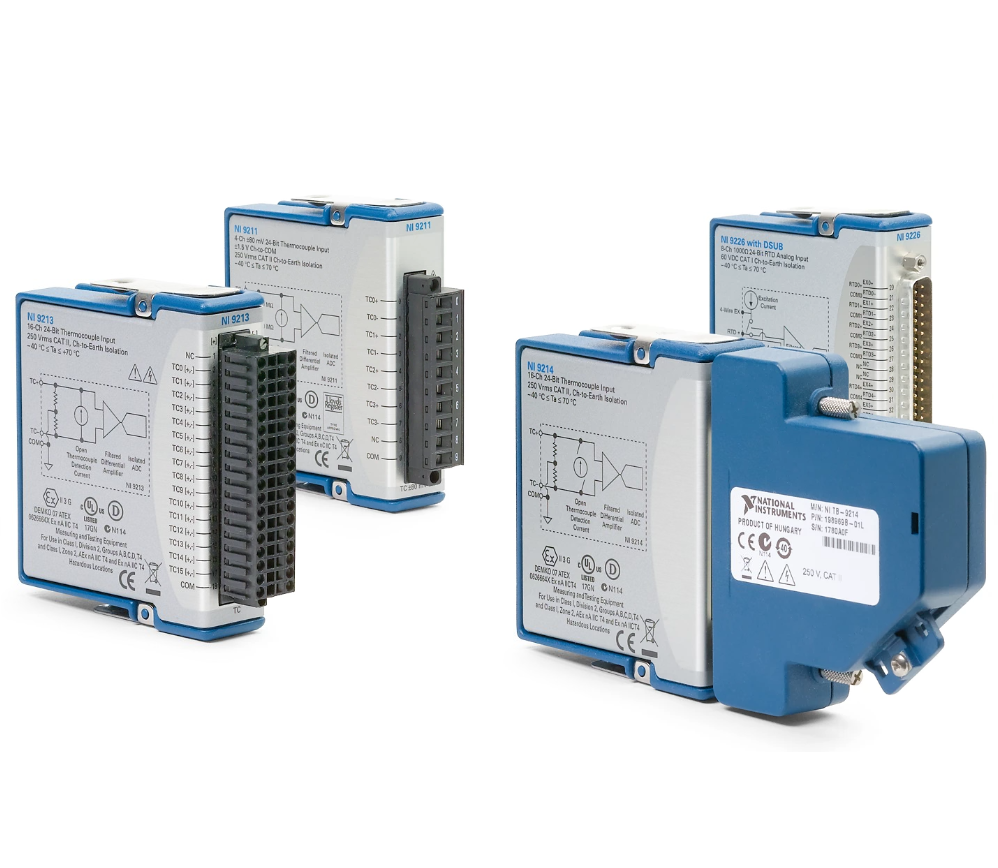
Temperature input hardware is not used in only one way. Some projects require a quick connection from a sensor to a PC, while others need synchronized measurement inside modular platforms or decentralized acquisition close to the machine. That is why this category includes compact devices such as the NI USB-TC01, modular PXI options like the PXIe-4353 and PXIe-4357, C Series modules for CompactRIO, and distributed solutions such as the NI FD-11613, NI FD-11614, and NI REM-11120.
If the project also includes mixed-signal acquisition, trigger logic, or broader sensor integration, it can be helpful to review related multifunction I/O hardware. In many real systems, temperature is only one part of a larger measurement chain that may also include analog and digital signals.
Support for thermocouples and RTDs
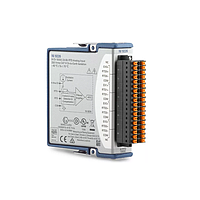
A key difference between temperature input devices is the type of sensor they are intended to measure. Several products in this category are built for thermocouple measurement, which is widely used for broad temperature ranges, machine surfaces, furnaces, and general-purpose industrial sensing. Examples include the NI USB-TC01 for single-channel USB measurement, the PXIe-4353 for higher channel density in PXI systems, and the sbRIO-9211 or sbRIO-9213 for embedded and control-oriented applications.
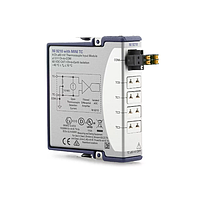
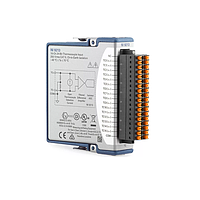
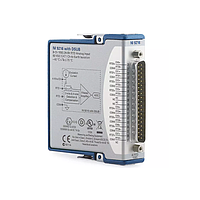
Other models are designed for RTD measurement, which is often selected when stability and precision are especially important. The PXIe-4357 supports RTD-based acquisition in PXI systems, while the NI-9226 C Series module is suitable for PT100 RTD applications on CompactDAQ or CompactRIO platforms. Choosing between thermocouples and RTDs depends on the required temperature range, sensor wiring approach, environmental conditions, and expected accuracy in the final system.
From single-channel USB devices to high-channel-count platforms
For straightforward PC-based temperature logging, the NI USB-TC01 is a practical starting point. It is available as a device-only option as well as versions bundled with J-Type grounded or exposed-junction thermocouple probes. This makes it relevant for users who want either a flexible interface for their own sensor setup or a ready-to-use path for basic measurement and validation work.
When more channels are needed, modular platforms become more attractive. The PXIe-4353 provides a 32-channel thermocouple option for PXI systems, while the PXIe-4357 supports up to 20 RTD channels. In distributed or field-oriented applications, the NI FD-11613 and NI FD-11614 offer isolated thermocouple inputs for FieldDAQ, helping users collect temperature data closer to the asset rather than routing all sensors back to a central cabinet.
Important selection criteria for temperature input devices
In technical procurement, the right choice usually depends less on product naming and more on measurement architecture. Start with the sensor type: thermocouple or RTD. Then consider the required number of channels, whether the signals must be isolated, how quickly the data must be updated, and which controller or chassis the module needs to work with. These factors typically narrow the selection much faster than comparing model numbers alone.
Channel count is especially important in thermal mapping, battery testing, environmental chambers, and machine diagnostics. Isolation matters when sensors are distributed across electrically noisy environments or mounted on equipment with different ground potentials. For some projects, adjacent measurement categories such as voltage acquisition are also relevant, especially when the same system combines thermal data with analog process signals.
- Sensor compatibility: confirm whether the application uses standard thermocouples or RTDs such as PT100.
- Platform fit: check whether the hardware is intended for USB, PXI, CompactRIO, CompactDAQ, FieldDAQ, or remote I/O deployment.
- Isolation and noise handling: important for industrial environments and long sensor runs.
- Channel density: affects cabinet space, scalability, and wiring complexity.
- Sampling needs: some applications only require slow trend logging, while others need faster updates across many channels.
Examples of device roles within the NI ecosystem
The models in this category illustrate different roles rather than minor variations of the same product. The NI USB-TC01 addresses small-scale, software-timed temperature measurement from a USB-connected computer. The sbRIO-9211 and sbRIO-9213 fit embedded monitoring and control systems where temperature data must be integrated directly into CompactRIO-based designs.
The NI-9226 expands RTD measurement in modular C Series systems, while the NI REM-11120 serves remote I/O scenarios with multiple temperature inputs in distributed architectures. For test systems that require rugged deployment or acquisition near the point of measurement, the FieldDAQ models provide another path. If the application also needs logic states, interlocks, or actuator feedback, related digital I/O modules may be part of the same solution.
Why integration matters in temperature acquisition
Temperature measurement rarely stands alone in industrial or laboratory systems. Engineers often need to correlate thermal behavior with electrical inputs, current draw, communication status, or machine states. A hardware family that spans compact devices, modular test platforms, and distributed acquisition can simplify scaling from prototype work to deployed systems.
This is also why many users prefer to stay within a single vendor ecosystem when possible. NI hardware in this category supports a consistent approach to temperature acquisition across different deployment levels, from local measurement on a development PC to larger automated systems. You can also explore the broader NI product range when the project requires a combination of temperature, electrical, and control-oriented hardware.
Choosing the right temperature category product
If your priority is quick setup and one measurement point, a USB-based device may be the most efficient choice. If the system must scale to many channels or integrate into an automated rack, PXI modules are often more suitable. For machine-level deployment, embedded control, or distributed monitoring, C Series, FieldDAQ, and remote I/O devices offer a more practical fit.
Within this category, the best approach is to match the hardware to the sensor type, installation environment, and host platform first. From there, it becomes much easier to compare options such as the NI USB-TC01, PXIe-4353, PXIe-4357, NI-9226, or FieldDAQ temperature modules based on real application needs rather than only headline specifications.
Temperature acquisition works best when the hardware fits the measurement method, wiring layout, and system architecture from the beginning. This category is intended to support that process, whether you are building a simple thermocouple setup or a larger multi-channel test and monitoring solution around NI platforms.
Get exclusive volume discounts, bulk pricing updates, and new product alerts delivered directly to your inbox.
By subscribing, you agree to our Terms of Service and Privacy Policy.
Direct access to our certified experts