Software Defined Radios
Modern wireless development rarely stays fixed for long. Teams working on communications research, protocol validation, spectrum monitoring, or academic instruction often need a platform that can adapt quickly as standards, frequency plans, and signal-processing requirements evolve. That is where Software Defined Radios become especially valuable.
Instead of relying only on fixed-function RF hardware, SDR platforms shift much of the radio behavior into software and programmable processing. This makes them useful for laboratories, universities, and engineering groups that need flexibility for prototyping, measurement, and repeatable test workflows. Within this category, the focus is on NI USRP-based platforms and teaching bundles designed for practical RF and wireless work.

Why SDR platforms are widely used in wireless design and test
A software defined radio combines RF front-end hardware with digital processing resources so that modulation, demodulation, channelization, recording, playback, and custom signal algorithms can be handled in software or FPGA logic. This approach is particularly useful when engineers need to evaluate multiple waveforms, explore new radio concepts, or move from simulation into over-the-air experiments without changing the entire hardware stack.
For B2B users, the main advantage is development flexibility. The same SDR platform may support classroom exercises, communications experiments, MIMO research, embedded wireless processing, or integration into larger automated test environments. If your work also involves adjacent RF instrumentation, it can be useful to compare these systems with RF signal generators used for dedicated stimulus generation.
Typical applications for software defined radios
SDR systems are used across both education and advanced engineering. In academic settings, they help students move beyond theory by working with real transceivers, cables, and courseware that support hands-on learning in communications and signal processing. In R&D environments, SDR platforms are commonly selected for waveform prototyping, receiver development, spectrum experimentation, and rapid proof-of-concept work.
They are also relevant in projects involving MIMO systems, channel sounding, RF recording and playback, and embedded wireless processing. When tighter integration between RF and vector signal processing is required, some users may also review vector signal transceivers to determine whether a more instrumentation-oriented architecture is a better fit.
Representative NI USRP platforms in this category
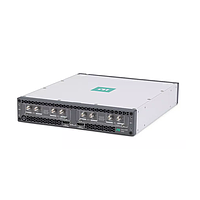
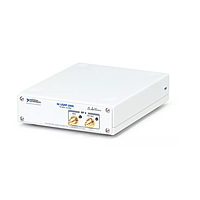
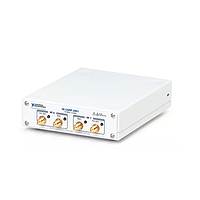
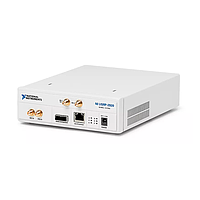
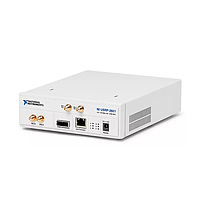
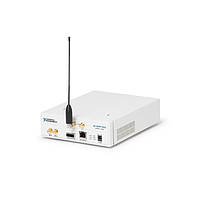
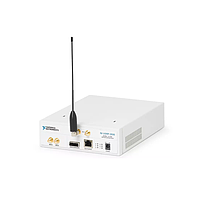
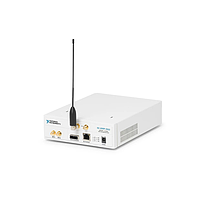
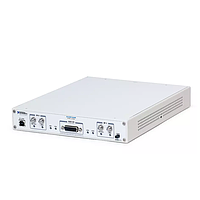
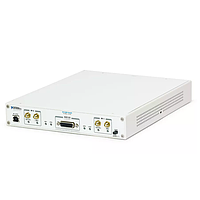
This selection centers on NI USRP hardware, covering both teaching bundles and higher-performance radio devices. For training and laboratory instruction, examples include the NI USRP-2920 Teaching Bundle, the NI USRP-2901 Teaching Bundle, and the NI USRP-2900 Teaching Bundle. These packages are built to support structured learning with multiple devices and course materials, making them suitable for communications labs and classroom demonstrations.
For more advanced use cases, the range includes devices such as the NI USRP-2974 stand-alone embedded SDR as well as modular and multi-channel options like the NI USRP-2955, USRP-2954, USRP-2953, USRP-2952, and USRP-2950 families. Across these models, users can select different frequency ranges, channel counts, and bandwidth classes depending on whether the priority is broad RF coverage, dual-channel transceive capability, four-channel reception, or an embedded architecture with onboard processing.
How to choose the right SDR for your project
The best selection process starts with the actual engineering task rather than the model number. Frequency coverage is one of the first filters. Some platforms in this category support lower and mid-band work, while others extend to 6 GHz, which is relevant for many contemporary wireless research and test scenarios. After that, channel configuration matters: a two-channel transceiver may be sufficient for many experiments, while multi-channel hardware is more appropriate for synchronized reception, direction finding, or more advanced MIMO studies.
Instantaneous bandwidth is another practical consideration. Wider bandwidth can be important when capturing or generating broader signals, observing more spectrum at once, or implementing higher-throughput experiments. Buyers should also consider whether they need a stand-alone embedded platform like the USRP-2974, or a device intended to work within a larger test architecture. In teaching environments, a complete bundle with cables and courseware may deliver more value than purchasing hardware alone.
Education bundles versus research-grade SDR hardware
Not every SDR requirement is the same, and this category reflects that difference clearly. Teaching bundles such as the NI USRP-2920, USRP-2901, and USRP-2900 packages are geared toward repeatable educational deployment. They are useful when institutions need coordinated hardware sets for lab classes, communication systems exercises, or introductory MIMO instruction with prepared materials.
By contrast, research and development teams often prioritize raw capability, integration options, programmable processing, and wider RF performance. Devices like the USRP-2954 or USRP-2955 are better aligned with scenarios where channel count, bandwidth, synchronization features, or connection into broader test setups become more important. The decision is less about which product is “better” overall and more about matching the platform to the intended workflow, user skill level, and test objectives.
Key selection factors for B2B procurement
For engineering managers, lab supervisors, and technical buyers, evaluation typically goes beyond headline RF specifications. A practical purchase review should include the intended deployment model, the number of users, expected software workflow, and whether the SDR will be used for teaching, prototyping, validation, or long-term system development. It is also worth checking how the hardware will connect into the rest of the lab environment, especially when timing, host interfaces, or external synchronization are part of the project scope.
Another important factor is scalability. A team may begin with one platform for proof-of-concept work and later expand into multiple synchronized radios, more advanced course delivery, or a broader wireless design bench. Choosing within a consistent ecosystem can simplify support, training, and future expansion. If your requirement is still evolving, reviewing the wider software defined radio range can help narrow the shortlist by architecture and application.
Where software defined radios fit in a modern RF workflow
SDRs are often positioned between simulation and dedicated RF instrumentation. They give teams a practical way to work with real signals while retaining a high degree of programmability. That makes them particularly useful for validating algorithms in hardware, exploring new communication methods, and building test setups that may change over time.
In many organizations, the value of an SDR is not just in RF transmission or reception, but in how effectively it supports iteration. Whether the goal is a university communications lab, a MIMO teaching setup, or an embedded research platform such as the NI USRP-2974, the right SDR can reduce the gap between concept, implementation, and measurable results.
Choosing from this category comes down to application fit: teaching bundle or advanced device, dual-channel or multi-channel, narrower scope or wider RF coverage. By aligning platform capability with the actual lab or development requirement, buyers can build a more efficient wireless test environment and avoid over- or under-specifying the hardware.
Get exclusive volume discounts, bulk pricing updates, and new product alerts delivered directly to your inbox.
By subscribing, you agree to our Terms of Service and Privacy Policy.
Direct access to our certified experts