Oscilloscope accessories
Accurate waveform analysis depends on more than the oscilloscope itself. In many test setups, the real difference between a clean measurement and a misleading one comes from the accessory chain: probes, terminators, cables, batteries, and add-on modules that connect the instrument to the signal under test.
Oscilloscope accessories support signal integrity, improve safety, and expand what an instrument can do in the lab, service environment, or production line. Choosing the right accessory helps reduce loading effects, avoid impedance mismatch, and adapt the oscilloscope to the application instead of forcing one generic setup onto every measurement task.
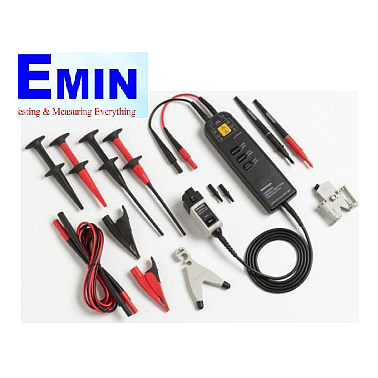
Why accessories matter in oscilloscope measurement
An oscilloscope only displays the signal that reaches its input. If the probe attenuates the waveform incorrectly, if the grounding method introduces ringing, or if the termination is wrong, the screen may show a result that looks valid but does not reflect the actual behavior of the circuit.
This is especially important when working with fast edges, high-frequency content, floating measurement points, or current waveforms. A suitable accessory helps maintain measurement fidelity by matching bandwidth, impedance, attenuation, and connection style to the task. For users comparing instrument types, the same principles also apply across digital oscilloscopes and other oscilloscope platforms.
Common accessory types in this category
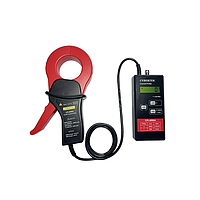
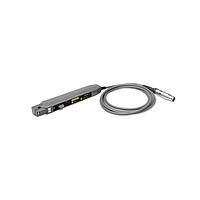
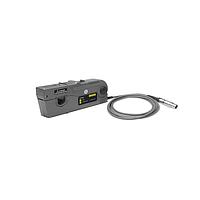
Probe selection is usually the first consideration. Passive voltage probes remain the most common option for general-purpose work, while differential probes are used when the measurement point is not referenced to ground or when higher common-mode voltage is involved. Current probes are useful when current waveform observation is needed without breaking the circuit.
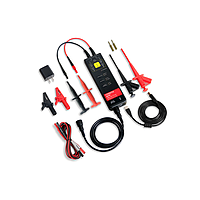
Representative examples in this category include the TEKTRONIX TPP1000 Passive Voltage Probe, the TEKTRONIX P5205A Differential Probes, the KEYSIGHT N2894A Passive Probe, and the KEYSIGHT 1146B Current Probe. Accessories are not limited to probes, however. Items such as the FLUKE TRM50 50 ohm Feed-Through Terminator BNC, low leakage triaxial cables, batteries for portable instruments, and analysis modules all play different roles in a complete test setup.
Choosing probes by signal type and application
For everyday voltage measurements, a passive probe is often the practical starting point. Models such as the Rohde & Schwarz RT-ZP03 Passive voltage probe, the TEKTRONIX TPP0100 Probe, or the KEYSIGHT N2894A Passive Probe illustrate the typical use case: general electronic debugging, logic-level checks, and observation of switching waveforms where moderate to high bandwidth is required.
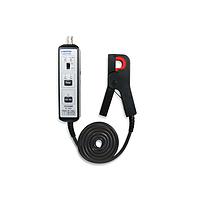
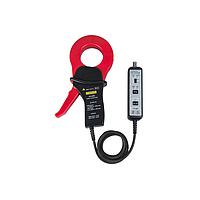
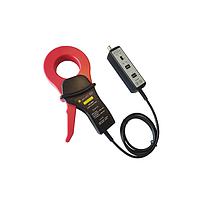
When measuring across shunts, half bridges, motor drives, or other points that cannot be safely tied to oscilloscope ground, a differential probe becomes the appropriate tool. The TEKTRONIX P5205A is a good example of this category. For current observation, a clamp-style solution such as the KEYSIGHT 1146B Current Probe helps capture inrush current, ripple current, or dynamic load behavior without inserting a series element into the circuit.
Some setups also require digital or analysis expansion rather than only analog front-end accessories. The TEKTRONIX SUP2-MSO, which adds mixed-signal functionality with 16 digital channels, and the TEKTRONIX DPO4BND Signal Analyzer Module show how accessories can extend instrument capability beyond basic probing.
Bandwidth, attenuation, and loading considerations
The accessory should be selected as part of the entire measurement path, not in isolation. Probe bandwidth needs to be appropriate for the signal being observed, because the lower-bandwidth element often limits the whole setup. For example, high-speed edges can be rounded or distorted if the probe cannot pass the signal content cleanly.
Attenuation ratio also affects the result. A 10:1 passive probe is commonly preferred because it reduces circuit loading compared with a 1:1 connection while still keeping the signal easy to interpret. Input impedance and capacitance matter as well, particularly on sensitive nodes. This is why accessories such as the KEYSIGHT 1130B InfiniiMax Probe or KEYSIGHT 16494A-001 Low Leakage Triaxial Cable are relevant in applications where loading, leakage, or high-frequency behavior must be controlled more carefully.
Termination, cables, and connection details
Signal errors are not always caused by the oscilloscope or the probe body itself. Termination and interconnection hardware can have a major impact on noise performance and waveform shape. In 50 ohm environments, using a proper feed-through terminator such as the FLUKE TRM50 helps minimize reflections and supports more predictable signal transfer.
Cable choice should also match the measurement objective. Low leakage and shielded cable assemblies are important in sensitive measurements, while unnecessarily long leads can add inductance and pick up noise. Even small accessories such as short ground connections or the right clip style can make a visible difference in overshoot, ringing, and repeatability. Users who need a more portable setup may also want to review options in handheld oscilloscopes, where accessory compatibility and power management are often part of the buying decision.
Accessories for portable and mixed-signal workflows
Not every oscilloscope accessory is directly related to the analog input path. Portable instruments often depend on power accessories to maintain uptime in field service or maintenance work. The FLUKE BP291 High Capacity Li-Ion Battery, designed for Fluke 190-Series-II instruments, is an example of an accessory that supports operational continuity rather than signal coupling.
In development environments, accessory needs may extend into logic analysis or application-specific decoding. Mixed-signal expansion and signal analysis modules help engineers move from simple waveform viewing to more structured troubleshooting across analog and digital domains. This becomes particularly useful when an oscilloscope must support embedded, communications, or power-electronics debugging in a single bench setup.
How to select the right oscilloscope accessory
A practical selection process starts with the signal and measurement objective. Consider whether you are measuring voltage, differential voltage, or current; whether the signal is grounded or floating; and whether bandwidth, voltage rating, or current range is the primary constraint. This usually narrows the choice quickly.
Next, check instrument compatibility and connector style. Some accessories are designed for specific oscilloscope families or input architectures, especially high-performance probes and functional expansion modules. If your workflow is based around a KEYSIGHT platform or a TEKTRONIX bench setup, matching accessories from the same ecosystem can simplify integration, compensation, and performance expectations.
Finally, look at the complete test environment. Bench R&D, service troubleshooting, and production diagnostics often require different combinations of probes, termination hardware, and support accessories. A good accessory choice is one that fits the signal, the instrument, and the working conditions at the same time.
Frequently asked questions
Do oscilloscope accessories affect measurement accuracy?
Yes. The probe, cable, and termination method directly influence the signal that reaches the oscilloscope input, so they can change waveform shape, amplitude, noise level, and edge behavior.
When is a differential probe necessary?
It is typically required when measuring between two non-ground reference points or when working in higher-voltage power electronics where a standard grounded passive probe is not appropriate.
Is a passive probe enough for all oscilloscope work?
No. Passive probes are versatile for general voltage measurement, but current measurements, floating nodes, mixed-signal analysis, and specialized high-frequency work often require other accessories.
The right accessory turns an oscilloscope from a general instrument into a more reliable measurement system. By selecting probes, cables, terminators, batteries, and expansion modules according to the signal and application, users can improve safety, reduce error sources, and get results that are more representative of the real circuit behavior.
Get exclusive volume discounts, bulk pricing updates, and new product alerts delivered directly to your inbox.
By subscribing, you agree to our Terms of Service and Privacy Policy.
Direct access to our certified experts