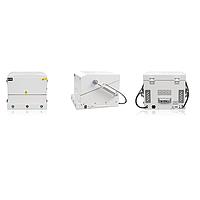
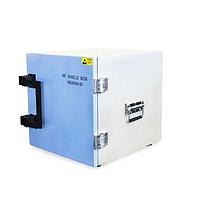
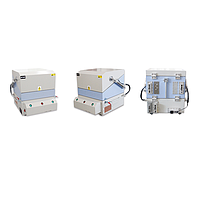
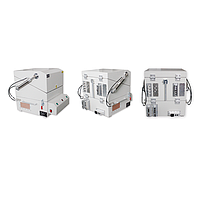
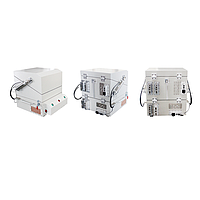
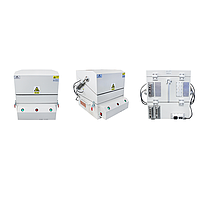
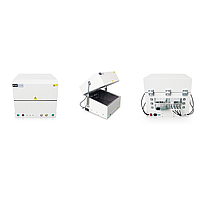
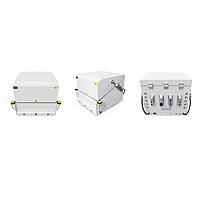
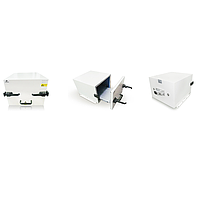
Shield Box
Reliable RF testing depends as much on the environment as on the device under test. When Wi-Fi, Bluetooth, Zigbee, and other wireless products are evaluated in an open lab or on a busy production floor, external signals can distort measurements, mask faults, or create inconsistent results between test cycles. That is why a Shield Box remains a practical tool for development teams, validation engineers, and manufacturing operations that need a controlled test space.
For telecom and wireless measurement work, these enclosures help isolate the DUT from surrounding interference while still allowing power, data, and RF connections to pass through in a controlled way. This makes them useful not only for functional verification, but also for repeatable RF checks, antenna evaluation, and pre-compliance workflows.
Why shield boxes matter in wireless test environments
In real workplaces, the radio environment is rarely quiet. Nearby access points, handheld devices, factory electronics, and other transmitters can all influence a test result. A shield box creates a more isolated chamber so engineers can evaluate wireless behavior under repeatable conditions rather than reacting to whatever interference happens to be present at the time.
This is especially important when diagnosing intermittent issues. If a wireless module behaves differently from one test to the next, the root cause may be difficult to separate from environmental noise. A controlled enclosure helps teams focus on the DUT itself, whether they are checking sensitivity, connection stability, throughput behavior, or general RF performance alongside instruments such as a signal analyzer.
Common use cases from R&D to production
During product development, shield boxes are often used for module bring-up, firmware tuning, and antenna-related verification. Compact manual models are well suited to bench testing, where engineers need quick access to the device while still reducing the impact of external radio traffic. In this context, a model such as the Angleton 182-200 Shielding Box illustrates the appeal of a compact stainless-steel enclosure for 2.4 GHz and 5.8 GHz applications.
In manufacturing, the priority shifts toward consistency and throughput. Production teams may use shield boxes to standardize pass/fail checks across shifts and stations, reducing the variation that can occur in an open environment. These setups are often paired with automated fixtures, external RF paths, and test sources from related categories like signal generators to create a stable and repeatable workflow.
Manual and pneumatic designs for different workflows
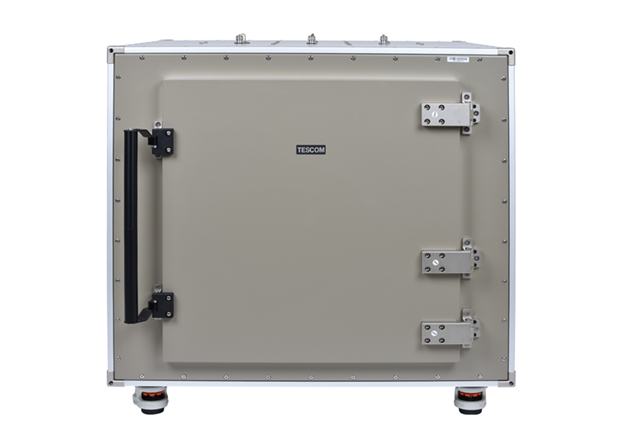
Not every application requires the same opening method or handling style. Manual shield boxes are typically a good fit for engineering labs, small batch testing, and situations where operators need frequent physical access to the unit under test. The Tescom TC-5910DU Shield Box, for example, represents the kind of benchtop enclosure commonly used when compact size and straightforward operation are priorities.
Where cycle time and operator efficiency matter more, pneumatic designs can be a better choice. The Tescom TC-5910DPU Pneumatic Shield Box reflects this approach, with remote-control compatibility that can support more automated test sequences. For buyers comparing platforms from Tescom or other brands, the key is to match opening method, control interface, and handling speed to the actual test process rather than choosing on enclosure size alone.
The role of interface panels, antennas, and couplers
A shield box is rarely used as a standalone enclosure. In practical RF testing, the surrounding ecosystem matters: interface panels route data and RF signals, while internal antennas or couplers help create the desired wireless path inside the chamber. The Tescom M01002A Data Interface Panel is a good example of how filtered signal and data connections can be brought into the enclosure without giving up the benefits of isolation.
For over-the-air or near-field style setups, Tescom accessories in this category also show how test configurations can be tailored to different bands. Products such as the TESCOM TC-93076A Dual Polarized Vivaldi Antenna, TESCOM TC-93177A Dual Polarized Vivaldi Antenna, and flat type antenna couplers like the TC-93061A or TC-93024A support the broader task of shaping RF conditions inside the chamber. When the goal is to verify antenna coupling, radiated behavior, or band-specific response, these accessories are just as important as the enclosure itself.
How to choose the right shield box
The best starting point is the DUT and the test method. Internal dimensions determine whether the enclosure can accommodate the device, fixture, and cable routing comfortably. Frequency range also matters, especially for applications covering common wireless bands or extending into higher-frequency ranges. Buyers should also consider how many filtered RF, USB, or data interfaces are required, since connectivity needs often grow once a test setup becomes more mature.
Shielding effectiveness is another practical selection factor, but it should be viewed together with the installed panel and accessory configuration. Real performance depends on the complete setup, not only on the empty enclosure. If your workflow includes antenna path verification, tools from the cable and antenna analyzer category may also help validate the RF path around the shielded setup.
Representative solutions in this category
This category includes compact and bench-ready options as well as supporting RF accessories. From Angleton, the Angleton 182-200 Shielding Box is relevant for users seeking a manually opened enclosure for common wireless frequency bands. From Angleton and Tescom alike, the focus is on practical lab and production use rather than generic enclosure hardware.
Tescom is particularly visible in this range through both enclosures and supporting components. The TC-5910DU and TC-5910DPU address different operation styles, while interface and RF components such as the M01002A panel, the TC-93061A flat type antenna coupler, and the TC-93021B or TC-93023B couplers help round out a more complete test environment. This makes the category relevant not only to buyers looking for a box, but also to teams building a full wireless test station.
Where shield boxes fit in a broader measurement workflow
Shield boxes are most effective when they are treated as part of a complete measurement chain. Depending on the task, users may combine them with analyzers, generators, RF cabling, couplers, and application-specific fixtures. For return loss and matching checks around antennas or feed structures, a VSWR analyzer may also support the wider validation process.
Used correctly, a shielded enclosure helps reduce false failures, improve comparison between test runs, and create a more dependable basis for engineering decisions. That is valuable whether the goal is debugging a prototype, validating a wireless module, or standardizing outgoing inspection on a production line.
Final considerations
Choosing a shield box is ultimately about control, repeatability, and fit for process. The right enclosure and accessory set should align with the device size, target bands, interface requirements, and level of automation expected in the workflow. For teams working with wireless products, this category offers practical options for building a more stable and measurable RF test environment.
If you are comparing solutions, it is worth looking beyond the chamber alone and considering the full setup around it. A well-matched combination of enclosure, interface panel, and RF coupling components usually delivers better long-term value than selecting a box based only on dimensions or basic frequency coverage.
Get exclusive volume discounts, bulk pricing updates, and new product alerts delivered directly to your inbox.
By subscribing, you agree to our Terms of Service and Privacy Policy.
Direct access to our certified experts