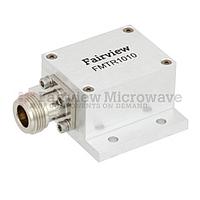
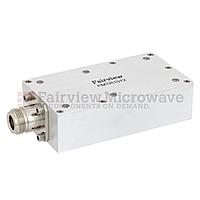
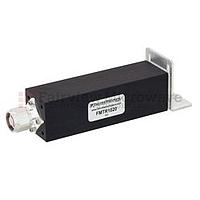
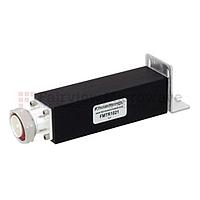
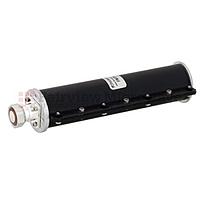
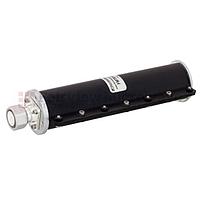
Termination, Load
Accurate RF measurement and stable signal handling often depend on components that seem simple but play a critical role at the end of a signal path. A properly matched Termination, Load helps absorb unwanted energy, reduce reflections, protect ports, and keep test results more reliable across telecom, broadcast, and laboratory setups.
In telecommunication and RF environments, terminations are used anywhere an unused port, line end, coupler output, splitter branch, or test interface must be matched to the system impedance. This category brings together practical 50 ohm RF loads for day-to-day bench work as well as higher-power solutions for transmission and continuous-duty applications.
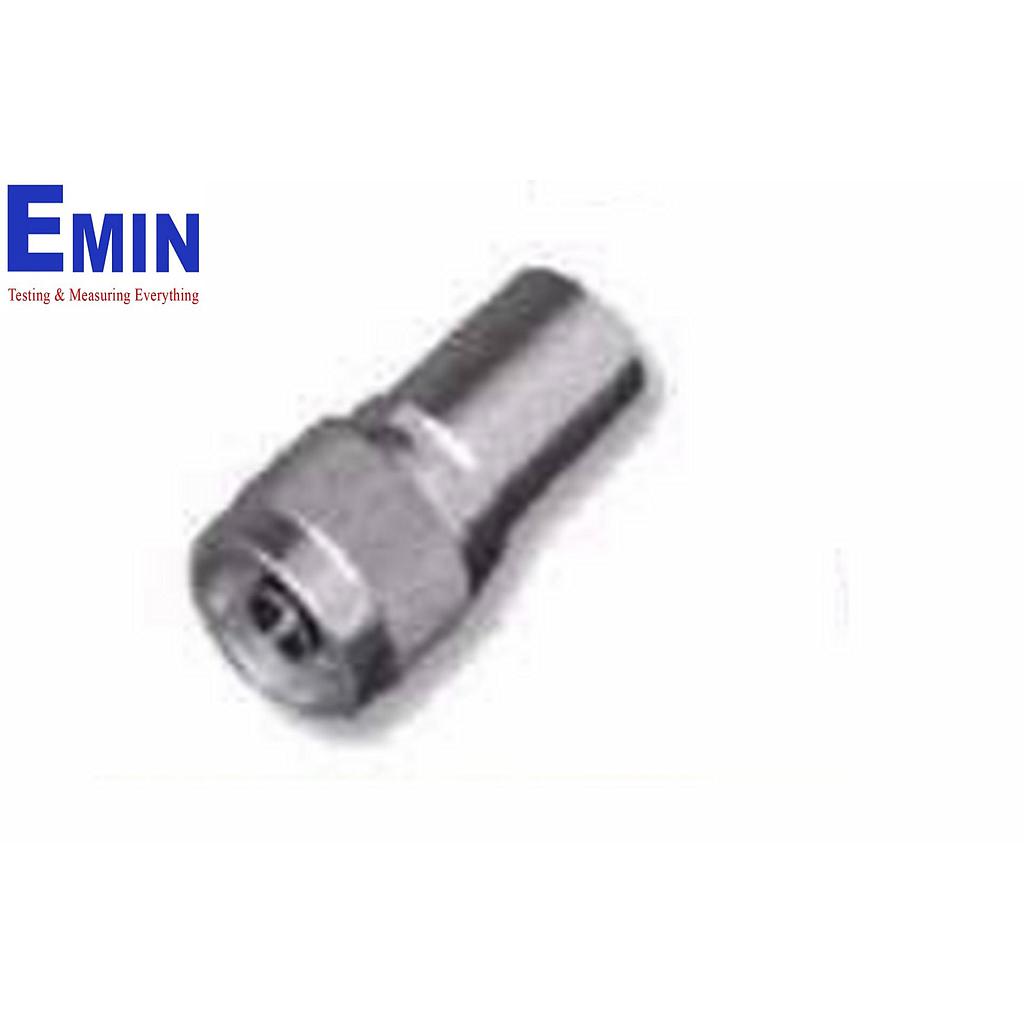
Why RF terminations matter in measurement and telecom systems
An RF termination is designed to present a known impedance to a circuit, typically 50 ohms in many telecom and test applications. When that impedance is matched correctly, the device helps minimize standing waves and unwanted signal reflections that can distort readings or stress connected equipment.
This becomes important in many common scenarios: closing unused analyzer or generator ports, terminating branches on a power divider, stabilizing interconnections during troubleshooting, or providing a safe load during transmitter testing. Even a small mismatch can affect measurement accuracy, especially as frequency increases.
Common types found in this category
The selection includes several practical formats suited to different installation and test conditions. Standard RF loads are intended to terminate a signal path directly, while feed-through terminations are useful when the mechanical layout requires in-line connection without changing the broader test arrangement.
Connector style is one of the most important selection points. Within this category, you will find BNC, N-type, 7/16 DIN, and TNC-related options represented through example products. That makes the range relevant for everything from compact bench setups to more demanding RF and telecom infrastructure environments where connector robustness and power handling are critical.
Examples from leading manufacturers
For general-purpose laboratory and engineering work, Tekbox offers several practical 50 ohm terminations with accessible power and frequency ranges. Examples include the Tekbox TBTER-2W-6GHz-50-N and TBTER-10W-6GHz-50-N, both using N-male connectors for broadband work up to 6 GHz, as well as compact BNC models such as the TBTER-0.5W-2GHz-BNCM and TBTER-2W-2GHz-50-BNCM.
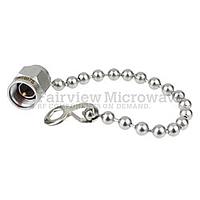
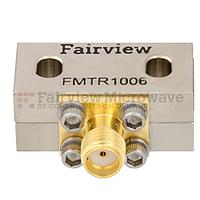
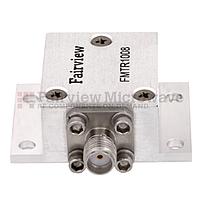
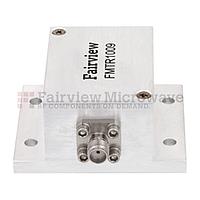
Where an in-line form factor is preferred, the Tekbox TBTERFT-0.5W-1GHz-BNCF and TBTERFT-0.5W-1GHz-BNCM show the role of feed-through designs in lower-power applications. For broader microwave coverage, Fairviewmicrowave models such as the STT1845 and STT1857 extend into higher frequencies, making them suitable where TNC connectivity and wider bandwidth are part of the test requirement.
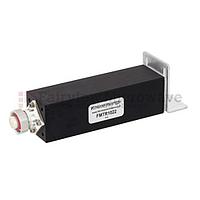
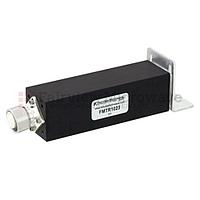
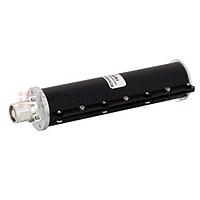
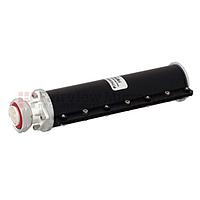
For high-power and continuous-duty use, Bird is particularly relevant. Products such as the Bird 8201, Bird 8251N, and Bird 8251D7-16 illustrate the difference between compact bench terminations and oil-cooled RF terminations intended for substantially higher power dissipation in more demanding operating conditions.
How to choose the right termination or load
The first check is impedance matching. In this category, the representative products are built around 50 ohm systems, which is standard for a wide range of RF and telecom measurement equipment. Using the wrong impedance can introduce reflection issues and reduce confidence in test results.
Next, compare the frequency range against your actual operating band, not just your nominal signal frequency. A termination used near or beyond its intended range may no longer maintain the desired VSWR performance. For example, some products here are suitable for DC to 1 GHz or 2 GHz, while others reach 6 GHz, 18 GHz, or support high-power operation up to 2.4 GHz.
Power rating is equally important. Low-power loads around 0.5 W to 10 W are often enough for analyzer ports, signal generators, and general bench work. When terminating transmitter outputs or handling continuous RF energy, higher-power solutions such as 25 W or oil-cooled 250 W to 1 kW designs are more appropriate.
Finally, verify connector compatibility and installation constraints. N-male, BNC male or female, TNC male, and 7/16 DIN female interfaces each fit different equipment families. In some setups, you may also need related RF accessories such as adapters or switching components to complete the test chain properly.
Application scenarios
In the lab, RF terminations are commonly used on unused instrument ports, coupler outputs, and temporary test fixtures. They help maintain predictable conditions during calibration, troubleshooting, comparison measurements, and prototype evaluation. Compact low-power models are often preferred here because they are easy to connect and move between instruments.
In telecom and broadcast infrastructure, loads may be used during commissioning, maintenance, and transmitter testing. Higher-power models are better suited for absorbing real RF power under continuous or semi-continuous operating conditions, especially where signal sources cannot simply be left open-circuited.
These components also support cleaner integration across broader RF assemblies. For example, a termination may be used alongside an isolator to manage reflected energy in a signal chain, depending on the architecture of the system and the purpose of the measurement.
Bench loads vs high-power oil-cooled terminations
Not all RF loads solve the same problem. A compact 0.5 W, 2 W, or 10 W model is typically intended for instrumentation interfaces and lower-power signal paths. These devices are practical for routine bench measurement, port protection, and impedance matching where the thermal load is limited.
By contrast, oil-cooled RF terminations such as the Bird examples in this category are engineered for much higher continuous power handling. They are more appropriate for transmitter test environments, RF service work, and applications where the load must dissipate significant energy safely over time rather than just terminate a low-level test signal.
Quick questions buyers often consider
Do I need a feed-through termination or a standard load?
A standard load is usually enough when you only need to terminate a port. A feed-through termination can be useful when the mechanical arrangement or signal path benefits from an in-line connection style.
Is a higher power rating always better?
Not necessarily. A higher-rated load may be larger, heavier, or less convenient for fine bench work. Choose the rating that matches your real operating conditions with an appropriate safety margin.
Why does connector type matter so much?
Connector format affects not only physical compatibility but also frequency performance, mechanical stability, and power handling. It should match both your equipment port and the demands of the application.
Choosing with confidence
The right RF termination helps create a more controlled system, whether you are closing an unused measurement port or absorbing substantial transmitter power. When comparing options in this category, focus on impedance, connector style, usable frequency range, and realistic power dissipation rather than choosing by model name alone.
From compact Tekbox and Fairviewmicrowave loads for bench and microwave test work to Bird oil-cooled solutions for heavier-duty RF applications, this category covers several practical needs within telecommunication measurement. A careful match at the end of the line often makes the whole signal chain more stable, safer, and easier to trust.
Get exclusive volume discounts, bulk pricing updates, and new product alerts delivered directly to your inbox.
By subscribing, you agree to our Terms of Service and Privacy Policy.
Direct access to our certified experts