Waveguide
When low-loss RF and microwave transmission becomes critical, waveguide technology remains a practical choice for many telecom, lab, radar, and high-frequency integration tasks. This category brings together Waveguide components used to route, adapt, detect, and transition signals across rectangular waveguide systems, especially where frequency range, power handling, and mechanical interface all matter.
For engineers and buyers working with microwave assemblies, the right waveguide part is rarely selected by frequency alone. Band coverage, WR size, flange style, insertion loss, VSWR, and the need to connect waveguide paths to coaxial interfaces all influence the final choice.
Where waveguide components fit in RF and microwave systems
Waveguide is widely used in frequency ranges where conventional transmission lines may introduce higher loss or lower power capability than the application allows. In practical systems, these components appear in test benches, transmit and receive chains, antenna feeds, measurement setups, and telecom or defense-oriented microwave assemblies.
This category is relevant not only for straight signal routing, but also for interface conversion and system integration. In many projects, waveguide hardware works alongside related RF building blocks such as adapters, switching elements, and signal distribution components to create a complete microwave path.
Common waveguide product roles in this category
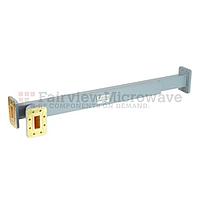
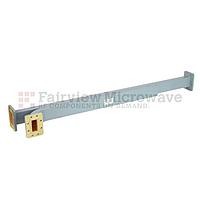
The range shown here covers several distinct functions. Flexible waveguide is used where mechanical routing, vibration tolerance, or installation constraints make rigid sections less convenient. A product such as the Pasternack PE-W137TF006-24 Twistable Flexible Waveguide illustrates this role well, with a WR-137 format intended for controlled routing while maintaining low mismatch and low typical insertion loss.
Another important group is the waveguide-to-coaxial adapter. These parts help bridge rectangular waveguide assemblies with connectorized coaxial test or communication hardware. Examples in this category include A-INFOMW right-angle adapters in WR90 and WR75 formats, supporting common transitions from waveguide to SMA Female or N Type Female interfaces across X and Ku range applications.
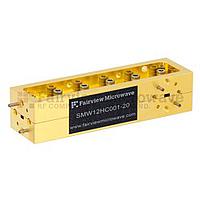
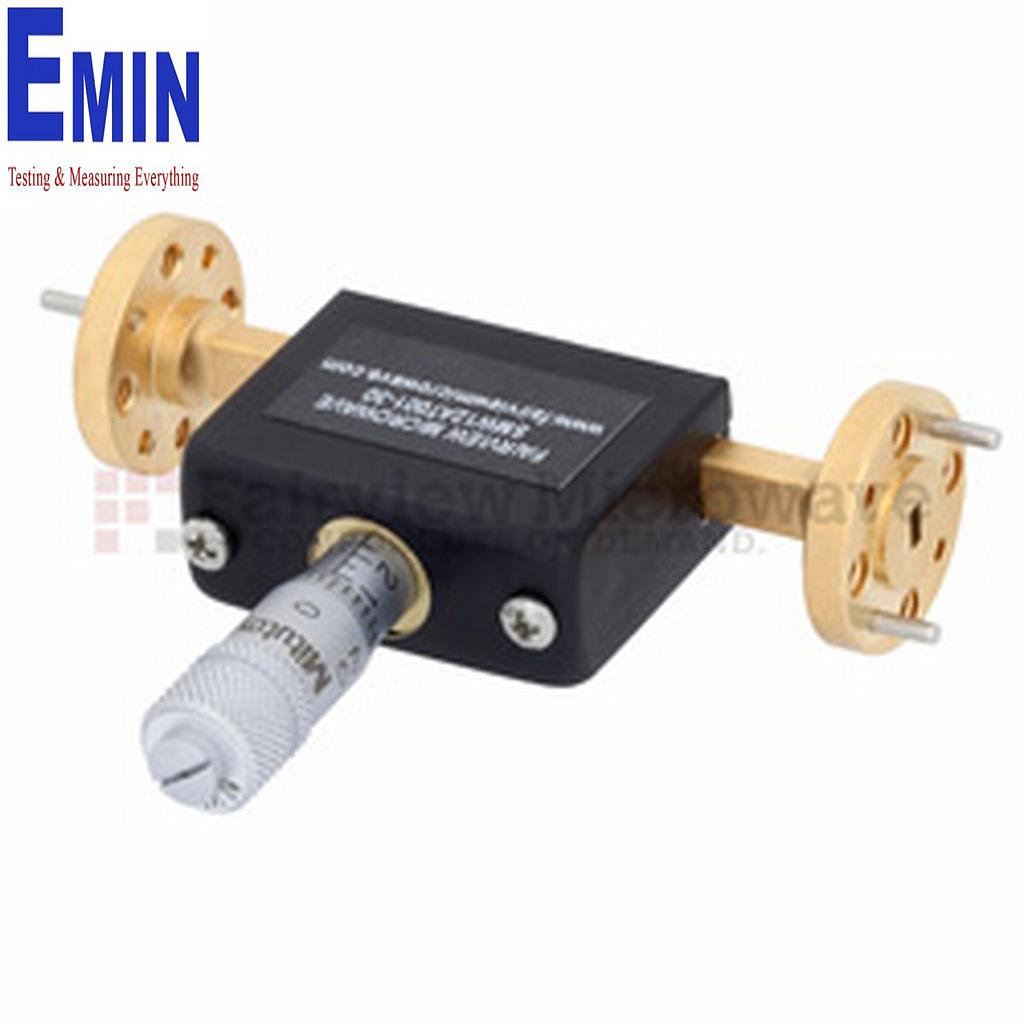
You will also find waveguide detectors and transitions. Fairviewmicrowave zero-biased detector models such as FMMT3005, FMMT3001, and FMMT3000 show how waveguide structures can be integrated into measurement and detection tasks from Ka band up to W band. Transition components such as the FMWTS1005 and FMWTS1006 help connect different WR sizes while keeping impedance behavior under control.
How to choose the right waveguide component
The first selection step is matching the frequency band and WR size to the system requirement. A WR90 part intended for 8.2 to 12.4 GHz serves a very different function from a WR-10 detector designed for 75 to 100 GHz. Even when two products look similar mechanically, the electrical band and waveguide standard must align with the operating range of the assembly.
Next, review the electrical performance that matters most to the application. For transmission and interface parts, engineers commonly focus on VSWR and insertion loss. Lower mismatch supports better power transfer and more predictable measurement results, while lower loss becomes especially important in longer signal paths or high-frequency systems.
Mechanical and environmental details also matter. Bend capability is important for flexible sections, while flange type and connector style matter for installation compatibility. In systems exposed to changing temperatures, maintenance access limitations, or tight enclosures, these practical factors can be just as important as the nominal RF specifications.
Examples of waveguide solutions from leading manufacturers
Fairviewmicrowave is represented here with several useful waveguide formats, including zero-biased detectors covering WR-28 through WR-10 and transitions between WR-90, WR-75, and WR-62 sizes. These products are relevant when a project requires measurement capability or an orderly change between waveguide standards without unnecessary complexity.
Pasternack adds flexible routing capability through its twistable WR-137 assembly, which is especially relevant when the installation path cannot be handled easily by rigid hardware alone. In practical builds, flexible sections can reduce mechanical stress at the interface and make equipment integration easier.
A-INFOMW contributes multiple right-angle waveguide-to-coaxial options, making it easier to move between rectangular waveguide transmission and connector-based RF equipment. That is particularly useful in bench testing, subsystem prototyping, or mixed-technology assemblies where waveguide and coax must coexist in the same signal chain.
Selection priorities for telecom, lab, and integration work
In telecom and microwave integration environments, the best choice often depends on the intended function of the part rather than on product family alone. If the goal is signal routing through a constrained path, flexible waveguide may be the priority. If the goal is instrument connection, a right-angle waveguide-to-coax adapter may be more appropriate. If the goal is band-to-band or size-to-size continuity, a transition is usually the better fit.
For test and measurement applications, it can also help to evaluate waveguide hardware as part of a wider component chain. A system may include waveguide sections, detectors, connectors, and complementary RF components such as an isolator or a power divider, depending on how the signal needs to be conditioned, split, or protected.
Why electrical and mechanical compatibility should be checked together
A common sourcing mistake is to confirm only one side of compatibility. A part may meet the desired frequency range but still fail to fit the assembly because of the wrong flange pattern, the wrong connector interface, or an unsuitable form factor. Likewise, a mechanically compatible part may not deliver the mismatch or loss performance needed for the system.
Checking both electrical and installation details early can reduce rework during procurement and assembly. For example, when choosing among WR90 adapters, it is useful to compare not only the operating band, but also the connector type, right-angle structure, power level, and expected integration space inside the enclosure or rack layout.
Waveguide components for expanding microwave system capability
This category is useful for buyers who need more than a single replacement part. It supports broader system design by covering several common waveguide tasks: transmission, conversion, transition, and detection. That makes it easier to source components that fit the same microwave ecosystem instead of mixing unrelated parts with uncertain compatibility.
If your application also involves path control or routing beyond passive waveguide hardware, related categories such as telecommunication switches may help complete the wider architecture. Reviewing the required band, WR standard, interface, and installation constraints up front will usually lead to a much cleaner selection process.
Choosing waveguide hardware is ultimately about matching the component’s role to the system’s electrical and mechanical reality. Whether you need a flexible section, a waveguide-to-coax interface, a detector, or a waveguide transition, this category helps narrow the options to practical components used in real microwave and telecommunication environments.
Get exclusive volume discounts, bulk pricing updates, and new product alerts delivered directly to your inbox.
By subscribing, you agree to our Terms of Service and Privacy Policy.
Direct access to our certified experts