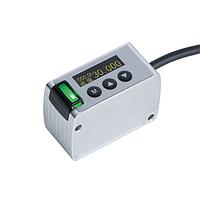
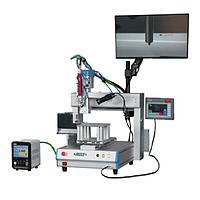
Other automated equipment
Automation projects often depend on more than core PLCs, drives, and HMIs. Many systems also require supporting modules, motion accessories, and interface components that help machines run more smoothly, connect signals correctly, and maintain stable control performance. This is where Other automated equipment becomes a practical category for engineers, maintenance teams, and industrial buyers looking for specialized items that do not always fit into a narrower product group.
On this page, you can explore a mix of automation-related components used in panel building, machine control, signal handling, and motion transmission. The range includes examples such as analog I/O modules and flexible shaft couplings, which are often essential for completing a reliable automation setup rather than serving as stand-alone systems.
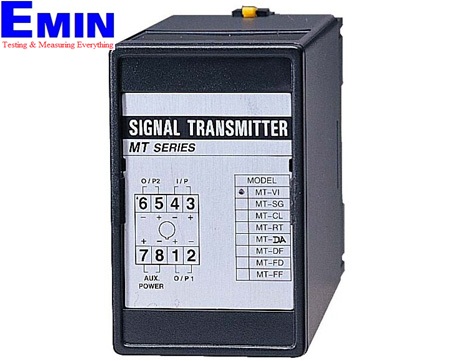
Why this category matters in industrial automation
In real applications, machine builders and plant engineers frequently need supporting components that bridge the gap between standard control hardware and actual field operation. These products may handle analog signal conversion, connect rotating shafts, compensate for misalignment, or support a specific installation requirement within a broader automation architecture.
Because of that, this category is useful for sourcing specialized automation parts that may not belong to a single mainstream family. It can help simplify procurement when a project needs both signal-level control accessories and mechanical support elements for automated equipment.
Typical product types found in this range
One important group in this category is analog I/O modules for PLC-based control systems. Products such as the MITSUBISHI Q64AD Module and MITSUBISHI Q64DAN Module Analog are designed for applications where controllers must read or send analog values such as voltage or current signals. In practice, these modules are commonly used when integrating transmitters, actuators, inverters, or process devices that communicate with 0-10 V, ±10 V, 0-20 mA, or 4-20 mA style signals.
Another representative group is flexible shaft couplings from Autonics. Examples in this category include ERB-A-19C and ERB-A-19S series variants with different bore combinations such as Ø4mm/Ø4mm, Ø5mm/Ø6mm, and Ø6mm/Ø8mm. These components play an important role in connecting rotating elements in compact automation assemblies, especially where alignment tolerance and smooth torque transmission are necessary.
Where these products are commonly used
Analog modules are relevant in many control panels and process interfaces. They are typically selected when a PLC needs to receive sensor feedback or generate analog output commands for valves, converters, or other field devices. In systems that require supervisory monitoring, these devices may also work alongside SCADA components to support visualization, trending, and higher-level control.
Flexible couplings are more often used on machine axes, encoder connections, compact motors, and precision rotating mechanisms. They help reduce the effects of slight shaft misalignment while maintaining a dependable mechanical link between connected parts. In small automation assemblies, this can improve repeatability and reduce unnecessary stress on bearings or shafts.
Key selection points before ordering
For analog input or output modules, buyers should first confirm signal type compatibility with the target PLC and field devices. Important checks usually include the number of integrated channels, supported voltage or current ranges, power requirements, and the available wiring method. In the examples listed here, the MITSUBISHI modules provide multiple integrated analog channels and are intended for PLC environments where space efficiency and signal handling are both important.
For couplings, selection should focus on bore size, mounting style, allowable speed, torque level, and acceptable shaft misalignment. A product such as the Autonics ERB-A-19S-06/08 Flexible Shaft Couplings may suit a different shaft combination than the ERB-A-19C-04/04 or ERB-A-19C-05/06 versions, so dimensional matching should always be checked carefully before purchase.
Mechanical and control components in the same ecosystem
Although analog modules and shaft couplings serve very different functions, both belong to the same broader automation ecosystem. One supports signal conversion and control integration, while the other supports mechanical transmission between rotating parts. In modern automated equipment, both electrical and mechanical details have a direct effect on uptime, accuracy, and ease of maintenance.
This is also why buyers often review adjacent product groups during project planning. For example, some applications may combine these components with data collection tools such as data loggers for automation systems when process values need to be recorded, analyzed, or transferred for troubleshooting and performance monitoring.
Representative brands in this category
This category includes products from recognized automation manufacturers such as MITSUBISHI and Autonics, with broader brand context also available across the automation range. MITSUBISHI is commonly associated with PLC control platforms and expansion modules, while Autonics is widely used in factory automation for sensors, controllers, motion-related accessories, and compact machine components.
Depending on project requirements, buyers may also compare broader automation ecosystems from manufacturers such as OMRON, SCHNEIDER, Adtek, and Fushin. The right choice usually depends less on brand alone and more on compatibility with the existing machine design, panel layout, and maintenance strategy.
How to evaluate fit for your application
When sourcing from a category like this, it helps to begin with the function the part must perform inside the full system. If the need is electrical, define the signal path, controller platform, and I/O requirement. If the need is mechanical, define shaft sizes, rotational speed, torque demand, and the amount of alignment variation expected during operation.
It is also useful to think in terms of lifecycle support. A component that fits electrically or mechanically on paper should also align with installation practice, replacement planning, and future serviceability. That approach reduces mismatch risk and helps ensure the selected item works well within the machine rather than only at the individual part level.
Choosing from the Other automated equipment category
This category is best viewed as a practical source for supporting automation components that complete real industrial systems. Whether you are selecting a PLC analog module for signal interfacing or a flexible coupling for a compact motion assembly, the goal is the same: choose parts that match the application, integrate cleanly, and support stable operation over time.
If you are comparing items in this range, focus on function, compatibility, and installation requirements first. That makes it easier to identify the right component for your control cabinet, machine retrofit, or automation build without overcomplicating the selection process.
Get exclusive volume discounts, bulk pricing updates, and new product alerts delivered directly to your inbox.
By subscribing, you agree to our Terms of Service and Privacy Policy.
Direct access to our certified experts