Radiation, Heat, Stress, Solar,
Field measurements often need to answer two different questions at once: how much solar energy is available, and how severe the thermal environment is for people, equipment, or processes. This category brings those tasks together with instruments used for solar irradiance measurement, heat stress monitoring, and related environmental assessment in industrial, maintenance, and safety applications.
Whether the job involves photovoltaic inspection, workplace heat exposure checks, or site surveys in challenging outdoor conditions, Radiation, Heat, Stress, Solar instruments help convert environmental conditions into usable data. The product range on this page includes handheld meters, WBGT monitors, and more specialized logging instruments suited to both spot checks and ongoing evaluation.
Where these instruments are used
In practice, this category supports several different workflows. Solar technicians use irradiance meters to verify sunlight conditions during photovoltaic installation, commissioning, and maintenance. Safety teams and EHS personnel use WBGT-based tools to evaluate heat load in factories, warehouses, foundries, utilities, construction sites, and outdoor work areas.
These instruments are also relevant in environmental testing, building services, and occupational hygiene. When broader monitoring is needed, users often combine them with devices from related areas such as air and gas transmitters or air quality sensors to build a more complete picture of indoor or outdoor conditions.
Heat stress monitoring and WBGT measurement
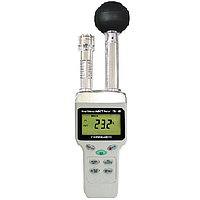
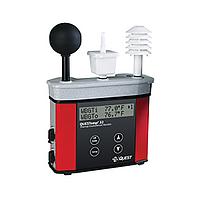
For worker safety, one of the most important parameters is WBGT, or Wet Bulb Globe Temperature. Unlike a simple air temperature reading, WBGT takes into account the combined effect of air temperature, humidity, radiant heat, and, depending on the method, solar load. That makes it far more useful for assessing thermal stress in real working environments.
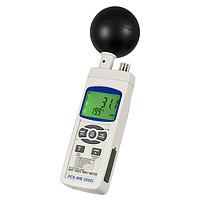
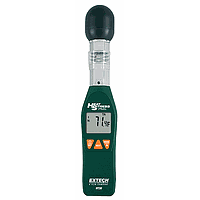
Typical examples in this category include the PCE WB 20SD Multifunction Thermometer, the skSATO SK-170GT WBGT Heat Stress Monitor, and EXTECH models such as the HT200 and HT30. These instruments are suitable for safety checks in production areas, logistics yards, and outdoor work zones where direct heat exposure can affect both personnel performance and compliance procedures.
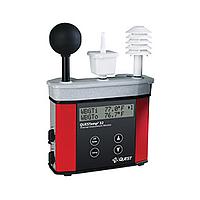
For more advanced or long-duration applications, Sensidyne solutions such as the ELR610S, ELR615S, and ELR615M are relevant where continuous monitoring, field durability, or system-based heat stress assessment is required. Their role is different from a basic handheld meter: they fit better into structured monitoring programs rather than quick one-time checks.
Solar irradiance meters for photovoltaic work
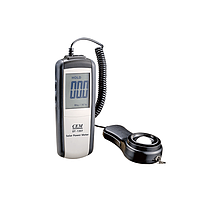
On the solar side, irradiance meters are used to measure incident solar energy in W/m², helping technicians compare actual site conditions with expected panel performance. This is especially useful during PV installation, performance verification, maintenance, and troubleshooting, where environmental conditions must be documented alongside electrical readings.
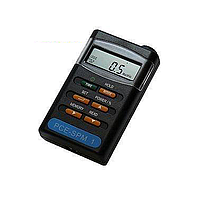
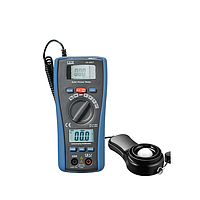
Representative products include the FLIR PV78, the FLUKE FLK-IRR1-SOL, the PCE SPM 1, EXTECH SP505, and the Triplett SPLT100. Some models go beyond irradiance alone by adding tilt, compass, or temperature measurement, which can be valuable when checking panel orientation, module surface conditions, or consistency across an array.
For users who also evaluate surrounding environmental conditions, it can be useful to review related devices such as ambient light sensors where the application extends beyond PV testing into general illumination or environmental sensing.
How to choose the right instrument
The first step is to match the instrument to the real measurement objective. If the goal is occupational safety and thermal exposure assessment, a WBGT monitor is usually the correct choice. If the work is centered on PV inspection or solar resource checks, a solar power or irradiance meter is more appropriate.
Next, consider whether you need a simple handheld unit for spot verification or a logger for trend analysis. Some instruments in this category support data storage, communication interfaces, or software integration, which is useful when records must be retained for audits, reporting, or maintenance documentation. In contrast, lightweight pocket or handheld meters are often preferred for fast field surveys.
It is also worth checking which environmental factors are measured together. Depending on the model, you may see combinations of air temperature, globe temperature, humidity, wet bulb temperature, irradiance, tilt angle, compass direction, or external probe capability. The right selection depends less on the number of functions and more on whether those functions align with the job you actually perform.
Comparing handheld meters and advanced monitoring systems
Not every application needs the same level of detail. Handheld instruments are ideal when technicians need mobility, quick readings, and straightforward operation. They are commonly used for route-based inspections, site acceptance checks, and routine safety reviews.
Advanced monitoring systems become more valuable when measurements must continue over time, cover changing environmental conditions, or support formal heat stress management. In those cases, logging interval, battery strategy, communications, and sensor configuration matter more than compact size alone. This is why a model designed for portable checks and a model designed for occupational monitoring can both be appropriate, even though they serve different operational needs.
Brands commonly selected in this category
This category includes products from established names such as FLIR, FLUKE, EXTECH, PCE, Sensidyne, skSATO, and Triplett. Each brand tends to be chosen for different reasons depending on the application, from compact field portability to broader environmental data capture.
For buyers comparing product ecosystems, it can be useful to browse the wider PCE range when looking for multifunction environmental instruments, while FLIR and FLUKE are often considered in maintenance and inspection workflows. Sensidyne is more likely to enter the conversation when occupational heat stress programs require more dedicated monitoring capability.
What to review before ordering
Before selecting a device, check the intended environment and measurement method. Indoor and outdoor heat stress evaluation may use different WBGT conditions, and solar testing may require more than one parameter to make field data meaningful. Accuracy, response time, memory, display readability, and power options can all affect usability in real work conditions.
It is also helpful to think about who will use the instrument. A maintenance technician may prefer a fast, intuitive handheld meter, while an EHS specialist may need stronger documentation features. In some facilities, these instruments are part of a larger environmental workflow that may also involve fixed transmitters, portable air quality tools, or other specialized air environment devices.
Supporting better environmental decisions
Choosing the right radiation, heat stress, or solar measurement instrument is mainly about matching the device to the decision you need to make. Some jobs require a quick confirmation of irradiance during PV service work. Others require a more defensible assessment of thermal exposure for worker safety and operational planning.
This category is designed to support both use cases with practical options across handheld and advanced instruments. By focusing on the measurement objective, operating environment, and required level of documentation, buyers can narrow the range efficiently and select equipment that fits their technical workflow with fewer compromises.
Get exclusive volume discounts, bulk pricing updates, and new product alerts delivered directly to your inbox.
By subscribing, you agree to our Terms of Service and Privacy Policy.
Direct access to our certified experts