Force & Strain Measurement
Accurate mechanical measurement is essential wherever products are pulled, compressed, twisted, weighed, or tensioned during development, quality control, and production. From simple load monitoring to advanced material characterization, Force & Strain Measurement equipment helps engineers capture reliable data for decision-making, traceability, and process improvement.
This category brings together instruments and sensing components used to measure force, torque, strain, and related mechanical responses across a wide range of industrial and laboratory tasks. It is relevant for machine builders, test labs, maintenance teams, OEMs, and manufacturers that need dependable results in applications such as assembly validation, structural testing, cable tension checking, and dynamic torque analysis.

Where force and strain measurement fits in industrial workflows
Mechanical measurement is rarely isolated. In many systems, force and strain data are used alongside displacement, speed, angle, temperature, or vibration to understand how a component behaves under real operating conditions. This is especially important in product validation, endurance testing, incoming inspection, and production-line verification.
Depending on the task, users may need a compact sensor integrated into a machine, a benchtop indicator for routine checks, or a more complete test platform for controlled experiments. In this category, the product range spans from load cells and torque sensors to evaluation instruments and universal testing systems, allowing users to build a measurement chain that matches both accuracy needs and process constraints.
Typical device types in this category
Force and strain measurement solutions can be grouped by what they measure and how they are used. Some products are intended for direct sensing, while others handle signal conditioning, display, storage, or test execution. For buyers, the key is to distinguish between the sensor itself and the supporting instrument required to make the data usable.
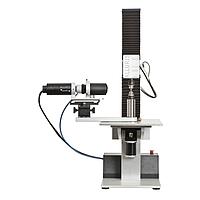
Examples from this category include Honeywell force sensors and load cells for direct force detection, the KISTLER 4520A shaft torque sensor for rotational torque measurement, and the KISTLER 4700B CoMo Torque evaluation instrument for processing torque sensor signals. For more advanced lab-based testing, the Anton Paar portfolio includes systems such as the UTM Micro Universal Testing Machine, which supports a broader range of controlled mechanical tests.
- Force sensors and load cells for compression, tension, or general load monitoring
- Torque sensors for rotating shafts, drivetrains, motors, and tightening processes
- Evaluation and readout instruments for display, analog output, digital I/O, and data handling
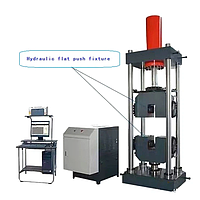
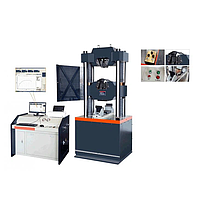
- Testing machines for structured mechanical characterization in R&D and QA environments
- Tension gauges for belts, wires, and cables where proper mechanical tension affects performance
Representative products and practical use cases
For rotating applications, the KISTLER 4520A shaft torque sensor is suited to torque measurement on drive systems where rotational speed and signal stability matter. In a motor test setup or assembly validation station, this type of sensor can help monitor transmitted torque and support performance comparison between units.
When a torque sensor needs dedicated signal evaluation, the KISTLER 4700B CoMo Torque instrument adds the processing layer. Its role is not to replace the sensor, but to convert raw measurement signals into readable and actionable values, with outputs that can be integrated into test benches or quality systems.
For direct force measurement, several Honeywell load cell models in this category can support OEM integration, compact measurement assemblies, or general force detection tasks. In a different application area, the CONTITECH VSM-3 tension gauge is useful where belt vibration frequency is used as an indirect method to assess belt tension, helping maintenance and setup teams verify correct mechanical adjustment.
How to choose the right solution
Selection should start with the measurement objective. If the requirement is to monitor static or slowly varying load, a suitable load cell with compatible signal handling may be enough. If the application involves a rotating shaft, dynamic response, or synchronization with speed and angle, a dedicated torque sensor and matching evaluation instrument are more appropriate.
Range is only one part of the decision. Buyers should also consider accuracy class, overload behavior, mounting conditions, environmental limits, output type, and how the device will connect to the rest of the system. For example, analog voltage outputs may simplify machine integration, while USB or serial communication can be useful in laboratory or standalone measurement environments.
It is also important to think about the full measurement chain. A sensor may require excitation, signal amplification, display electronics, data logging, or software interpretation before it becomes a complete working solution. That is why categories such as load cells, torque sensors, and testing platforms should be evaluated together rather than as isolated hardware items.
Application areas across manufacturing and testing
Force and strain measurement equipment is used in sectors where mechanical behavior directly affects safety, product quality, or process repeatability. Common examples include component assembly, packaging verification, spring and fastener testing, cable and belt setup, actuator development, and materials evaluation.
In R&D and laboratory settings, more advanced systems support controlled test methods involving tension, compression, bending, shear, torsion, or friction. The Anton Paar UTM Micro, for instance, illustrates how a universal platform can serve users who need fine force control and broader mechanical characterization rather than a single-purpose sensor.
In production environments, by contrast, the priority is often robust integration and fast feedback. Here, compact force sensors, shaft torque sensors, and practical readout instruments are often chosen for inline control, fixture monitoring, pass/fail checks, or maintenance routines.
Leading manufacturers in this category
This category includes products and solution families associated with established names in industrial measurement. Honeywell is widely recognized for force sensing and load cell options suited to integration in equipment and measurement assemblies. KISTLER is a strong reference point for torque measurement and related signal evaluation in dynamic mechanical applications.
For laboratory-grade mechanical analysis, Anton Paar brings in a broader testing perspective through precision instrumentation. Other manufacturers listed in this category, such as CONTITECH, support specialized use cases including mechanical tension checking. The value of a brand in this field often lies not only in the sensor itself, but in the surrounding ecosystem of accessories, interfaces, and application fit.
What matters for integration and long-term use
Beyond headline specifications, long-term usability depends on installation quality, calibration strategy, signal compatibility, and service conditions. Mechanical alignment, fixture design, cable routing, and electrical noise can all influence measurement stability, especially when working with low-level signals or dynamic events.
Users should also verify whether the device will be used as a standalone indicator-based setup or as part of a PLC, DAQ, or automated test system. In many industrial projects, the practical success of a force or strain measurement solution depends on how easily it can be integrated into the broader control and quality infrastructure.
For teams comparing options, it is often helpful to shortlist devices based on application type first, then refine by range, output, environmental conditions, and installation method. This approach reduces the risk of selecting a sensor that looks suitable on paper but is difficult to deploy in the actual machine or test bench.
Finding a suitable product for your measurement task
If your project involves monitoring force, torque, strain, or mechanical tension, this category provides a useful starting point for both component-level selection and complete test setups. Whether the need is a compact load cell, a shaft torque sensor, a signal evaluation instrument, or a universal testing platform, the right choice depends on the nature of the load, the dynamics of the application, and the required output for control or analysis.
A careful review of measurement range, installation requirements, and system compatibility will usually lead to a more reliable result than choosing by nominal capacity alone. For industrial buyers and engineers, that means selecting equipment that not only measures correctly, but also fits the process, the machine, and the data workflow over the long term.
Get exclusive volume discounts, bulk pricing updates, and new product alerts delivered directly to your inbox.
By subscribing, you agree to our Terms of Service and Privacy Policy.
Direct access to our certified experts