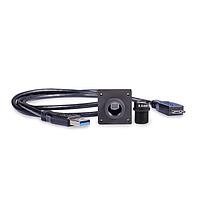
Industrial camera
Reliable image capture is a critical part of modern automation, especially where inspection speed, repeatability, and integration with control systems matter. In production lines, robotics, packaging, electronics assembly, and traceability tasks, the right industrial camera helps convert visual information into measurable data that supports quality control and process stability.
This category brings together machine vision imaging solutions used in demanding industrial environments. Whether you are selecting a compact area scan camera for OEM integration or a ready-to-deploy vision system for inspection and code reading, the goal is the same: stable image acquisition, predictable triggering, and compatibility with the rest of the automation architecture.
Where industrial cameras are used
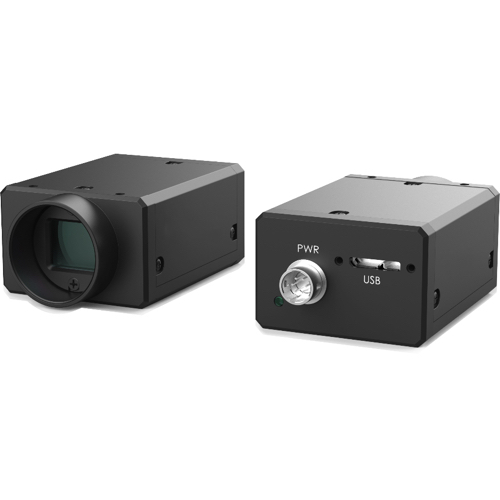
Industrial cameras are commonly applied in tasks such as presence detection, positioning, dimensional verification, surface inspection, label reading, and component identification. Compared with consumer imaging devices, they are designed for continuous operation, controlled synchronization, and easier connection to PLC, IPC, and machine vision software environments.
In practical projects, camera selection often depends on line speed, field of view, object motion, lighting conditions, and the level of image detail required. Some applications need high frame rates to freeze fast-moving objects, while others prioritize higher resolution for small feature detection or more reliable inspection across a larger area.
Key features to evaluate before choosing a camera
A good starting point is the balance between resolution, frame rate, and interface bandwidth. Higher resolution can improve measurement precision and defect visibility, but it also increases the amount of image data that must be transferred and processed. For faster production lines, bandwidth and trigger response become just as important as pixel count.
Sensor type also matters. Many industrial imaging tasks benefit from global shutter technology because it captures the full image at the same instant, reducing distortion when objects or conveyors are moving quickly. Lens compatibility, power options, environmental protection, and software support should also be reviewed carefully to ensure the camera fits the mechanical and electrical design of the system.
For projects that require optics matching, focal length selection, or field-of-view optimization, it is often useful to review available camera lenses alongside the camera body rather than treating them as a separate decision.
Examples from Basler area scan cameras
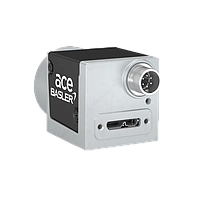
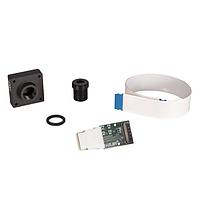
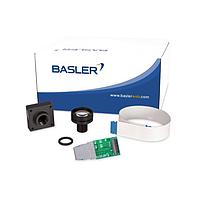
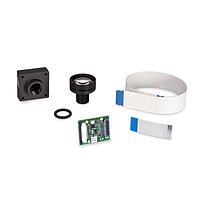
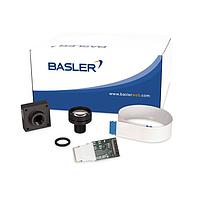
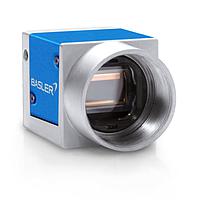
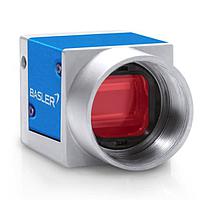
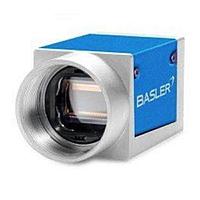
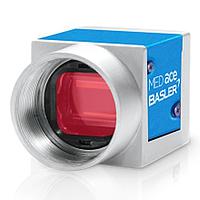
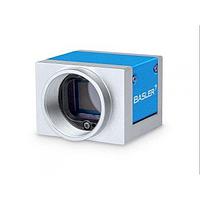
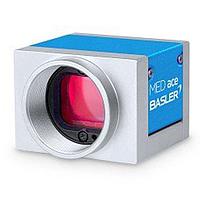
Basler is well known in machine vision environments for compact area scan cameras that are easy to integrate into automated equipment. In this category, examples include the Basler a2A1920-165g5mBAS and a2A1920-165g5cBAS, both built around the Sony IMX392 sensor with 2.3 MP resolution and 5GigE connectivity. These models are suitable when stable triggering, compact dimensions, and relatively high acquisition speed are important.
For applications that need more image detail, models such as the Basler a2A4096-44g5cBAS and a2A4096-44g5mBAS provide around 12 MP resolution, while the a2A2840-67g5cBAS and a2A2840-67g5mBAS sit in the 8 MP class. The a2A2448-105g5cBAS and a2A2448-105g5mBAS offer a 5 MP option with high frame-rate potential, making them relevant where both detail and throughput need to be balanced.
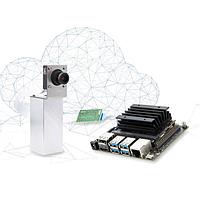
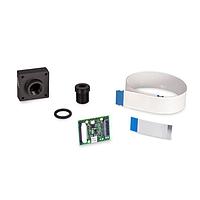
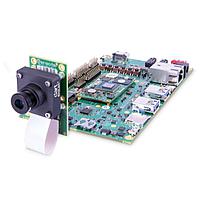
Across these examples, common integration advantages include C-mount lens support, hardware or software triggering, and Ethernet-based data transfer. If your application requires a broader view of similar imaging options, you can also explore the wider range of cameras and camera modules available for machine vision system design.
When a complete vision system may be the better choice
Not every project starts with a standalone camera. In many factories, users need an imaging device that already combines optics support, lighting options, onboard processing, industrial communication, and inspection tools in one package. In those cases, an integrated vision system can reduce engineering time and simplify deployment.
Cognex examples in this category include the In-Sight 7501, In-Sight 7600, In-Sight 7800, and In-Sight 7801. These systems are positioned for inspection and identification workflows where image acquisition is tightly linked with analysis, I/O handling, and industrial protocol support. They are especially relevant when users want a more complete inspection platform instead of building a vision stack from separate camera, processor, and software components.
Integrated systems can be attractive in applications such as code verification, assembly checks, guided presence detection, and line-side quality decisions. They also make sense where environmental protection, built-in connectivity, and compact installation are priorities.
How to choose between mono and color imaging
The choice between monochrome and color depends on the inspection objective rather than preference alone. A monochrome camera is often preferred for contrast-based measurement, edge detection, and controlled lighting setups because it can simplify image processing and improve sensitivity in many machine vision tasks.
Color models are more suitable when the application depends on distinguishing printed marks, label colors, wiring identification, packaging appearance, or multicolor part verification. In the product examples listed here, several Basler models are available in both mono and color versions, which helps system designers choose the image type that best matches the inspection logic without changing the overall hardware format too much.
Integration considerations in industrial environments
Successful deployment depends on more than camera specifications alone. Triggering method, synchronization with conveyors or encoders, available power, network architecture, and software compatibility all affect system performance. Ethernet-based cameras and vision systems are often selected because they fit well into factory communication environments and support practical cable lengths.
Mechanical integration also plays an important role. Mounting space, connector orientation, thermal conditions, and protective enclosures may influence the final device choice. In some installations, supporting items such as mounts, cables, and protective parts are essential to long-term reliability, so it can be useful to review related camera accessories during the design stage rather than after commissioning issues appear.
Choosing the right industrial camera for your application
If your project centers on raw image acquisition for a custom machine vision setup, an area scan camera with suitable resolution, shutter type, and interface speed is often the right path. If you need a more self-contained inspection platform with industrial communication and embedded vision capability, an integrated vision system may be the more efficient option.
Within this category, Basler models illustrate compact camera options for machine builders and integrators, while Cognex solutions represent a more complete vision-system approach. The best choice usually comes from matching the device to the inspection task, lighting concept, image processing method, and installation environment rather than focusing on one specification alone.
By reviewing application needs first and hardware details second, buyers can narrow the selection more effectively and build a vision system that is practical to integrate, maintain, and scale over time.
Get exclusive volume discounts, bulk pricing updates, and new product alerts delivered directly to your inbox.
By subscribing, you agree to our Terms of Service and Privacy Policy.
Direct access to our certified experts