
Programmable Logic Controllers - PLCs
Reliable machine control starts with a controller that can handle real-world signals, communication needs, and future expansion. In manufacturing, utilities, building systems, and OEM equipment, Programmable Logic Controllers - PLCs remain a practical choice for managing discrete I/O, sequencing, interlocks, and process logic with better stability than general-purpose computing alone.
This category brings together PLC hardware used for control tasks ranging from compact standalone systems to modular architectures with expandable I/O and communication options. Whether you are replacing an installed controller, building a small automation panel, or specifying a scalable platform for a larger machine, the right PLC depends on the required I/O count, power supply, network interfaces, and system structure.
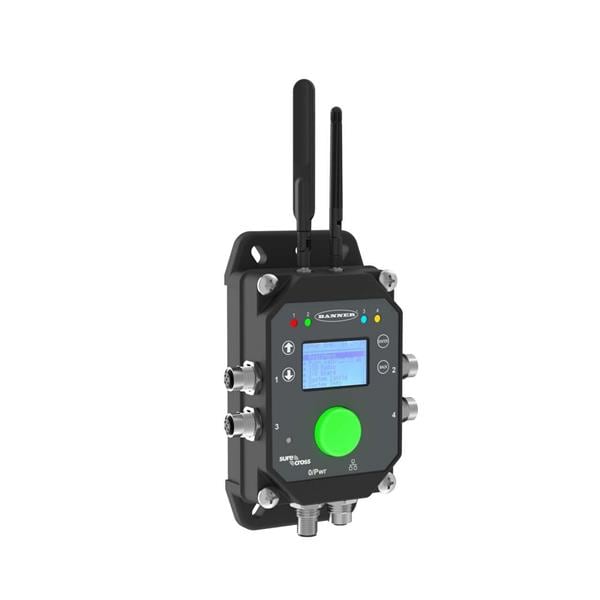
Where PLCs fit in industrial automation
A PLC is designed to monitor inputs, execute programmed control logic, and switch outputs in a predictable cycle. That makes it well suited to applications such as conveyor control, packaging lines, pump and fan automation, material handling, and machine safety interlocking at the control level. Compared with more specialized devices, PLCs offer a flexible platform when multiple signals and operating conditions must be coordinated.
In many systems, a PLC works alongside operator interfaces, sensors, drives, relays, and dedicated controllers. For applications centered on loop tuning and thermal regulation, users may also compare PLC-based control with PID controllers. The best fit depends on whether the task is mainly process regulation or broader machine sequencing with multiple inputs and outputs.
Compact, modular, and expandable PLC options
Not every automation project needs the same controller structure. Compact PLCs integrate CPU, power, and a fixed I/O set in one unit, making them a practical option for smaller machines and panel spaces where simplicity matters. Models such as the Arduino AFX00001 PLC and Arduino AFX00002 PLC illustrate this approach, combining onboard I/O with communication features suitable for edge-connected or compact automation setups.
For systems that may grow over time, modular PLC platforms provide more flexibility. Delta DVP20EH00T3 and Delta DVP20EH00R3 CPU PLC units are examples of controller-focused hardware that can serve machine builders needing a dedicated CPU base, while the Delta DVP40ES200RE CPU PLC supports applications that benefit from Ethernet connectivity. In larger architectures, separate CPU, backplane, and I/O modules allow the control system to be sized more precisely around the machine.
Examples of PLC ecosystem components
When evaluating this category, it helps to look beyond the CPU alone. Some products are complete PLC units, while others are supporting components used to build or extend a control platform. For example, the OMRON CS1G-CPU42H programmable CPU is intended for a modular control system, where the overall setup can also include parts such as the CS1W-BC022, CS1W-BC032, CS1W-BC052, or CS1W-BC082 CPU backplane depending on the required slot capacity.
I/O expansion is equally important in many projects. The OMRON CP1W-40EDR Module In/Out shows how a PLC system can be expanded with additional digital signals instead of replacing the entire controller. This distinction matters during specification: a product in the PLC category may be the main controller, an expansion module, or infrastructure that supports the full rack-based system.
How to choose the right PLC
The first selection step is usually the I/O requirement. Count digital inputs, digital outputs, analog points, relay outputs, and any expected future expansion. A compact controller with built-in I/O may be enough for a simple machine, but a modular platform is often easier to maintain and scale when signal counts increase or when different module types are needed.
Next, review the electrical and communication needs. Power supply type, relay versus transistor output, and interfaces such as RS-232, RS-485, USB, Ethernet, Wi-Fi, or BLE can affect integration time and total system cost. If the PLC must exchange data with supervisory systems, remote devices, or smart equipment, communication support should be planned from the start rather than added as an afterthought.
Physical installation also matters. Panel space, enclosure rating expectations, maintenance access, and wiring layout all influence the right hardware format. In applications where a PLC is only one part of a wider control strategy, it may also be useful to review related programmable controllers to compare architectures and control approaches.
Featured manufacturers in this category
This range includes products associated with established automation brands and widely used control platforms. For compact and accessible control hardware, Arduino offers PLC options that combine industrial-style control functions with modern connectivity. These products can be relevant for smaller automation projects, educational industrial setups, and OEM applications that require straightforward integration.
Delta is well represented with CPU PLC and programmable PLC options suited to machine control and cabinet-based automation. OMRON also appears in this category with modular CPUs, backplanes, and I/O-related components that support more structured control system design. Brand selection should ultimately align with your preferred programming environment, installed base, communication requirements, and long-term maintenance strategy.
PLCs compared with dedicated control devices
A PLC is often chosen when control logic involves multiple conditions, timers, counters, status handling, and coordinated outputs. However, some applications are better served by a dedicated controller if the task is narrow and highly specific. For example, liquid storage systems may rely on a dedicated level controller when the control objective is focused on one variable rather than broader machine automation.
That does not mean one device type replaces the other in every case. Many real systems combine a PLC with specialized devices, using the PLC for supervisory logic and the dedicated controller for localized control. Understanding this division helps buyers avoid over-specifying a PLC for simple tasks or under-specifying a control platform for more complex operations.
Typical buying considerations for B2B users
For maintenance teams, compatibility with existing hardware and wiring conventions is often the priority. Matching the installed platform can simplify replacement, reduce downtime, and minimize software changes. For new builds and OEM projects, the focus may shift toward communication options, expandability, and long-term availability across different machine variants.
It is also worth checking whether the project needs only a PLC CPU, a complete compact controller, or additional modules and backplanes to complete the system. This is especially relevant in modular families, where the base controller and the expansion hardware are selected separately. Looking at the category in this way makes it easier to shortlist products that fit the real system architecture rather than only comparing headline specifications.
Find the PLC platform that matches your control architecture
Choosing a PLC is less about picking the highest specification and more about matching the controller to the machine, process, and support model behind it. A compact unit may be ideal for a self-contained panel, while a modular CPU with backplane and I/O expansion is often the better route for larger or evolving systems.
By comparing controller format, I/O structure, communication interfaces, and ecosystem compatibility, buyers can narrow this category to the most suitable options for maintenance, retrofit, or new automation projects. If you are building around a known platform or evaluating alternatives for a specific control task, this PLC category provides a practical starting point for that selection process.
Get exclusive volume discounts, bulk pricing updates, and new product alerts delivered directly to your inbox.
By subscribing, you agree to our Terms of Service and Privacy Policy.
Direct access to our certified experts
