Light to Frequency & Light to Voltage
When a control system needs a clean electrical output from incident light, the choice of sensor interface matters just as much as the sensing element itself. Light to Frequency & Light to Voltage devices are designed for applications where optical input must be translated into a signal that can be read easily by analog circuits, microcontrollers, or industrial electronics.
These components are commonly used in measurement, detection, and embedded sensing tasks where designers want simpler signal conditioning and more direct integration into a larger automation or instrumentation system. Depending on the design target, the output may be an analog voltage proportional to light intensity or a frequency-based signal that is convenient for digital counting and noise-tolerant transmission.
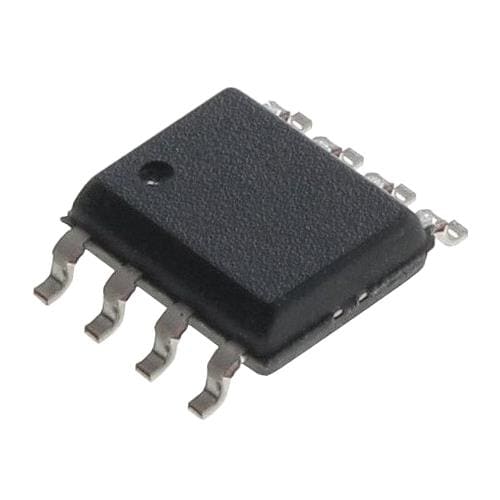
Where light-conversion sensors fit in industrial and embedded design
In many systems, a standard photodiode alone is only one part of the sensing chain. Designers often still need amplification, conditioning, and a usable output format before the signal can be processed reliably. That is why light-to-voltage converters and light-to-frequency devices are valuable: they help reduce external circuitry and support faster integration into compact boards and control modules.
These sensors can be used in optical presence detection, light level monitoring, reflective sensing, emitter-receiver assemblies, and application-specific measurement circuits. In environments where the goal is simply to convert optical energy into a stable electrical representation, they provide a practical middle layer between raw photodetectors and fully application-specific optical modules.
Light-to-voltage vs. light-to-frequency output
A voltage-output device converts received light into an analog voltage that can be read by an ADC, comparator, or analog front end. This approach is often convenient when the rest of the system is already analog-heavy or when the controller is set up to sample continuous signal levels.
A frequency-output device, by contrast, represents incident light as a pulse train whose frequency changes with intensity. This can be advantageous in electrically noisy environments or in designs where digital counting is easier than precision analog measurement. If your project is more focused on environmental brightness measurement, it may also be worth reviewing ambient light sensors, which are often selected for broader illumination sensing tasks rather than direct signal conversion architecture.
Typical product examples in this category
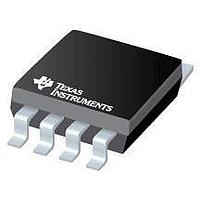
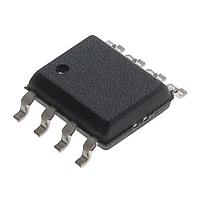
This category includes solutions from established semiconductor manufacturers such as Melexis and Texas Instruments. Within the available range, Melexis MLX75305 variants illustrate compact SMD/SMT light-to-voltage conversion for designs operating from low supply voltages, while Texas Instruments OPT101 series devices are well known for combining a photodiode with integrated amplification in a single package.
Examples such as the Melexis MLX75305KXD-AAA-000-SP and MLX75305KXD-ABA-000-TU show how similar device families may differ in responsivity while targeting the same basic optical conversion task. On the Texas Instruments side, OPT101P-J and OPT101P-JG4 represent integrated optical sensing options for engineers who want a simpler path from light detection to analog output without building a separate transimpedance stage from scratch.
Key selection criteria
The first factor to review is output type. If your control board already includes analog acquisition hardware, a light-to-voltage device may be the most direct choice. If your design benefits from pulse counting, long trace routing, or digital timing methods, a light-to-frequency architecture may be preferable.
Next, consider spectral response and peak wavelength. The listed products show examples centered around 650 nm and 850 nm, which can matter significantly if the sensor is paired with a specific LED, IR source, or optical filter. Supply range, operating current, package style, and temperature range also affect suitability, especially for embedded industrial designs where power budget, board space, and environmental conditions are tightly constrained.
It is also important to think about the measurement chain as a whole. Responsivity, frequency range, and signal conditioning behavior should be matched to the expected light level, optics, and target resolution. If the application needs discrimination between hues rather than intensity alone, color sensors may be the more appropriate path.
Application considerations for real-world deployment
In practical use, these devices are rarely selected by datasheet headline values alone. Engineers typically evaluate the emitter wavelength, distance to target, reflectivity of the surface, ambient light interference, and mechanical alignment. A converter that performs well in a lab setup may behave differently once enclosed in an industrial assembly with windows, lenses, or protective covers.
Temperature behavior is another important factor. Some devices in this category support extended temperature operation, which can be useful in outdoor equipment, automotive-adjacent electronics, or machinery exposed to thermal cycling. Packaging also matters for assembly flow, especially in SMT-based production where moisture sensitivity and reflow handling need to be considered during procurement and manufacturing planning.
How these devices relate to adjacent sensor categories
Although these parts are optical in nature, they serve a different purpose from many application-ready sensor families. For example, a light-conversion component is often chosen when the designer wants direct control over optics, thresholds, amplification strategy, and downstream processing. That makes it a strong fit for custom sensing modules and OEM designs.
By comparison, categories such as air quality sensors or flow sensors address very different physical variables and usually come with their own dedicated sensing principles and compensation methods. Understanding this distinction helps buyers avoid selecting a component that measures light correctly but does not match the actual parameter the system is intended to monitor.
Choosing the right device for your design stage
If you are still defining the sensing concept, start with the required output interface, expected wavelength, and whether the system measures transmitted, reflected, or ambient light. Then narrow the shortlist by supply voltage, package format, operating temperature, and integration level. This usually leads to a more efficient selection process than comparing product codes first.
For teams optimizing BOM complexity, integrated options like the OPT101 family can reduce the need for external analog front-end design. For compact embedded systems built around low-voltage operation and specific optical response targets, MLX75305 variants can be a useful reference point within the category. The right choice depends less on brand preference and more on how the sensor output fits the signal-processing architecture of the final product.
Final thoughts
Light to Frequency & Light to Voltage products are best understood as interface-oriented optical sensors: they simplify the step from incident light to a readable electrical signal. For industrial electronics, embedded control, and custom sensing assemblies, that can translate into faster development, fewer external components, and more predictable signal handling.
When comparing available options, focus on output behavior, wavelength compatibility, operating conditions, and integration needs rather than selecting by part family alone. A well-matched device will make the rest of the optical measurement chain easier to design, validate, and maintain over time.
Get exclusive volume discounts, bulk pricing updates, and new product alerts delivered directly to your inbox.
By subscribing, you agree to our Terms of Service and Privacy Policy.
Direct access to our certified experts