Sensor Hardware & Accessories
Reliable sensing depends on more than the sensor itself. In many industrial installations, the mechanical mount, reflector, cable, bracket, locknut, or protective hardware has a direct impact on alignment, repeatability, signal quality, and long-term maintenance. That is why Sensor Hardware & Accessories plays an important role in building stable, serviceable sensing systems across factory automation, machine building, and process environments.
This category brings together the supporting components used to install, protect, adapt, and optimize sensor setups. Whether you are working with photoelectric sensing, fiber optic arrangements, edge guiding systems, or proximity sensor assemblies, the right accessory helps reduce installation time and improves consistency in real operating conditions.
Why accessories matter in sensor integration
In industrial automation, a sensor may have the right detection principle, but performance can still be limited by poor mounting, vibration, contamination exposure, or misalignment. Accessories help address these practical issues by providing the physical interface between the sensing device and the machine or production line.
Mounting hardware, reflectors, fiber optic cables, and interface blocks all support more reliable operation. They can make adjustments easier during commissioning, help maintain beam position over time, and simplify replacement when maintenance is required. For engineering teams, these details often have a measurable effect on uptime and inspection consistency.
Typical products found in this category
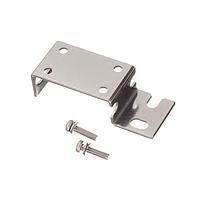
This range includes components used alongside many different sensor types rather than standalone sensing devices only. Examples from the category include the Eaton E51KT123 fiber optic cables for diffuse and fiber optic sensor applications, the Eaton E57KNM8 steel locknuts for E57 series inductive proximity sensors, and the Eaton 6161AS1150 mounting bracket for Comet Series compatibility.
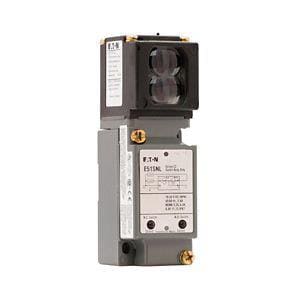
For optical systems, accessories such as the Banner Engineering BRT-150X18A rectangular reflector and Banner Engineering BRT-.6-25 circular reflector help create or improve retroreflective sensing arrangements. Additional installation and system support items such as the Banner Engineering PBT-1 power block, SMB700 optical edgeguide mounting bracket, and OTC-1-YW protective field cover illustrate how this category supports both setup and ongoing operation.
Common application areas
Sensor hardware and accessory components are used across packaging lines, conveyor systems, assembly machinery, material handling equipment, and inspection stations. In these environments, integrators often need brackets for precise positioning, reflectors for photoelectric detection paths, or cable and mounting elements that fit within constrained machine layouts.
They are also relevant when upgrading legacy equipment. Instead of redesigning an entire sensing point, teams may improve performance by replacing worn reflectors, adding a more suitable bracket, or selecting fiber optic components that better match the detection geometry. In many cases, accessories provide a practical route to improve system reliability without changing the complete sensor architecture.
How to choose the right sensor hardware
A good selection process starts with the sensor technology already in use. Optical sensors may require reflectors, beam alignment supports, or fiber optic accessories, while inductive sensors often depend on proper thread hardware and mounting stability. The correct accessory should match the sensor family, intended mounting method, and the mechanical conditions of the machine.
It is also important to consider environmental and maintenance factors. Material choice, mounting orientation, available space, vibration, temperature exposure, and service access all influence which accessory is appropriate. A stainless steel bracket, for example, may be preferred in demanding industrial areas, while protective covers can help prevent accidental activation or reduce unnecessary operator interaction in touch-based sensor interfaces.
If your application is still being defined, reviewing adjacent sensing technologies can also be useful. Some projects combine accessory hardware with devices from related categories such as ambient light sensors, color sensors, or flow sensors & pitot tubes depending on the measurement objective.
Representative manufacturers and ecosystem fit
This category supports a broad industrial ecosystem, with accessory needs varying by sensing method and machine design. Brands such as Banner Engineering and Eaton are represented through practical hardware items used for mounting, targeting, cable routing, and sensor installation support.
At the same time, the wider sensing landscape includes manufacturers known for active sensing components, such as ams OSRAM and Broadcom. Products like the ams OSRAM SFH3410R ambient light sensor, ams OSRAM SFH3716, SFH7074 high power IR LED, and the Broadcom AVSP-9104-003 show how accessories fit into a broader design chain where emitters, detectors, and mechanical hardware all need to work together. In engineered systems, accessory selection should always be considered part of the full sensing solution rather than an afterthought.
Support for optical and proximity sensor setups
Many of the products in this category are especially relevant to optical sensing and proximity-based detection. Reflectors are essential in many retroreflective arrangements, while fiber optic cables allow sensing points to be routed into spaces where a conventional sensor body may not fit. Brackets and mounting assemblies help maintain the position and angle required for stable detection performance.
For threaded proximity sensors, small components such as locknuts may appear simple, but they are important for repeatable installation depth and mechanical retention. Where optical edgeguide or beam-based systems are used, accessory hardware often determines how accurately the system can be aligned and how easily it can be serviced later. That is particularly valuable in applications where product position, web tracking, or object presence must be monitored continuously.
Selection considerations for maintenance and replacement
When sourcing replacement hardware, compatibility is usually the first priority. Buyers should confirm the intended sensor series, mounting format, and functional role of the accessory, whether that means fastening, beam reflection, protective coverage, or signal path support. Even simple parts can affect installation geometry, so matching the original use case matters.
It is also worth thinking about future maintenance efficiency. Standardized brackets, replaceable reflectors, and clearly matched accessory parts can reduce downtime during service. For OEMs and maintenance teams alike, choosing accessories that support quick installation and predictable fit can make spare parts planning much easier over the life of the equipment.
Building a more reliable sensing system
Choosing sensor accessories well is often what turns a workable design into a dependable one. The right combination of mechanical support, alignment aids, and protective elements helps sensors perform more consistently in production, while also making systems easier to install and maintain.
Whether you are specifying parts for a new machine or replacing components in an existing line, this category helps connect the sensor to the real conditions of the application. By selecting accessories that match the sensing principle, installation method, and operating environment, teams can create sensor setups that are more robust, easier to service, and better suited to long-term industrial use.
Get exclusive volume discounts, bulk pricing updates, and new product alerts delivered directly to your inbox.
By subscribing, you agree to our Terms of Service and Privacy Policy.
Direct access to our certified experts