
Motor Drives
Precise motor control is a core requirement in modern equipment, from cooling systems and compact actuators to automated machinery and motion subassemblies. When engineers source Motor Drives, they are usually balancing torque, speed regulation, control method, power architecture, and integration with the wider automation system.
This category brings together components and drive solutions used to control different motor types in industrial and embedded applications. Whether the project involves a fan motor, an H-bridge design, a PWM-based controller, or a compact motion stage, the right drive electronics help improve responsiveness, efficiency, and overall system stability.
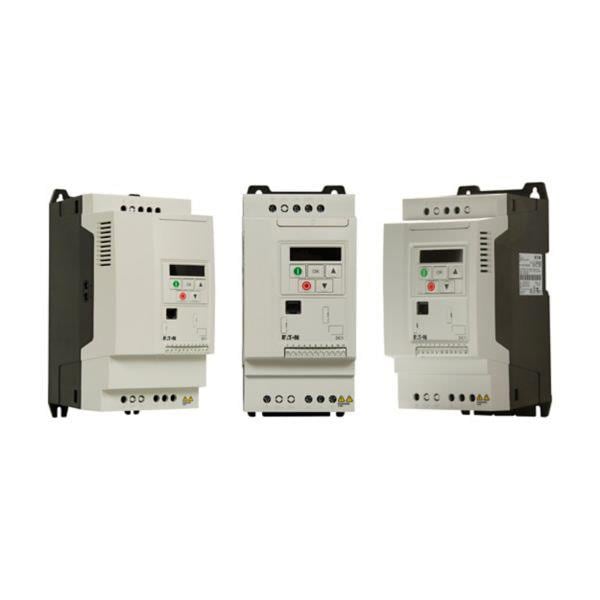
Where motor drives fit in an automation system
A motor drive is the control layer between the power source, the command signal, and the motor itself. Its role can include switching, speed control, direction control, current handling, and in some cases more refined functions such as stepping or microstepping. In practical terms, this makes motor drives essential wherever repeatable motion or controlled rotation is needed.
In industrial automation, motor drives are often selected alongside related control and protection hardware. For example, they may work with industrial controllers for logic and sequencing, while upstream protection can be coordinated with circuit protection devices to support safer operation and longer equipment life.
Common drive architectures in this category
This category includes several familiar control approaches used across compact and embedded motion systems. H-bridge motor drivers are widely used where bidirectional control is required, while full-bridge devices are a common fit for DC motor applications that need forward and reverse operation under logic control.
There are also solutions oriented toward PWM motor control, which is often used to adjust motor speed efficiently by modulating the applied drive signal. For more specialized motion needs, the range may include devices designed for fan motors, BLDC fan drive tasks, and voice coil applications, each serving different control priorities such as speed regulation, smooth actuation, or compact implementation.
Examples in this category illustrate that variety well. The Allegro MicroSystems A5941GLNTR-T 3-phase fan driver and Allegro MicroSystems A4945KLJTR-T BLDC fan driver are relevant for fan control scenarios, while the Asahi Kasei Microdevices (AKM) AP1016AEN and AP1013DEN show the H-bridge side of the category. Devices such as the Allegro MicroSystems L6219DSTR-T PWM motor controller and A3992SB-T full bridge motor driver are more aligned with projects that require controlled switching and motion management at the driver IC level.
How to choose the right motor drive
The first selection step is to match the drive to the motor type and control method. A DC motor, a fan motor, a BLDC design, and a voice coil actuator do not share the same drive requirements. Choosing by application first usually avoids unnecessary redesign later, especially when control signals, power rails, and thermal constraints are already fixed in the system.
Next, look at the electrical and mechanical demands of the application. Engineers typically review supply voltage compatibility, current handling, control interface expectations, and the need for direction control, speed regulation, or stepping behavior. Package style can also matter if board space, thermal dissipation, or assembly method is a constraint.
It is also helpful to consider how the drive will interact with adjacent hardware. In many panels and machine builds, motor drives are not standalone parts; they sit within a wider ecosystem that may also include contactors for power switching and counters and tachometers for motion feedback or speed verification.
Representative manufacturers and product examples
Several established suppliers appear prominently in this category, each relevant to different design priorities. Allegro MicroSystems stands out here with examples covering fan drivers, full-bridge motor drivers, PWM motor control, and general motor driver/controller functions. That breadth is useful for designers working across multiple motion-control tasks while keeping sourcing within a familiar component ecosystem.
Asahi Kasei Microdevices (AKM) is represented by H-bridge devices such as the AP1016AEN and AP1013DEN, which are suitable reference points for compact bidirectional motor control. Diodes Incorporated also appears in this category with the AH286-YL-13 fan motor speed controller, highlighting the overlap between motion control and thermal-management hardware where fan speed adjustment is part of the design requirement.
Other listed products add context around how broad the category can be. The Allegro MicroSystems A3917ECGTR voice coil motor driver reflects motion applications beyond standard rotary motors, while the Adafruit 4489 and Eaton CI-PKZ0-GRM indicate that users browsing this category may be sourcing both core drive electronics and supporting motion-related items depending on project scope.
Application areas for motor drives
Motor drives in this category can support a wide range of B2B use cases. Typical examples include cooling fans in control cabinets, compact conveyor or feeder mechanisms, lab and test equipment, embedded robotic modules, positioning assemblies, and custom control boards used in OEM products. The exact implementation depends on whether the requirement is simple speed control, directional control, or more refined motion behavior.
Fan-oriented drive ICs are especially relevant in systems where airflow must be controlled rather than simply switched on and off. H-bridge and full-bridge drivers are more commonly used in motion tasks that need reversal or controlled actuation. Voice coil driver devices, meanwhile, are better suited to applications where very compact linear movement or precise actuator response is part of the design.
Where machine vision or inspection systems include moving elements, drive electronics may also be specified alongside sensing and imaging components such as cameras and accessories. This reflects the broader reality of automation design: motion control rarely exists in isolation from control, sensing, and protection.
Selection considerations for procurement and engineering teams
For procurement teams, the key challenge is often not just finding a motor driver, but finding one that aligns with the intended design architecture. Product descriptions should therefore be reviewed in terms of motor category, control style, and packaging rather than by part number alone. This helps reduce sourcing mismatches when multiple similar ICs exist in the same family.
For design engineers, the practical focus is usually system fit. A part may be technically capable, but still unsuitable if it complicates PCB layout, thermal design, firmware strategy, or signal interfacing. Looking at the category through application logic instead of only component labels makes comparison easier and supports faster shortlisting.
Finding the right fit for your project
The best way to evaluate this category is to start from the motion task itself: what motor is being driven, what kind of control is required, and how the drive will connect to the rest of the system. From there, it becomes easier to compare fan drivers, H-bridge devices, PWM controllers, and other motor-control components with the right level of specificity.
For OEM development, machine retrofits, or embedded control design, a well-matched motor drive can simplify integration and improve control performance across the entire application. Browsing the available products by motor type, control approach, and manufacturer is often the fastest route to identifying a practical shortlist for engineering review.
Get exclusive volume discounts, bulk pricing updates, and new product alerts delivered directly to your inbox.
By subscribing, you agree to our Terms of Service and Privacy Policy.
Direct access to our certified experts
