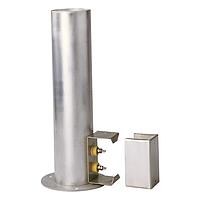
Duct and Enclosure Heaters
Maintaining stable air temperature inside ducts, cabinets, and process enclosures is critical in many industrial systems. Whether the goal is freeze protection, airflow heating, drying, or equipment temperature control, Duct and Enclosure Heaters are used where heat must be applied directly and predictably within a confined air path or housing.
In industrial HVAC, air dryers, and heating equipment, the right heater selection helps support process consistency, protect components, and improve system response. This category focuses on inline electric heating solutions designed for controlled air heating, with models suited to different power levels, mounting arrangements, and electrical requirements.
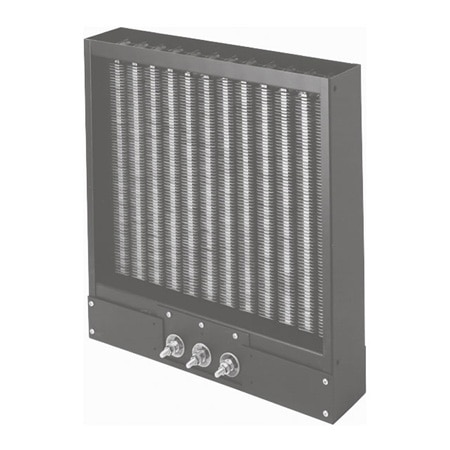
Where duct and enclosure heaters are used
These heaters are commonly installed in air handling paths and enclosed equipment spaces where a compact, direct heating method is needed. Typical applications include HVAC air systems, air dryers, heating equipment, and industrial enclosures that require warm, circulating air to maintain operating conditions.
Compared with open-area heating methods, this product group is better suited to installations where airflow direction, temperature rise, and space constraints matter. For systems that heat air within a defined path, inline duct heaters provide a practical way to deliver heat where it is needed without redesigning the full air circuit.
Typical configuration features in this category
The products highlighted here are centered on inline electric duct heater designs from OMEGA. Across the range, common characteristics include stainless steel sheath construction, 3-phase power options, and configurations intended for air and HVAC service.
Several models support outlet air temperatures up to 440 °F, making them relevant for demanding industrial air heating tasks. The available range also spans different power classes, from 12 kW units for smaller systems up to 50 kW versions for higher-capacity heating duties, helping buyers match heater output to airflow and process demand.
How to choose the right heater for your system
A good starting point is to define the application clearly: airflow volume, required temperature rise, available supply voltage, mounting constraints, and control strategy. In this category, power options include 12 kW, 20 kW, 25 kW, 30 kW, 40 kW, and 50 kW, with supply voltage examples such as 208 Vac, 240 Vac, and 480 Vac.
It is also important to review the number of circuits, connection location, and physical dimensions before specifying a unit. In practice, engineers often compare not just heater power, but also how the heater fits the duct section or enclosure, how electrical access is arranged, and whether the installation prefers a face or bottom connection layout.
For applications outside air-path heating, a different heater style may be more suitable. For example, liquid tanks and process vessels are often better served by immersion heaters, while direct contact heating of metal tooling or surfaces may point toward cartridge heaters.
Examples from the available range
For higher-capacity systems, models such as the OMEGA CABB-5011/480/3P and OMEGA CAB-5011/480V/3P illustrate 50 kW inline heater options designed for 480 Vac, 3-phase installations. Mid-range requirements may align more closely with models like the CABB-4011/480/3P, CAB-3011/480V/3P, or CAB-2511/480V/3P, depending on the required output and connection style.
Where a smaller heating load is sufficient, the 12 kW class offers additional flexibility. Examples include the OMEGA CABB-1211/480/3P, CABB-1211/240/3P, and CABB-1211/208/3P, which show how similar heater formats can be matched to different supply voltages without changing the overall application concept.
Understanding face and bottom connection options
Within this category, one meaningful difference between models is the connection location. Some heaters are configured with face connections, while others use bottom connections. This affects installation access, cable routing, panel clearance, and maintenance convenience rather than changing the core heating principle.
In compact equipment layouts, the connection side can make a noticeable difference to serviceability. When selecting between comparable units, buyers should consider not only electrical rating and heat output, but also how the heater will integrate into the surrounding ductwork, enclosure wall, or support frame.
Material, power density, and operating considerations
The listed models use stainless steel sheath material, which is widely preferred in industrial heater construction for durability and resistance in air heating environments. Another useful reference point is power density, shown here at up to 26 W/in² on the featured models. Power density helps indicate how heat is distributed across the element surface and can influence operating performance and heater life in the intended airflow conditions.
System designers should also confirm that airflow is appropriate for the heater rating and that controls are chosen to maintain safe operating conditions. Even when a heater is sized correctly on paper, the real installation must still account for air movement, control response, overtemperature protection, and the full thermal behavior of the equipment.
How this category fits within industrial heating systems
Duct and enclosure heaters serve a specific role inside the broader industrial heating landscape. They are most relevant when the medium being heated is air in a defined passage or enclosed volume. If the application calls for broad non-contact heat, radiant heaters may be worth reviewing, while panel or surface-mounted heating tasks may align better with strip heaters.
This distinction matters because heater performance depends heavily on where and how the heat is transferred. Choosing by application type first, then narrowing by power, voltage, dimensions, and connection layout, usually leads to a better result than selecting by wattage alone.
Final considerations before ordering
Before finalizing a heater, verify the available supply voltage, phase, required kW output, duct or enclosure dimensions, and preferred connection orientation. It is also worth checking whether the application is continuous-duty air heating, intermittent process support, or environmental protection for an enclosure, since each may influence sizing and control decisions.
This category is designed for buyers who need a practical range of industrial air heating options with clear electrical and mechanical differences. By comparing output level, mounting style, and installation details carefully, it becomes much easier to select a duct or enclosure heater that fits the system rather than forcing the system to fit the heater.
Get exclusive volume discounts, bulk pricing updates, and new product alerts delivered directly to your inbox.
By subscribing, you agree to our Terms of Service and Privacy Policy.
Direct access to our certified experts