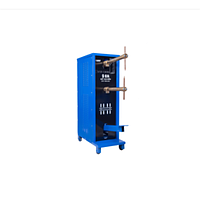
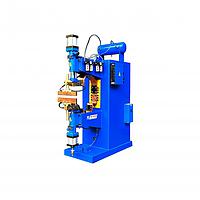
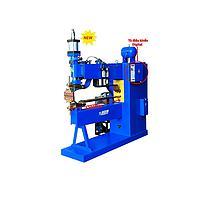
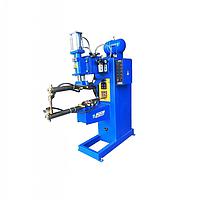
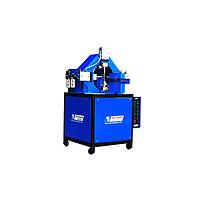
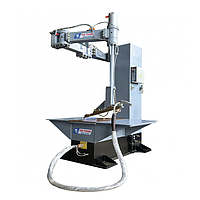
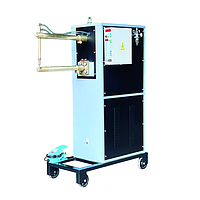
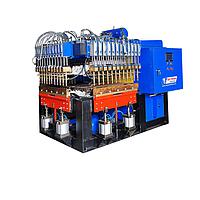
Spot welding machine
In sheet metal fabrication, wire processing, and light industrial assembly, joining two parts quickly without adding filler material can make a major difference in throughput and consistency. That is why spot welding machines remain a practical choice for many workshops and production lines, especially where repeated weld points, thin metal sections, and stable cycle times are required.
This category brings together equipment designed for resistance spot welding across a range of capacities, from compact foot-operated models for lighter work to larger pneumatic systems for heavier-duty or multi-point applications. If you are comparing machines for manual operation, semi-automatic production, or higher-output factory use, the selection here helps narrow down the right configuration for your process.
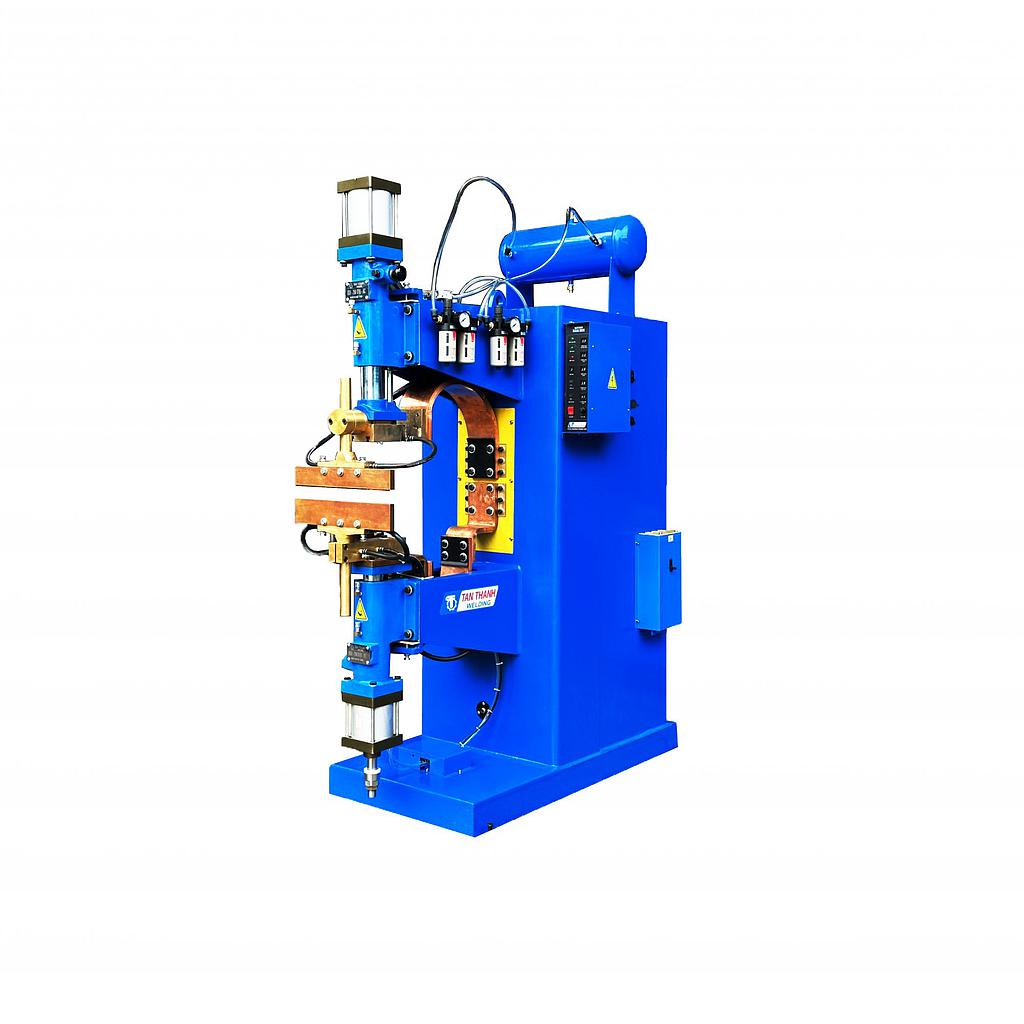
Where spot welding machines are commonly used
Resistance spot welding is widely used when two overlapping metal parts need to be joined at specific points with speed and repeatability. Typical applications include sheet metal cabinets, brackets, frames, wire products, light steel assemblies, and production components where a neat weld point is preferred over a longer seam.
Compared with some general-purpose welding methods, spot welding is often chosen for repetitive tasks and controlled production environments. For manufacturers handling thin materials or repeated joining points, it can support faster operation and more uniform results. In broader fabrication workflows, users may also compare this category with equipment such as a plasma cutter when both cutting and joining are part of the same process.
Main machine types in this category
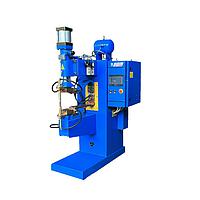
The product range in this category covers several common machine formats. Foot pedal machines are often suitable for small workshops and routine fabrication tasks, where an operator needs direct control over part positioning and weld timing. Examples include the Tân Thành HB4.5KVA, HB9KVA, and HB15KVA foot pedal operated spot welding machines, which represent different capacity levels for increasing material thickness and workpiece size.
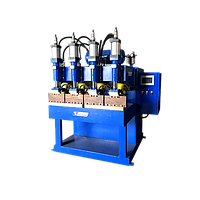
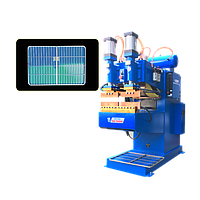
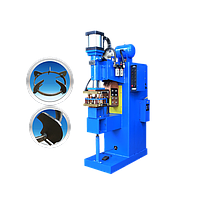
For larger production demands, pneumatic spot welding machines are a better fit when more pressing force, repeatable cycles, and reduced operator effort are needed. Models such as the Tân Thành HBH35KVA-AC, HBH50KVA-AC, HBH75KVA-AC, and HBH100KVA-AC illustrate this heavier-duty approach, while specialized options like the HBH150KVA multi-point pneumatic spot welding machine and the HB2DAU or HB4DAU multi-head welding machines are relevant where productivity and multiple weld points are priorities.
How to choose the right spot welding machine
The first point to evaluate is the material and thickness you plan to weld. Lighter machines are generally used for thinner sheets and smaller wire diameters, while higher-capacity systems are more appropriate for thicker materials, larger parts, or production settings that require stronger and more consistent weld pressure. Input power supply also matters, since this category includes both 220V and 380V machines.
Next, consider the operating method. A foot pedal machine gives simple manual control and can be effective for flexible bench or floor work. A pneumatic spot welding machine is usually more suitable when repeatability, higher clamping force, and faster production cycles are important. Cooling method is another practical factor, especially in repeated-duty environments where fan, water, or combined cooling helps support stable operation.
It is also worth checking throat depth, working height, and general machine size in relation to your parts. These details affect how easily an operator can position components and whether the machine will suit your workspace. For buyers already reviewing broader joining options, categories such as transformer welding machines or multi-function welding machines may be useful for process comparison.
Representative products and capacity range
This selection includes both compact and industrial-scale equipment. On the lighter end, the Tân Thành HB4.5KVA foot pedal model is aimed at thinner workpieces and smaller production requirements. Moving upward, the HB9KVA and HB15KVA versions provide more welding capacity for users who need to handle a wider thickness range while keeping a familiar foot-operated workflow.
For larger output and heavier materials, pneumatic AC models such as the HBH35KVA-AC, HBH50KVA-AC, HBH75KVA-AC, and HBH100KVA-AC expand the category into more demanding factory applications. The Tân Thành HBH50KVA-DC offers another configuration within the pneumatic segment, while multi-point and multi-head machines can support specialized setups where several weld locations must be completed efficiently in one process.
This category also includes the Hồng Ký HK-HB10KB electronic press welder, which adds another option for users looking at practical press-type resistance welding equipment from an established manufacturer. For buyers focusing on this supplier range, the Tân Thành lineup offers the widest spread of foot pedal, pneumatic, and multi-head spot welding solutions in the current selection.
Operational considerations for workshop and factory use
A good machine match is not only about KVA rating. In real production, performance also depends on electrode access, workpiece shape, operator handling, cooling stability, and expected duty cycle. A machine that is oversized for the job may add unnecessary space and power requirements, while an undersized unit can limit productivity or weld consistency.
For workshops with mixed jobs, simpler manually controlled equipment may provide flexibility. For repetitive runs, heavier pneumatic systems are often preferred because they help maintain consistent electrode pressure and reduce variation between welds. This becomes increasingly important in production work involving repeated weld points on similar components.
Brand options in this category
The current range highlights two key manufacturers: Hồng Ký and Tân Thành. Hồng Ký appears here with an electronic press welder suited to resistance welding applications, while Tân Thành covers a broader spread of machine sizes and operating formats, from entry-level foot pedal models to large pneumatic and multi-head systems.
For many B2B buyers, brand selection is closely tied to application type rather than name alone. A smaller fabrication shop may prioritize a straightforward foot-operated machine, while a factory environment may focus more on pneumatic control, water cooling, and larger capacity. Reviewing the available model structure by manufacturer can make comparison easier when you already know your production method and power supply conditions.
Choosing with the application in mind
If your work involves light sheet assemblies, wire products, or small metal parts, a compact machine with moderate capacity may be sufficient. If your process requires heavier overlap joints, larger diameters, or repeated operation over longer periods, moving up to a pneumatic model is often the more practical route. Multi-point or multi-head solutions become relevant when cycle time reduction is a core objective.
Overall, this category is best approached by matching the machine to actual part geometry, material thickness, production volume, and available power source. By comparing operating style, capacity, and cooling method across the listed models, buyers can identify a spot welding machine that fits both present production needs and future workflow expansion.
Get exclusive volume discounts, bulk pricing updates, and new product alerts delivered directly to your inbox.
By subscribing, you agree to our Terms of Service and Privacy Policy.
Direct access to our certified experts