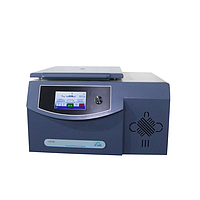
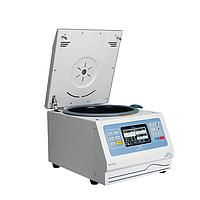
Centrifuge
Separating particles by density is a routine step in many laboratory workflows, from clinical sample preparation to molecular biology and general research. Choosing the right centrifuge affects not only throughput, but also sample integrity, safety, and day-to-day convenience in the lab.
This category brings together benchtop and high-capacity centrifuge options used for tube-based processing, micro-volume applications, refrigerated operation, and clinical routines. Whether the priority is higher g-force for small samples or larger bucket capacity for batch processing, the selection should match the rotor format, temperature needs, and expected workload.
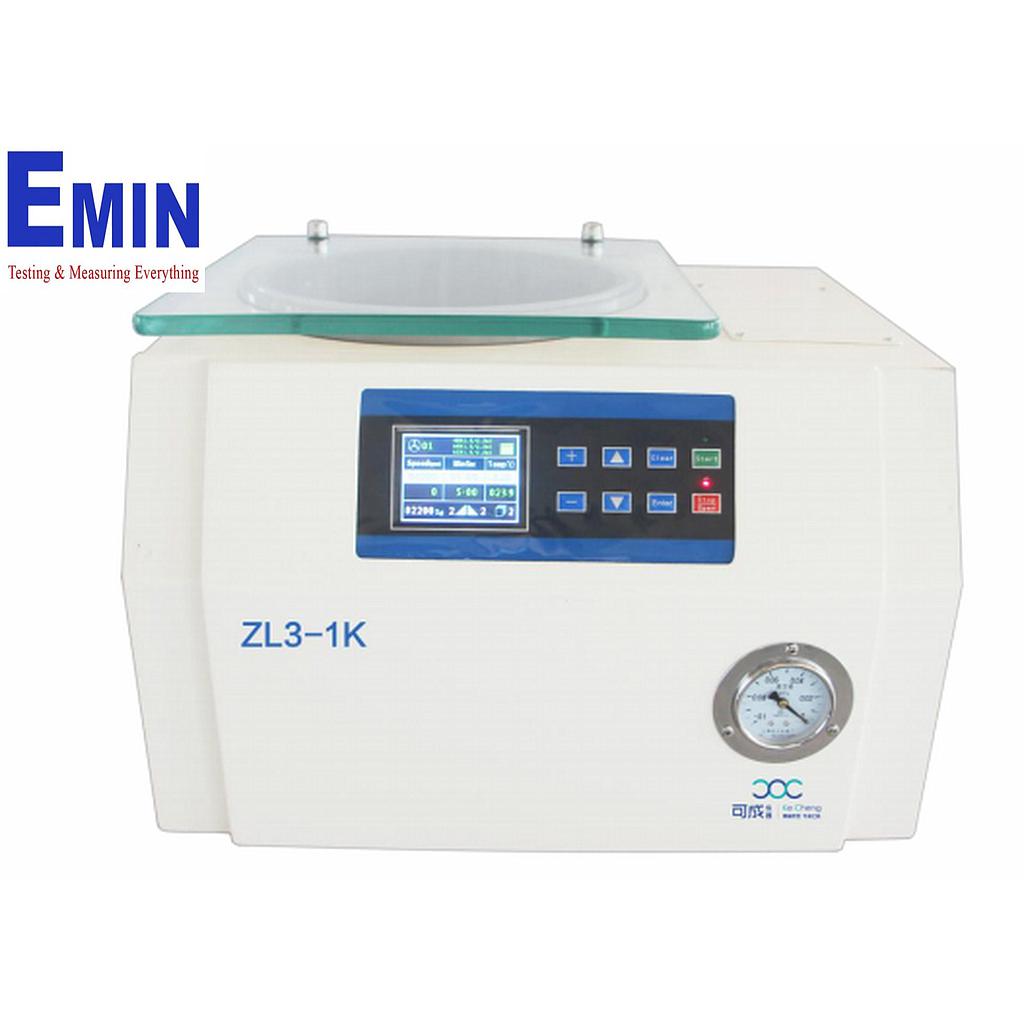
How centrifuges support laboratory separation tasks
A centrifuge works by generating centrifugal force, causing particles with different densities to separate more quickly than they would under normal gravity. In practical terms, this makes it possible to isolate cells, precipitates, serum, plasma, nucleic acids, or other components depending on the sample type and protocol.
Performance is often considered through speed and RCF rather than RPM alone, because actual separation efficiency depends on both rotational speed and rotor geometry. This is why rotor selection matters as much as the motor specification: the same instrument may support different applications depending on the rotor and tube configuration being used.
Common centrifuge types found in laboratory use
Laboratories rarely need only one style of centrifuge. Small-volume workflows often rely on micro or high-speed units for rapid spin-down, while routine clinical or general-purpose tasks may require larger tube capacity and simpler operation. For temperature-sensitive samples, refrigerated models help maintain process stability during longer runs or high-speed operation.
Within this category, the range includes compact clinical and benchtop units, high-speed models for smaller tubes, swing-out configurations for larger sample volumes, and refrigerated systems for applications where heat buildup may be a concern. Some platforms also support microplates, which is useful in screening, assay preparation, and multi-sample workflows.
What to consider when selecting a centrifuge
The first question is usually the sample format. Tube size, number of samples per run, and whether the workflow uses fixed-angle or swing-out rotors will narrow the options quickly. Small research labs may prioritize flexibility across multiple rotor formats, while routine testing environments often focus on repeatability and easy loading.
Another major factor is whether refrigerated operation is necessary. If your process involves biological samples, enzymes, temperature-sensitive reagents, or longer spin times, controlled cooling can be important. Noise level, footprint, timer range, and safety features such as lid interlock, imbalance monitoring, and overspeed protection also become increasingly relevant in busy laboratory settings.
For broader lab workflow planning, it may also be useful to review related equipment such as laboratory blenders for sample preparation or laboratory apparel for safer routine operation.
Representative models in this category
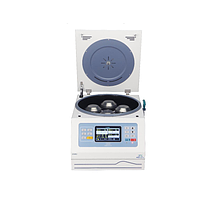
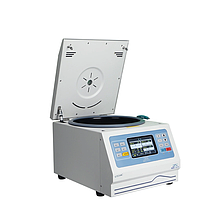
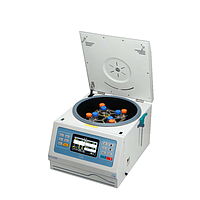
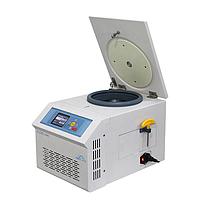
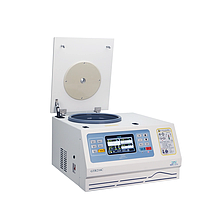
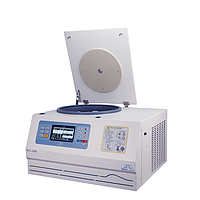
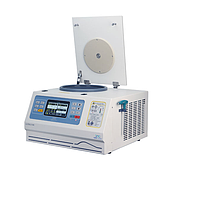
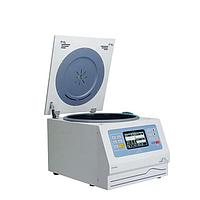
Several products in this range illustrate how centrifuge selection changes with application. For high-speed tube-based work, the DaiHan CEF-100H and DaiHan CEF-100HR are suited to users who need stronger centrifugal force for microtubes and small-volume tubes, with the refrigerated version adding temperature control for more sensitive protocols.
Where larger containers and swing-out buckets are preferred, models such as the DaiHan CEF-250R, DaiHan CEF-500, and DaiHan CEF-1000R are more aligned with higher-volume processing. These are useful examples of how capacity and rotor style can take priority over maximum speed, especially in routine separation tasks involving multiple larger tubes or plate-based work.
For clinical and specialized applications, the DaiHan CEF-50 and DaiHan CEF-15 address general-purpose tube centrifugation, while the DaiHan CEF-MHT is designed for microhematocrit workflows. In the compact high-speed segment, the DaiHan CFH-24 and refrigerated CFH-24R show a different balance of speed, small sample handling, and bench efficiency. The CRYSTE Velospin 17R is another example of a multi-purpose refrigerated centrifuge platform for labs needing a broader operating envelope.
Key design elements that influence daily operation
A centrifuge is more than a motor and a spinning rotor. Stable operation depends on the interaction between the drive system, rotor compatibility, chamber design, and the control interface. Brushless motor designs are commonly valued for smoother operation and reduced maintenance compared with older brushed systems.
Safety is equally important. Typical protections in modern laboratory centrifuges include lid locking, overspeed detection, imbalance monitoring, and alarm or diagnostic functions. These features help protect both the operator and the samples, especially when instruments are used repeatedly throughout the day by multiple users.
Capacity also affects workflow efficiency. A compact benchtop unit may be ideal for small sample batches, while a floor-standing or high-volume model can reduce total processing time in labs that handle larger numbers of samples. If your laboratory uses a broader ecosystem of products from the same supplier, you can also explore DaiHan equipment or related DaiHan laboratory products for a more consistent setup.
Good operating practice for centrifuge use
Correct loading is essential to both safety and performance. Tubes should be balanced by mass and placed symmetrically in the rotor, and the selected rotor should match the tube type and fill volume specified for the application. Even a well-designed instrument can be affected by vibration, noise, or reduced separation quality if the load is not properly balanced.
Users should also confirm speed, time, and where applicable, temperature settings before starting a run. Routine cleaning of the chamber and rotor area helps prevent contamination and corrosion, while regular inspection of tubes, adapters, and rotor surfaces supports long-term reliability.
Finding the right fit for your laboratory
The most suitable centrifuge depends on what your lab processes every day rather than on maximum speed alone. A clinical routine may require a straightforward low- to medium-speed unit, while molecular or analytical work may call for higher RCF, compact rotors, or refrigerated control. Capacity, rotor style, sample sensitivity, and workflow volume should all be considered together.
This category covers a practical range of centrifuge options for laboratories that need dependable sample separation across different scales. By focusing on the actual sample format and process requirements, it becomes easier to identify a model that supports consistent results, safer operation, and more efficient lab work.
Get exclusive volume discounts, bulk pricing updates, and new product alerts delivered directly to your inbox.
By subscribing, you agree to our Terms of Service and Privacy Policy.
Direct access to our certified experts