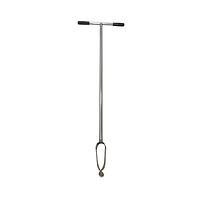
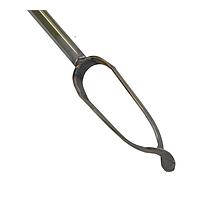
Soil Samplers
Reliable soil investigation starts with getting a representative sample. In geotechnical work, environmental monitoring, agriculture, and site preparation, the quality of the sample often determines how useful the downstream test results will be. This is why choosing the right Soil Samplers matters not only for field efficiency, but also for data confidence.
This category brings together practical tools for collecting disturbed or near-intact soil samples from different ground conditions. From hand augers and split-core sampling sets to extraction accessories and impact tools, these products are designed to support routine field sampling, profile inspection, and basic subsurface investigation.
What this category is used for
Soil sampling equipment is commonly used when engineers, technicians, and field teams need to assess soil composition, moisture behavior, contamination potential, or basic stratification. Depending on the method, a sampler may be used to recover material for laboratory analysis, on-site observation, or process control during construction and environmental work.
In many projects, manual sampling tools remain a practical choice because they are portable, fast to deploy, and suitable for shallow to moderate depths. They are especially useful where access is limited, where power equipment is unnecessary, or where operators need flexibility across changing soil conditions.
Typical tools included in soil sampling workflows
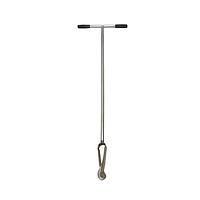
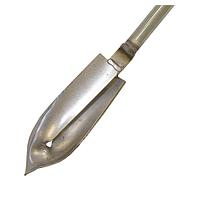
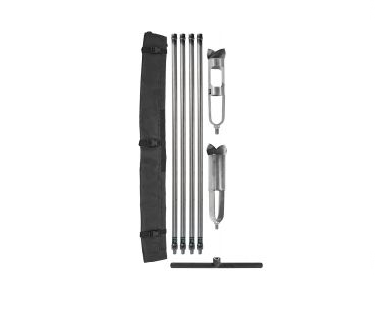
This category covers more than a single type of sampler. A complete field setup often combines augers, extension rods, cross handles, liners, extraction tools, and impact accessories so operators can adapt to soft ground, cohesive soils, or more resistant layers.
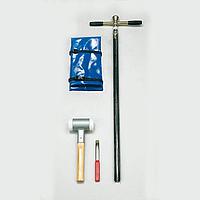
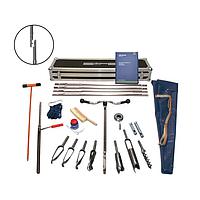
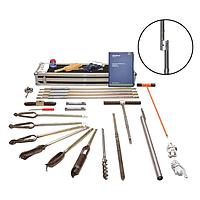
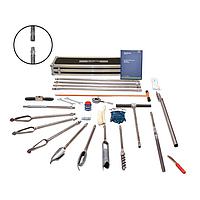
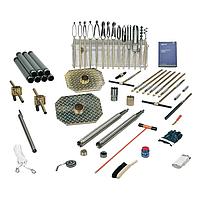
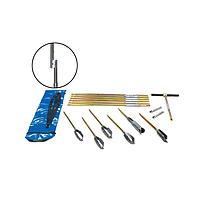
For example, the AMS 402.23 2 1/4" Professional Soil Sampling Kit is built around a practical field kit concept, combining augers, extensions, a split-core sampler, liner components, and carrying accessories in one package. For routine manual boring and sample recovery, the Matest S052 KIT offers another compact approach for field teams that need a transportable auger-based setup.
Choosing between kits, accessories, and extraction tools
The right selection depends on how often the equipment will be used and how varied the field conditions are. A full sampling kit is often the best starting point when teams need a ready-to-use solution for manual boring and sample collection. It reduces the need to assemble separate components and helps standardize field procedures.
Accessories become more important when the sampling process involves deeper reach, difficult extraction, or repeated work across mixed soil profiles. Tools such as slide hammers and rock breaker attachments support recovery and penetration when manual pulling alone is not enough. If your work also involves broader sample collection tasks beyond this page, it may be useful to compare related options in sludge and sediment samplers.
Examples of field equipment in this range
Several products in this category illustrate how a soil sampling system is built in practice. The AMS 215.06 Hand Vacuum Pump serves a more specialized supporting role where vacuum-assisted handling is needed. Slide hammer models such as the AMS 58506 Hex Quick Pin Slide Hammer, AMS 57780 Professional Slide Hammer, and AMS 350.96 Compact Slide Hammer help with tool extraction and impact-assisted operation in the field.
For tougher ground, the AMS 424.00 5/8" Threaded Rock Breaker Kit and AMS 424.001 3/4" Rock Breaker Kit are intended to work with compatible slide hammer setups to break through resistant material. Supporting hand tools such as the AMS 410.01 Montana Sharp Shooter can also be relevant during sample point preparation, clearing, or trench-side work around the bore location.
How to select soil samplers for your application
A good selection process starts with the sampling objective. If the goal is general classification or routine testing, an auger and core sampling kit may be sufficient. If the project requires repeated sampling across different layers, consider whether you need interchangeable augers, extension sections, liners, and impact accessories that make the system more flexible.
It is also important to think about soil condition, target depth, and transport requirements. Soft or muddy ground may call for mud augers, while compacted or partially obstructed soil may require stronger extraction tools and breaker accessories. For organizations that also evaluate flow behavior in soils after collection, related instruments in the soil permeability meter category can help extend the testing workflow.
Why manufacturer ecosystem matters
In field sampling, compatibility between components is often just as important as the sampler itself. Choosing equipment from established product ecosystems can make it easier to match threads, handles, extensions, and impact tools without unnecessary adaptation in the field.
This category highlights recognized names such as Matest and AMS, both of which are commonly associated with soil and construction testing workflows. Depending on project scope and purchasing preference, buyers may also review broader sampling and laboratory brands listed on the site, but the most practical choice is usually the one that fits the required method and accessory chain.
Common buying considerations for B2B users
For contractors, laboratories, consultants, and public-sector buyers, the decision is rarely based on one tool alone. Teams usually compare portability, field durability, handling comfort, replacement part availability, and whether the system can be expanded later. A compact kit may suit occasional site work, while a more modular setup is often better for regular investigation programs.
It is also worth considering how the sampler fits into the wider testing workflow. Some users need equipment strictly for sample retrieval, while others need a broader field-and-lab chain that includes classification, permeability assessment, or additional mud and soil measurements. In those cases, related categories such as other mud and soil testing equipment may help complete the setup.
Short FAQ
Are soil samplers only used in laboratories?
No. Most products in this category are intended for field use, where soil must be collected before laboratory analysis or on-site evaluation.
When is a slide hammer needed?
A slide hammer is useful when samplers or accessories need extra impact force for insertion or extraction, especially in denser or more resistant ground conditions.
Is a full kit better than buying separate components?
It depends on the application. A full kit is convenient for standard field work, while separate components may be more suitable when you need a customized configuration.
Whether you are setting up a basic manual sampling kit or expanding an existing field system, the right soil sampler should match your sampling method, ground conditions, and expected workflow. A well-matched combination of augers, core tools, and extraction accessories helps improve consistency in the field and supports more dependable test results afterward.
Get exclusive volume discounts, bulk pricing updates, and new product alerts delivered directly to your inbox.
By subscribing, you agree to our Terms of Service and Privacy Policy.
Direct access to our certified experts