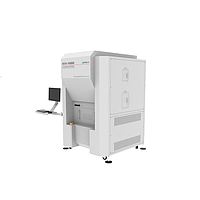
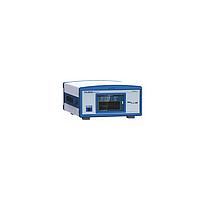
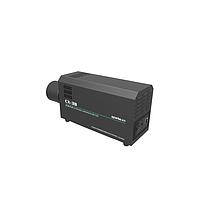
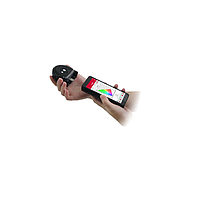
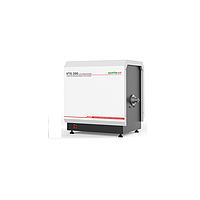
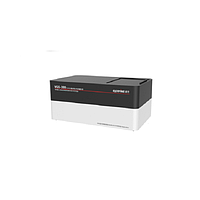
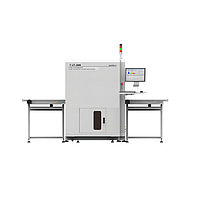
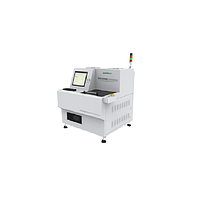
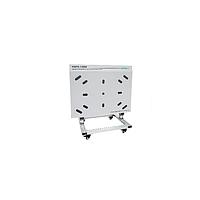
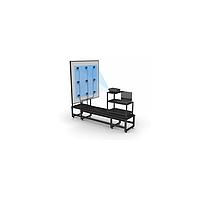
Lamp, LED Testing system
Accurate light measurement is essential when product quality depends on brightness, beam pattern, flicker behavior, flash output, or optical consistency. In manufacturing, inspection, and laboratory environments, engineers often need more than a basic lux meter—they need instruments designed for Lamp, LED Testing system workflows, from component checks to finished-product evaluation.
This category brings together optical and lighting test equipment used to assess LED performance, lamp output, headlight alignment, flicker characteristics, flash behavior, and camera-related optical parameters. It is relevant for electronics production, automotive inspection, lighting development, optical laboratories, and quality control teams that require repeatable measurement and practical integration into daily testing processes.

Where these systems are used
Lighting and LED test requirements vary widely depending on the product under inspection. Some applications focus on photometric output, such as illuminance or luminous intensity, while others prioritize dynamic behavior such as flicker, flash timing, or response under pulsed drive conditions. In many production environments, the goal is not only measurement accuracy but also fast pass/fail decisions and stable repeatability.
Typical use cases include automotive lamp inspection, LED component verification, flash and shutter evaluation, and optical checks in camera-related assemblies. For broader handheld and bench-level measurement needs, users may also compare options in the light meter range when a general illuminance solution is sufficient.
Typical instrument groups in this category
This category covers several different device types rather than a single measurement method. Flicker meters are used to analyze temporal light modulation, while LED checkers and LED drivers support component-level testing and controlled drive conditions. Other systems are designed for more specialized optical tasks such as beam alignment, flash integration, shutter timing, and focus evaluation.
For example, the Gossen MAVOPAD The Flicker Meter and the Gigahertz-Optik PFL-200 Fast Flicker Meter are suited to applications where flicker behavior, modulation, and dynamic light variation must be examined. In contrast, the ADEX AX-733A 2 channel LED checker is aimed at electrical verification of LEDs, and the Bestintech CDCLD-65-CVTP LED Driver supports controlled driving conditions for test setups.
Flicker measurement for modern lighting evaluation
As LED lighting has become standard across industrial, consumer, and automotive products, flicker analysis has become increasingly important. Even when average light output appears acceptable, temporal instability can affect product compliance, visual comfort, image capture performance, or downstream system behavior. This is especially relevant in environments where LEDs interact with cameras, sensors, or high-speed inspection systems.
The Gossen MAVOPAD The Flicker Meter is an example of a portable solution that combines a touchscreen interface with dedicated flicker sensing. The Gigahertz-Optik PFL-200 Fast Flicker Meter addresses high-speed analysis needs where timing behavior and fast response matter. When evaluating whether flicker testing is required, users should consider the expected light source, modulation frequency range, target standard, and whether the measurement will be performed in the lab, on the production floor, or in field diagnostics.
LED component testing and drive control
At the component and subassembly level, testing often starts with the basic electrical and optical behavior of individual LEDs. A practical setup may combine an LED checker, a suitable driver, and a mounting accessory to create a repeatable station for incoming inspection, failure analysis, or production QA. This is useful when teams need to confirm forward characteristics, channel consistency, or output behavior under defined drive conditions.
The ADEX AX-733A 2 channel LED checker supports dual-channel checking for LED evaluation, while the Bestintech CDCLD-65-CVTP LED Driver can be used where stable constant-voltage driving and trigger-based control are important. For fixture-level integration, the THORLABS 8060-2 LED Socket plays a supporting role by helping connect compatible LED leads securely within a test arrangement. Together, these products illustrate how this category also supports the broader LED test ecosystem, not only standalone measuring instruments.
Automotive and optical application examples
Some testing tasks require dedicated instruments designed around a specific product type. In automotive inspection, beam alignment and luminance evaluation are central to headlight checking. The MULLER 764-8 Headlight tester is an example of a CCD camera-based system intended for measuring and aligning halogen, LED, and Xenon headlights, making it relevant for workshops, inspection lines, and vehicle service operations.
In optical manufacturing and camera-related inspection, testing may focus on shutter timing, flash output, focal position, or aperture-related behavior. Tsubosaka instruments in this category illustrate that scope well, including the 7FR-80D Shutter Tester, FD-30N Focus Tester, SMD-81T2 F Number Meter, and flash-oriented models such as the LX-25, LX-60, and STB-209XL2. If your work involves adjacent optical alignment or imaging verification tasks, related sections such as camera tester solutions or collimator equipment may also be relevant.
How to choose the right lamp or LED test system
The right selection depends first on what you need to measure. If the requirement is temporal light behavior, a flicker meter is more suitable than a general illuminance instrument. If the objective is LED electrical checking, then an LED checker or driver-based test setup is usually the better starting point. For beam shape, optical alignment, flash integration, or shutter timing, dedicated application-specific instruments will deliver more meaningful results than a general-purpose device.
It is also important to review how the equipment fits into your process. Consider whether you need portable or bench-mounted operation, touchscreen or PC-based workflow, USB/LAN/Wi-Fi connectivity, pass/fail output, channel count, and compatibility with your fixture or sensor arrangement. In production environments, ease of positioning, measurement speed, and communication interfaces often matter as much as the core specification.
Another practical factor is the test object itself: finished lamp, discrete LED, headlight assembly, optical module, or camera component. Matching the instrument to the real inspection task helps avoid overbuying while improving repeatability and operator efficiency.
Why category-level comparison matters in B2B purchasing
Unlike consumer lighting tools, industrial optical test equipment is usually selected as part of a process, not as a one-off purchase. Engineering teams often compare multiple approaches before deciding whether they need a dedicated flicker instrument, a flash meter, a headlight tester, or a support component for a larger bench setup. That is why category-level browsing is useful: it helps clarify measurement logic before narrowing down to a specific model.
It also allows buyers to compare manufacturers with different strengths. Tsubosaka appears strongly in optical and camera-related test applications, while Gossen and Gigahertz-Optik are relevant for flicker-focused measurement. ADEX and Bestintech are more aligned with LED checking and driving tasks, and MULLER addresses automotive headlight inspection needs. Looking at the category as a whole helps identify which path best fits the application rather than forcing all use cases into one type of instrument.
Final considerations
A well-chosen Lamp, LED Testing system supports more reliable inspection, faster troubleshooting, and clearer quality decisions across lighting and optical applications. Whether you are evaluating flicker, checking LED components, measuring flash output, or inspecting headlights and optical assemblies, the most effective choice is the one that aligns with the real test method used in your process.
Use this category to compare specialized instruments by measurement purpose, workflow, and application environment. If needed, you can also explore nearby optical measurement categories to build a more complete testing setup around your lighting or LED evaluation requirements.
Get exclusive volume discounts, bulk pricing updates, and new product alerts delivered directly to your inbox.
By subscribing, you agree to our Terms of Service and Privacy Policy.
Direct access to our certified experts