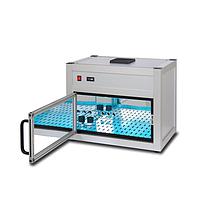
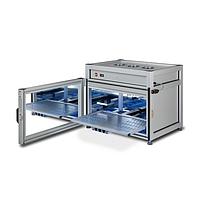
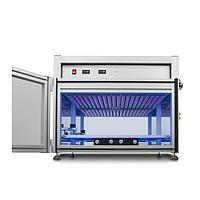
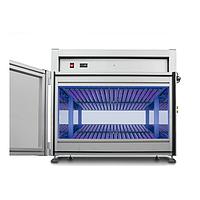
UV Chamber
Controlled UV exposure is essential when teams need repeatable testing, curing, irradiation, or material evaluation under defined laboratory conditions. In production, R&D, and quality environments, an enclosed chamber helps improve consistency, operator safety, and process control compared with open UV sources.
UV Chamber systems in this category are suited to applications where wavelength, irradiance, exposure time, and sample placement all matter. The range shown here focuses on chamber-based UV-LED solutions from Opsytec Dr.Grobel, with configurations designed for different wavelengths, output levels, and chamber sizes.
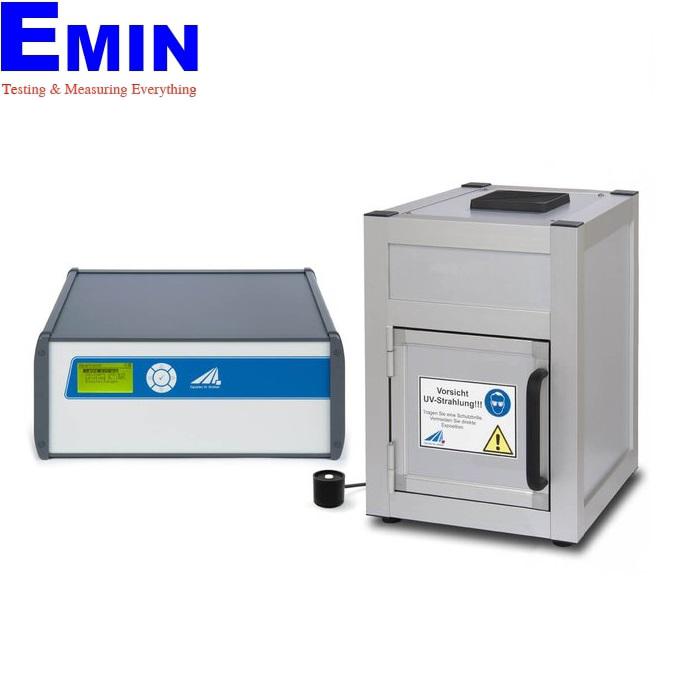
Why a chamber-based UV setup matters
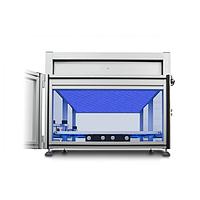
An enclosed UV chamber gives users a more stable and manageable environment for exposure-based work. Instead of relying on handheld lamps or improvised fixtures, the chamber format supports more uniform positioning, defined timing, and built-in safety features such as door contact monitoring and over-temperature protection.
This matters in processes where even small changes in distance, exposure duration, or irradiance can affect results. Whether the task involves surface treatment, adhesive curing, material response checks, or laboratory irradiation workflows, a chamber helps create a more repeatable process from one sample batch to the next.
Typical configurations in this category
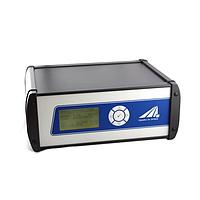
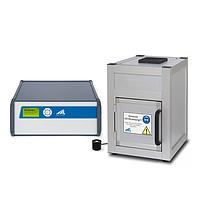
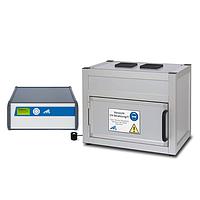
The product range includes several chamber variants with different working volumes and LED output levels. Representative examples include the Opsytec Dr.Grobel BSL-04 UV-LED Chamber in 365 nm, 385 nm, 395 nm, and 405 nm versions, as well as the BSL-03 ECO and BSL-03 HO series for users who need a more compact chamber or different irradiance levels.
From the available models, users can choose between wavelengths commonly used in UV processing and testing, including 365 nm, 385 nm, 395 nm, and 405 nm. Output also varies by model, with ECO versions aimed at standard exposure tasks and HO versions offering higher irradiance for applications that require stronger UV intensity or shorter processing times.
How to choose the right UV chamber
The first selection point is usually the wavelength. Different materials, coatings, inks, adhesives, and photochemical processes respond differently across the UVA range. If your process specification already defines a target wavelength, that requirement should drive the shortlist immediately.
The second factor is irradiance. Some workflows prioritize gentle, controlled exposure, while others need higher intensity to reduce cycle time or achieve a target dose faster. In this category, for example, users can compare ECO and HO chamber versions, while larger BSL-04 units offer another option when chamber volume and sample area are more important.
A third factor is usable chamber space. Larger samples, multiple parts, or fixture-based testing may call for a bigger interior, while bench-space limitations may favor a more compact system. It is also worth checking whether your process requires optional dose control or integration with UV measurement tools for verification.
Differences between chamber series
The BSL-04 series is positioned for users who need a larger chamber interior for broader sample formats or more spacious test layouts. Models in this line are available in multiple wavelengths, including 365 nm, 385 nm, 395 nm, and 405 nm, giving laboratories flexibility when matching source characteristics to a defined application.
The BSL-03 ECO series is a more compact alternative for controlled UV-LED exposure where moderate chamber size is sufficient. For more demanding processes, the BSL-03 HO series increases irradiance at the same nominal wavelengths, making it suitable when throughput, stronger exposure, or higher energy density is part of the requirement.
Rather than treating all versions as interchangeable, it is better to compare them by process target: chamber size, wavelength, and intensity should align with the material response you need to achieve.
Process control, measurement, and verification
In UV applications, nominal source output alone does not always tell the full story. Real-world performance is influenced by distance to the sample, exposure time, chamber geometry, and the sensitivity of the material under test. That is why many users pair chamber systems with a UV meter when they need to verify irradiance or document process conditions.
For broader optical and lighting workflows, related tools such as a light meter or color sensors may also be relevant, depending on whether the task includes visible-light measurement, sensor validation, or optical characterization alongside UV exposure. These tools do not replace the chamber, but they can strengthen process validation and quality control.
Common application scenarios
UV chambers are commonly used where users need a defined and reproducible irradiation environment. Typical scenarios include laboratory testing of material response to UVA exposure, curing studies for UV-reactive substances, evaluation of coatings and resins, and pre-production validation of exposure parameters.
They can also support comparative testing across multiple wavelengths. For example, a team may evaluate whether 365 nm or 405 nm provides a better balance between process speed and material response, or whether a higher-output HO model improves throughput without compromising the sample. In these cases, the chamber becomes part of a structured test method rather than simply a light source.
What to review before ordering
Before selecting a model, it helps to confirm a few practical points: the required wavelength, the target irradiance or dose, the size and number of samples per cycle, and the available installation space. Users should also review supply requirements, operating environment, and whether sample heating under high UV irradiance needs to be considered in the process design.
If traceable or repeatable exposure is important, it is sensible to plan for measurement and documentation from the start. That may include timer-based workflows, optional dose-related control, and periodic verification with appropriate measuring instruments. A chamber that fits the application technically will usually be more valuable than simply choosing the highest output version.
Finding a suitable UV chamber for your workflow
This category brings together chamber-based UV-LED systems for users who need controlled irradiation in a compact and safer laboratory format. With multiple wavelength options and both ECO and HO output levels available, the range supports a variety of evaluation and process tasks without forcing every application into the same setup.
If you are comparing models, focus on the relationship between chamber size, irradiance, and wavelength rather than product name alone. That approach makes it easier to identify a UV chamber that fits your samples, process goals, and verification needs with fewer compromises.
Get exclusive volume discounts, bulk pricing updates, and new product alerts delivered directly to your inbox.
By subscribing, you agree to our Terms of Service and Privacy Policy.
Direct access to our certified experts