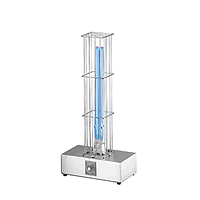
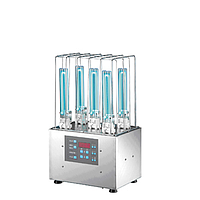
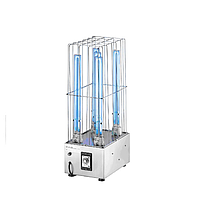
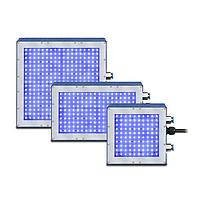
UV Illumination Equipment
Stable and application-appropriate lighting is a critical part of inspection, exposure, curing, fluorescence observation, and many other optical processes. In industrial and laboratory environments, the right UV illumination equipment helps improve repeatability, image contrast, process control, and operator confidence when working with light-sensitive materials or UV-dependent inspection tasks.
This category brings together equipment used to generate, direct, or support ultraviolet and related illumination in practical workflows. Depending on the process, that may include compact UV exposure units for bench use, stabilized light sources for optical setups, and high-brightness illumination systems used in machine vision or line-based inspection environments.

Where UV illumination equipment is used
UV-based lighting appears in a wide range of technical applications. Typical use cases include PCB and photosensitive material exposure, optical testing, fluorescence-related observation, imaging systems, and production lines where controlled illumination is needed to reveal surface features, markings, or defects that are difficult to detect under standard visible light.
In some setups, UV output is the main process requirement. In others, it is part of a broader illumination strategy that may also involve visible-spectrum lighting, directional line illumination, and measurement tools. When evaluating a system, it is often useful to consider the surrounding ecosystem as well, including instruments such as a UV meter for checking irradiance or exposure conditions.
Key equipment types in this category
This category may serve users with very different needs, from laboratory optical benches to production equipment. A desktop UV exposure machine is typically suited to repeatable exposure of flat workpieces in compact work areas, while a stabilized source is more appropriate when output consistency matters in optical experiments, calibration-related work, or spectral applications.
For example, the Hoystar GW-S32 Desktop Uv Exposure Machine represents a bench-oriented format designed for practical exposure tasks, while the THORLABS SLS204 Stabilized Deuterium UV Light Source fits applications where controlled UV output and source stability are more important than simple area exposure. In machine vision environments, high-brightness line illumination products from Aitec can also be relevant when the inspection strategy depends on precise linear lighting geometry rather than broad-area exposure.
How to choose the right UV illumination setup
Selection should start with the process itself rather than the product name. The most important questions usually involve wavelength range, exposure area, optical stability, mechanical integration, input power, and whether the equipment will be used for lab work, standalone bench processes, or embedded automation systems.
If your task is exposure of photosensitive materials, coverage area and mechanical format are often the first filters. If your task is spectral or optical testing, source stability and wavelength characteristics become more important. For vision-based inspection, beam shape, line length, color, and working distance may matter more than UV alone, especially when the objective is contrast enhancement rather than ultraviolet processing.
It can also be helpful to review neighboring technologies. In systems where imaging quality must be verified after illumination changes, a camera tester may support evaluation of image response, while a light meter can help assess visible-light conditions in mixed-light environments.
Examples of products available in this category context
Several representative products illustrate the range of solutions users may encounter. The THORLABS SLS204 stabilized deuterium source is aligned with optical and laboratory setups that require ultraviolet output within a defined spectral range. This type of source is typically relevant when consistency, controlled coupling, and stable operation are part of the measurement or illumination requirement.
The Hoystar GW-S32 desktop UV exposure machine addresses a different need: compact exposure work with a defined working area and desktop footprint. That makes it easier to consider for users building a small exposure station or adding UV processing capability without moving to a larger integrated system.
Aitec line illumination models such as LLRJ1000NB, LLRVC1000NB, LLRVC1000NG, LLRVC1000NR, and LLRVC1000NW show how illumination selection can extend beyond UV-specific devices. These products are useful references for line-scan or high-contrast inspection tasks where emission color, illuminated length, and brightness level influence detection performance.
Understanding the role of wavelength, geometry, and intensity
Wavelength affects how materials respond to illumination. Some applications depend on ultraviolet energy for exposure or fluorescence, while others benefit more from visible blue, green, red, or white lighting to improve feature separation in cameras and sensors. That is why lighting selection should be tied to the behavior of the target object, coating, ink, adhesive, surface texture, or substrate.
Illumination geometry is equally important. A broad-area source is not interchangeable with a line light, and a stabilized optical source is not simply a brighter version of a work lamp. The direction, uniformity, and physical shape of the light determine whether the system reveals the feature you need or introduces glare, shadows, and inconsistent results.
Intensity and stability influence repeatability over time. In production and lab environments, stable output helps maintain comparable results across shifts, batches, and test cycles. Where verification is important, complementary sensing devices such as color sensors or UV/light measurement tools may be used alongside the illumination source.
Manufacturers and solution context
This category includes products and related solution paths associated with manufacturers such as THORLABS, Aitec, Hoystar, BOSCH, Opsytec Dr.Grobel, and MEDSOURCE. The practical focus differs by brand and product family: some are more aligned with optical instrumentation, some with industrial lighting, and others with portable or application-specific illumination tools.
Not every product shown in the broader lighting ecosystem is a dedicated UV process device. For example, BOSCH products such as the GBA rechargeable battery and GLI 120-LI cordless worklight may serve supporting roles in portable task lighting workflows, but they address a different operational need from stabilized UV sources or UV exposure machines. For buyers, this distinction is important because support accessories, inspection lights, and UV process equipment should be evaluated according to the actual function they perform in the system.
What to review before ordering
Before selecting a unit, confirm the required operating range, installation space, and power conditions. In addition, check whether your application requires direct exposure, fiber-coupled output, line illumination, or general-purpose task lighting around a UV workstation. Small differences in mounting method, illuminated area, or output type can significantly affect usability.
It is also worth reviewing how the device will be validated after installation. Some users prioritize immediate process compatibility, while others need measurable control over irradiance, visual output, or camera response. Clarifying those requirements early helps narrow the choice and reduces the risk of selecting equipment that is technically compatible but operationally inefficient.
Choosing with application fit in mind
The most effective way to compare UV illumination options is to match the lighting method to the process objective. A compact exposure machine, a stabilized deuterium source, and a high-brightness line light each solve different problems, even though they all sit within a broader optical illumination landscape.
By focusing on wavelength needs, output stability, lighting geometry, and integration constraints, buyers can identify equipment that supports reliable inspection or processing rather than simply adding more light. For teams working in industrial inspection, laboratory optics, or UV exposure workflows, this category provides a practical starting point for selecting equipment with the right technical role.
Get exclusive volume discounts, bulk pricing updates, and new product alerts delivered directly to your inbox.
By subscribing, you agree to our Terms of Service and Privacy Policy.
Direct access to our certified experts