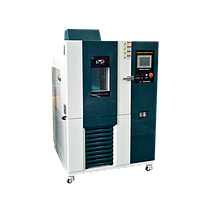
TEMPERATURE & HUMIDITY TEST CHAMBER
Environmental reliability testing often starts with one practical question: how will a product behave when heat, cold, and moisture combine in ways that rarely appear in a stable laboratory room? For manufacturers, R&D teams, and quality engineers, that question directly affects product validation, shipment readiness, and long-term field performance.
Temperature & humidity test chambers are used to reproduce controlled climate conditions so teams can evaluate materials, components, assemblies, and finished products under repeatable test cycles. On this page, you can explore chamber solutions for routine stability tests, accelerated environmental screening, and broader laboratory or industrial qualification work.
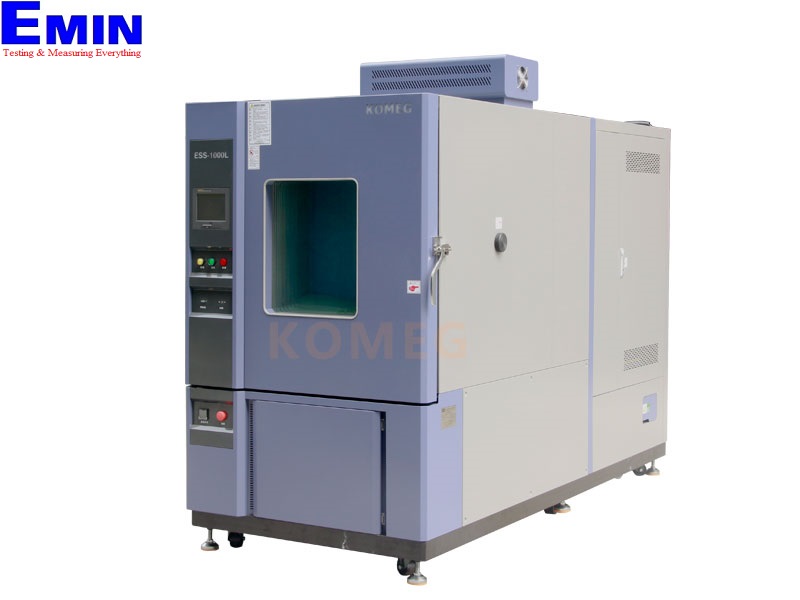
Why these chambers matter in product development
In many industries, passing an internal bench test is not enough. Electronics, sensors, packaging, automotive parts, plastics, coatings, and industrial components may all face changing ambient conditions during transport, storage, and operation. A controlled chamber helps engineers identify drift, deformation, condensation-related issues, or performance loss before products move to mass production or export markets.
This type of equipment is also valuable for comparing design revisions under the same climate profile. Instead of relying on inconsistent room conditions, teams can build a repeatable test method with defined temperature ramps, humidity control, soak periods, and recovery observations. For applications that also require thermal-only conditioning, some users may additionally review related solutions such as laboratory furnaces for high-temperature material work outside the humidity range of a chamber.
How a temperature and humidity test chamber works
A chamber creates a sealed test environment where temperature control and humidity control are managed together. Heating and cooling systems adjust the air temperature, while humidification and dehumidification functions maintain the required relative humidity range. The goal is not only to reach a target setpoint, but to hold it with good stability and distribution throughout the workspace.
Air circulation plays a major role in result quality. If airflow is poorly managed, samples placed on different shelves may see different conditions, which reduces confidence in the test outcome. In practical use, engineers also pay close attention to recovery after door opening, sensor response, water supply condition, and load placement inside the chamber.
Common chamber types and selection ranges
Selection usually depends on sample size, required temperature range, humidity range, and the intended test profile. Compact benchtop models are useful for smaller parts and laboratory workflows, while floor-standing systems support larger loads, more shelves, and longer qualification programs.
Within the JEIOtech range, for example, the tabletop TH3-PE-065 chamber is suited to smaller-volume testing, while larger constant climate models such as TH-G-180, TH-G-300, TH-G-408, and TH-G-1500 cover broader capacity needs. Where humidity is not required, heating and cooling chambers such as PMV-040 and PMV-070 can support thermal conditioning only. This range helps buyers match equipment size and performance to the real workload instead of over- or under-specifying the system.
What to evaluate before buying
The first point is the test requirement itself. Define the target temperature limits, humidity window, sample dimensions, cable routing needs, and whether the chamber must support continuous operation or intermittent lab use. A mismatch here can lead to unstable testing, excessive cycle times, or unnecessary capital cost.
The second point is control performance. Buyers typically look at stability, variation, heating and cooling behavior, chamber volume, shelf load, and ease of programming. For teams working with recurring validation procedures, a chamber that simplifies cycle setup and monitoring can reduce operator error and improve traceability.
The third point is lifecycle practicality. Water quality management, maintenance access, consumables, and optional accessories all affect long-term operation. Depending on the application, it may be useful to add supporting items such as the JEIOTECH THE-625 Water Purifier, THE-620 Direct Water System, AAA80550 Warning Signal Lamp, or the AAA8T500 recorder for data capture and status visibility.
Representative products and accessories in this category
Rather than viewing the chamber as a standalone box, it is better to think of it as part of a test ecosystem. The main chamber defines the environment, but accessories often improve workflow, data handling, and installation flexibility.
- Benchtop climate chamber: JEIOTECH TH3-PE-065 for compact laboratory testing with temperature and humidity control.
- Floor-standing constant climate chambers: TH-G-180, TH-G-300, TH-G-408, and TH-G-1500 for larger loads and broader capacity requirements.
- Thermal-only chambers: PMV-040 and PMV-070 for heating and cooling applications without humidity control.
- Supporting accessories: AAA80633 stand, THE-625 water purifier, THE-620 direct water system, AAA80550 warning signal lamp, and AAA8T500 recorder.
These accessories are not merely add-ons. Water treatment supports stable humidification, signal lamps help visual status indication in busy labs, and recorders can be useful where process documentation or review of test history is important.
Brands and solution context
This category includes products from established manufacturers used in environmental and laboratory testing. Depending on project requirements, buyers may compare offerings from JEIOtech, ESPEC, Binder, MEMMERT, Aralab, ACS, Julabo, EYELA, inTEST, and Anton Paar. Each brand may be considered in relation to chamber size, control philosophy, installation constraints, and application focus.
If your testing program extends beyond climatic simulation, it can also be useful to review adjacent methods. For example, packaging and barrier-material laboratories may combine climate conditioning with a water vapor transmission rate test system or an oxygen permeation system to study how environmental exposure influences material performance.
Practical operation and maintenance considerations
Even a well-specified chamber can produce inconsistent results if it is overloaded or poorly maintained. Excessive sample mass, blocked airflow, or unsuitable water quality can increase stress on refrigeration and humidification systems. Over time, that may affect control stability and reduce confidence in the test data.
Routine inspection is therefore part of reliable operation. Engineers typically monitor condenser condition, water-related components, seals, sensors, and chamber cleanliness, while also checking that shelves and sample placement do not obstruct circulation. For production-facing laboratories, this preventive approach helps reduce unexpected downtime and protects test schedules tied to product release.
Choosing the right chamber for your workflow
The best fit usually comes from balancing test profile, chamber capacity, utilities, and documentation needs. A small tabletop unit may be enough for component screening or R&D work, while a higher-capacity floor model is more appropriate for larger assemblies, batch testing, or qualification programs with multiple fixtures.
As you compare options in this category, focus on the conditions you actually need to reproduce, how often the chamber will run, and which accessories are necessary for stable daily use. A well-matched temperature and humidity test chamber supports better product validation, clearer decision-making, and more dependable environmental testing over time.
Get exclusive volume discounts, bulk pricing updates, and new product alerts delivered directly to your inbox.
By subscribing, you agree to our Terms of Service and Privacy Policy.
Direct access to our certified experts