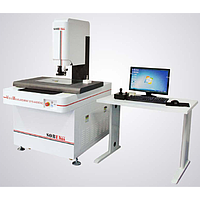
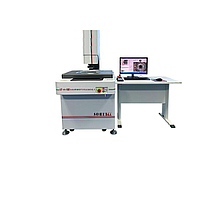
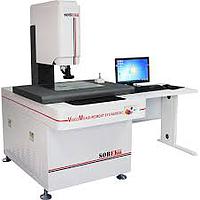
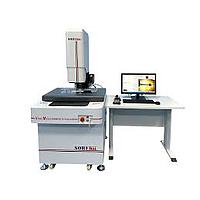
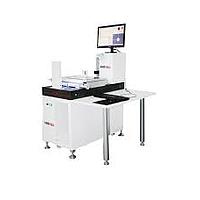
CNC Measuring system
When dimensional accuracy becomes a bottleneck in production, inspection can no longer rely only on handheld tools or visual checks. A CNC Measuring system helps manufacturers verify size, position, profile, and surface-related features with greater repeatability, especially when parts are small, detailed, or produced in volume.
In practical quality control, these systems sit between traditional mechanical measurement and fully integrated metrology workflows. They are commonly used for component inspection, first-article verification, tooling checks, and routine process monitoring where optical measurement, probe-based measurement, or a combination of both is required.
Where CNC measuring systems fit in modern inspection
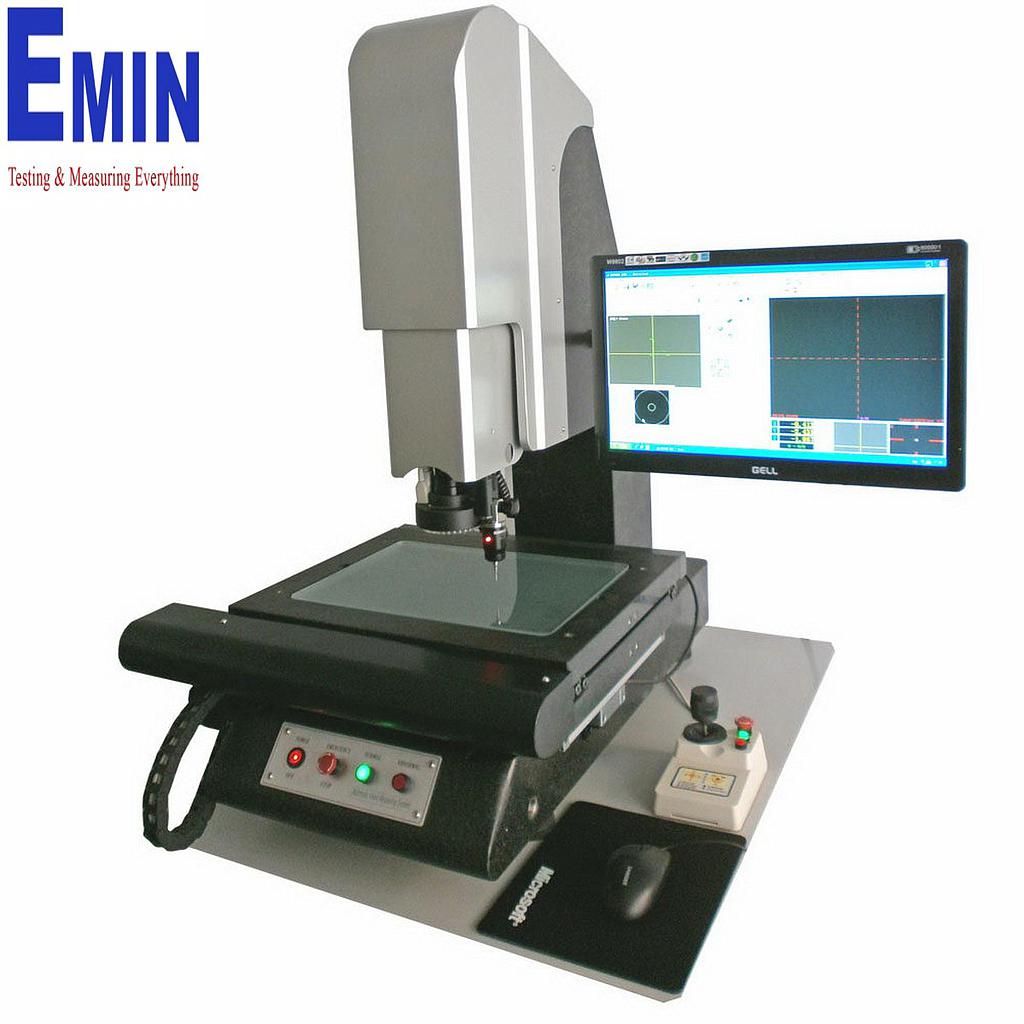
Compared with basic shop-floor tools, a CNC-based measuring platform brings automated motion, controlled lighting, image capture, and software-assisted analysis into one setup. That makes it useful for inspecting machined parts, molded components, stamped pieces, electronic parts, fixtures, and other workpieces that require consistent dimensional verification.
These systems are particularly valuable when the same inspection routine must be repeated many times. In that situation, CNC travel, programmable measurement paths, and digital data handling can reduce operator dependency and improve consistency from one batch to the next.
Typical measurement approaches in this category
This category includes both manual video measuring machines and more automated CNC vision systems. Manual models remain relevant when operators need flexibility for low-volume work, sample inspection, or mixed-part measurement. Automated models are better suited to repetitive tasks, standardized programs, and environments where throughput matters as much as precision.
Several listed systems also combine video measurement + probe, which is useful when optical inspection alone is not enough. Optical measurement is efficient for edges, contours, and visible features, while a contact probe can extend capability for certain height, position, or 3D-related checks depending on the setup.
Representative systems and measurement range examples
Within this range, Sobekk appears with both manual and automatic solutions. For example, the Sobekk S300 Manual Video Measuring Machine and Sobekk S400 Manual Video Measuring Machine represent manual 2.5D inspection platforms with measuring ranges suited to medium-size parts, while the Sobekk EP200, EP300, and EP400 models add probe-based capability for more versatile measurement tasks.
For users looking at automation, the Sobekk AC300CNC Automation Vision Measuring Machine and the Sobekk A300-CNC or A400-CNC standard automatic video measuring machines illustrate the move toward software-driven inspection, closed-loop control, higher travel speed, and finer resolution in some configurations. These examples show how selection often starts with part size, required inspection frequency, and whether the workflow is manual, semi-automatic, or fully programmed.
What to consider before choosing a system
The first factor is the measuring range. A machine sized for 200 x 100 x 200 mm work is very different from one built for 400 x 300 x 200 mm travel. Buyers should match the X, Y, and Z capacity to their actual parts, fixtures, and future workload rather than choosing only by current sample size.
Accuracy and repeatability are equally important. In this category, several systems are positioned for micrometer-level dimensional inspection, with repeatability figures and encoder-based positioning intended for precision work. If your process requires stable comparison across batches, it is worth looking not only at nominal accuracy but also at drive method, guideway quality, encoder resolution, and how the machine will be used in real operating conditions.
Software should not be overlooked. Manual systems using 2.5D software can be appropriate for routine profile and dimensional work, while 3D-oriented software and probe support may be better for more demanding inspection tasks. For high-volume quality control, ease of programming, report output, lighting control, and operator training can influence productivity as much as the hardware itself.
Manual vs CNC automatic systems
A manual video measuring machine is often the right choice when product variation is high and the operator needs direct control. Models such as the Sobekk E200, E300, E400, S300, and S400 are suitable examples of setups where a handwheel-based approach can work well for inspection labs, incoming QC, or smaller production runs.
A CNC automatic system is more appropriate when the same measurement sequence is repeated regularly. Automatic travel, software-controlled illumination, and joystick or software operation help streamline batch inspection and reduce variability between users. If inspection time is becoming a production constraint, this is often where CNC systems justify their role.
How these systems connect with the wider metrology workflow
No single instrument covers every inspection task. A CNC measuring system is often used alongside simpler tools for quick checks and with other specialized instruments for feature-specific analysis. For routine comparative checks on displacement or runout, users may still rely on dial indicators. For fast dimensional checks on the shop floor, callipers remain useful before parts move to more detailed optical inspection.
In applications where geometry or form quality is critical, manufacturers may also complement vision measurement with a roundness measuring machine. This broader toolchain helps companies balance speed, cost, and inspection depth instead of forcing all tasks into one machine.
Optics, imaging, and observation support
Vision measurement quality depends heavily on optics, lighting, and image clarity. In this category, camera-based systems use industrial imaging and programmable illumination to improve edge detection and repeatable part presentation. That is especially relevant for reflective surfaces, fine contours, and small components where lighting conditions can affect the result as much as the machine structure.
For close observation, digital microscopy can also support inspection workflows around the measuring station. The ASH range, including the ASH Inspex HD Table Digital microscope, is relevant in cases where users need high-definition visual review, setup support, or detailed observation before or after dimensional measurement. While it is not a substitute for a full measuring machine, it can be a useful companion in electronics, precision assembly, and defect review tasks.
Who typically benefits from CNC measuring systems
These systems are commonly chosen by machine shops, mold manufacturers, electronics producers, component suppliers, and QA laboratories that need reliable dimensional inspection without depending entirely on manual interpretation. They are also useful for engineering teams handling sample validation, process capability improvement, and documentation for customer or internal quality requirements.
If parts are becoming more complex, tolerances are tightening, or inspection volume is increasing, moving from basic measurement tools to a programmable optical system is a logical step. The right setup depends on whether your priority is flexibility, automation, 2.5D measurement, or a more advanced combination of video and probe inspection.
Conclusion
Choosing the right CNC measuring system is less about buying the most advanced machine and more about aligning capacity, accuracy, software, and workflow with the parts you actually inspect. Manual video systems, probe-assisted platforms, and automatic CNC models each serve a different role in production and quality control.
By comparing measuring range, motion type, imaging capability, and software features, buyers can narrow the selection to a system that improves consistency and supports long-term inspection needs. For many industrial users, that makes a CNC measuring platform an important step toward more structured, data-driven metrology.
Get exclusive volume discounts, bulk pricing updates, and new product alerts delivered directly to your inbox.
By subscribing, you agree to our Terms of Service and Privacy Policy.
Direct access to our certified experts