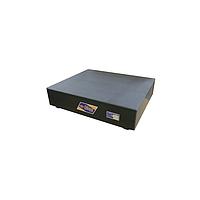
Granite surface plate
In precision inspection, the reference surface matters as much as the measuring instrument itself. A granite surface plate provides the stable, flat base needed for dimensional checks, layout work, flatness evaluation, and height measurement in workshops, quality labs, and production environments where repeatability is important.
Compared with ordinary worktables, granite plates are used as a precision reference surface. They support reliable measurement by reducing distortion, resisting wear, and offering good dimensional stability over time. This makes them a practical choice for applications involving gauges, fixtures, and contact measuring tools.
Why granite is widely used for reference plates
Granite is valued in metrology because it combines rigidity, surface stability, and resistance to corrosion. For inspection tasks that require a dependable plane, granite helps create a repeatable base for checking flatness, height differences, and part geometry without introducing unnecessary variation from the support surface.
Another practical advantage is its suitability for continuous use in inspection rooms and manufacturing areas. When the reference plate remains stable, operators can use accessories and instruments more effectively, whether they are checking machined components, verifying setup conditions, or comparing dimensions against known standards.
Typical uses in inspection and manufacturing
Granite plates are commonly used for marking out, comparative measurement, and surface inspection. They are especially useful when paired with contact tools such as dial indicators for checking runout, flatness, or displacement on a known reference plane.
They are also part of a broader dimensional inspection workflow. Depending on the task, users may combine them with callipers for general dimensional checks or with external measuring tools for more specific tolerances. In all cases, the plate itself functions as the baseline that supports confidence in the measurement result.
What to consider when choosing a granite surface plate
The first point is size. The working area should match the parts being inspected while still leaving enough space for setup and movement of gauges or fixtures. Small plates are convenient for benches and localized measurement, while larger tables are better suited to bigger workpieces or multi-point inspection tasks.
The second point is the required level of flatness and the operating environment. For high-accuracy inspection, users often prioritize tighter flatness grades and a proper support structure. Weight, handling, and installation conditions also matter, especially for large plates that are intended for fixed placement rather than frequent relocation.
It is also important to think about the full measuring setup, not only the plate. If the application includes height comparison or wall thickness checks, related categories such as thickness meter solutions may be relevant alongside the reference table, depending on the inspection method being used.
Examples from the current product range
The available range includes both compact and large-format options as well as supporting stands. For smaller inspection tasks, the Standard table C3030C Niigata Seiki (300 × 300 × 60 mm) is a useful example of a compact reference table suited to bench-top measurement and localized checking.
For larger workpieces or inspection stations, the Mitutoyo 517-310C Granite Surface Plates model illustrates the heavy-duty end of the category, with a 2000 x 1000 x 250 mm format and grade 0 classification shown in the product data. This type of plate is typically selected when users need a larger, more stable platform for precision work.
The category also includes stands designed to support correct installation. Examples include the MITUTOYO 517-209-4 stand, VIỆT NAM CHAN-6900-066 stand for 630 x 630 plates, and VIỆT NAM VN517-204 flatness test table stand for 600 x 600 mm. These support components are important because a precision plate performs best when it is mounted on a suitable structure rather than placed on an improvised bench.
Stands and support structures are part of the solution
A granite plate is only one part of the inspection system. The stand affects working height, stability, leveling, and day-to-day usability. For this reason, many buyers review plate size and stand compatibility together, especially for medium and large installations.
Several stand options in this category show the range of installation needs. Obishi stand models, for example, cover larger supported sizes such as 1000 x 1000 mm, 1500 x 1000 mm, 2000 x 1000 mm, 2000 x 1500 mm, and 3000 x 1500 mm. Some applications may prefer caster-equipped structures for positioning flexibility, while fixed setups are often preferred where vibration control and consistent reference conditions are more important.
Brands commonly associated with this category
Buyers often look for familiar metrology brands when selecting a surface plate or stand. Within this category, MITUTOYO and Niigata Seiki are relevant names for representative products, while Obishi and VIỆT NAM also appear in the available range for stand and table solutions.
Brand selection should be considered alongside actual application needs such as plate dimensions, support method, and inspection workflow. In many cases, the right choice is not simply the most recognized name, but the combination of plate format, support arrangement, and measurement task.
How to match the plate to your measurement workflow
For general quality control, start with the size of the workpiece, the available workspace, and the type of instrument used on the plate. A small or medium plate may be enough for comparative inspection, gauge setup, or part checking on a workbench. Larger installations are more appropriate when handling heavy components, multiple fixtures, or broader inspection areas.
It is equally useful to review how the plate fits into the wider inspection process. If operators also use external measuring tools such as micrometers or contact indicators, the surface plate becomes the shared platform that improves consistency across different checks. Choosing the correct stand height and ensuring stable placement can make routine measurement safer and more efficient.
Final thoughts
A well-selected granite surface plate helps create a dependable foundation for precision measurement, inspection, and setup work. Whether the need is a compact bench-top table, a large grade 0 granite plate, or a matching stand for proper installation, the best choice depends on the size of the work, the accuracy required, and how the equipment will be used in practice.
Reviewing plate dimensions, flatness requirements, and support options together will usually lead to a more effective purchase decision. For technical teams building or upgrading an inspection area, this category provides both the reference surface and the supporting accessories needed for a more stable measurement workflow.
Get exclusive volume discounts, bulk pricing updates, and new product alerts delivered directly to your inbox.
By subscribing, you agree to our Terms of Service and Privacy Policy.
Direct access to our certified experts