Angel
Accurate angle control is a basic requirement in metalworking, inspection, toolroom work, and general fabrication. When a part must be checked for squareness, set to a reference angle, or verified before machining, choosing the right angle measuring instrument helps reduce rework and improves consistency across the process.
On this page, you can explore a practical range of tools used for angle checking and layout tasks, from traditional engineer’s squares to sliding T-squares. These instruments are commonly used alongside other workshop measuring tools when verifying alignment, perpendicularity, and dimensional setup in production or maintenance environments.
Where angle measuring tools are used
In many workshops, angle-related inspection is not limited to one single task. Operators may need to confirm that a machined face is perpendicular, check a setup before drilling, mark out a workpiece, or verify whether two surfaces meet at the intended angle. This makes the category relevant to both precision inspection and everyday fabrication work.
These tools are widely used in machine shops, maintenance departments, production lines, educational workshops, and quality control areas. Depending on the job, users may also combine them with spirit levels or straightness measuring tools to check broader setup conditions such as level, flatness reference, and edge alignment.
Main tool types in this category
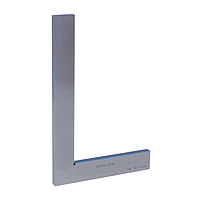
A large part of angle verification work begins with the engineer’s square. This is a familiar reference tool for checking 90-degree relationships between two surfaces, inspecting edges, and supporting marking-out operations. Traditional fixed squares are especially useful when a fast and reliable squareness check is needed at the bench or near the machine.
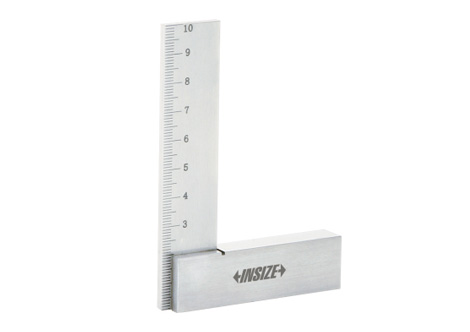
Another practical format is the sliding T-square, which offers more flexibility for positioning and layout work. It can be useful where the user needs to adjust the measuring point or combine angle guidance with linear reference. In applications where the task is more about reading or setting a defined angle rather than checking a right angle, a protractor may be the more suitable option.
Examples from the current range
The selection includes several square formats from MOORE & WRIGHT, a well-known name in mechanical measuring instruments. For example, the MOORE & WRIGHT 4003, 4004, 4006, 4009, and 40012 traditional engineers' squares cover different blade lengths, making them suitable for checking everything from smaller components to larger workpieces.
For users who need higher-grade reference tools for inspection-oriented work, the MOORE & WRIGHT MW910 series includes compact to larger engineer’s squares such as MW910-01, MW910-02, MW910-03, MW910-05, and MW910-06. The category also includes sliding T-squares such as DS71044 and DS71056, which are useful where adjustable positioning and layout convenience matter.
How to choose the right angle measuring instrument
The first factor is the actual task. If the goal is to verify a 90-degree corner or inspect perpendicularity on machined parts, a fixed square is often the simplest choice. If the work involves repeated marking, adjustable reference positioning, or flexible bench use, a sliding type may offer better workflow.
Size also matters. Smaller tools are easier to handle when checking compact parts or working in tighter spaces, while longer blades help when inspecting larger faces or longer edges. Users should also consider the working environment, required precision level, and whether the tool will be used mainly for layout, general workshop checking, or formal inspection.
Material quality, standard, and workshop reliability
In angle and squareness measurement, the quality of the tool body has a direct effect on repeatability. Heat-treated steel construction, stable stock-to-blade geometry, and recognized manufacturing standards all support more dependable checking over time. This is especially important in environments where the tool is used frequently or handled by multiple operators.
Some products in this category reference standards such as BS939 or DIN 875 Grade 0. While the exact selection depends on the job requirement, these references help buyers distinguish between general workshop tools and instruments intended for more demanding inspection use. For procurement teams and maintenance planners, this makes product comparison more practical and transparent.
Fit within a broader measuring workflow
Angle checking is rarely isolated from the rest of dimensional control. In practice, users often verify straightness, level, and angle together before machining, assembly, or final inspection. That is why this category fits naturally into a broader measuring workflow rather than acting as a standalone tool group.
For example, a setup may begin with edge or surface reference, continue with squareness verification, and finish with angle confirmation on the relevant features. In some applications, additional tools from related categories such as angle measuring instruments or straightness and level tools help create a more complete inspection routine across the workshop.
Brands and buying considerations for B2B users
For business buyers, consistency of supply and suitability for the intended application are often just as important as the tool format itself. The broader brand landscape connected to this category includes names such as SATA, STANLEY, MOORE & WRIGHT, Niigata Seiki, Tajima, Obishi, Shinwa, and ASAKI, giving buyers useful context when comparing workshop tools and precision-oriented measuring equipment.
When selecting for industrial purchasing, it is worth considering who will use the tool, how often it will be used, and whether the requirement is general production support or inspection-grade checking. A compact square may be ideal for routine bench work, while a higher-grade reference square may be more appropriate in calibration, quality, or toolroom environments.
Choosing with confidence
This category is most useful when selection is based on the actual measuring task rather than on size alone. A good choice balances working range, handling, inspection requirement, and the type of angle verification needed in daily use. That approach helps ensure the instrument fits the process instead of becoming an underused accessory.
If you are comparing options for squareness checks, layout work, or general angle inspection, reviewing the available square and T-square formats is a practical starting point. With the right tool matched to the application, measurement reliability becomes easier to maintain across machining, assembly, and maintenance work.
Get exclusive volume discounts, bulk pricing updates, and new product alerts delivered directly to your inbox.
By subscribing, you agree to our Terms of Service and Privacy Policy.
Direct access to our certified experts