Straight
Accurate assessment of flatness, alignment, and edge quality starts with a dependable reference. In workshop inspection, toolroom verification, and precision manufacturing, Straight measuring tools help technicians check whether a surface or line remains true before moving on to machining, assembly, or final quality control.
This category focuses on straightness measuring instruments used for visual and contact-based inspection of edges, surfaces, and machine components. They are commonly selected when a simple but highly reliable standard is needed for checking straightness on benches, machine tables, guideways, and precision parts.
Where straightness tools fit in dimensional inspection
Straight edges are fundamental instruments in mechanical measurement. They provide a known reference edge that can be used to detect gaps, waviness, bending, or deviation along a workpiece or surface. In many environments, this is a practical first step before applying more advanced metrology methods.
These tools are especially useful when checking machine setup, confirming the condition of ground or machined faces, or verifying whether mating surfaces are suitable for assembly. For broader alignment and geometry tasks, users may also compare their inspection workflow with related tools such as spirit levels or angle measuring instruments depending on the application.
Common straight edge types in this category
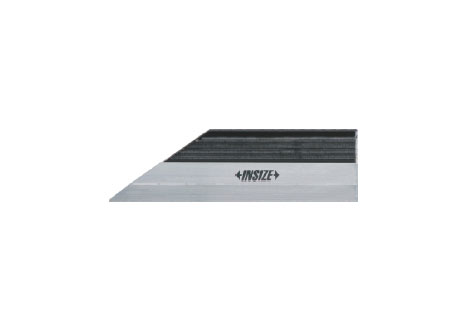
The products shown here reflect two common approaches. One is the knife straight edge, designed with a fine edge profile that supports precise visual inspection against light. This style is widely used for checking flatness and straightness on smaller precision components, reference surfaces, and tooling.
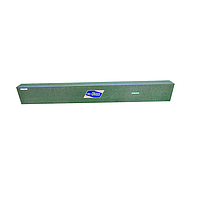
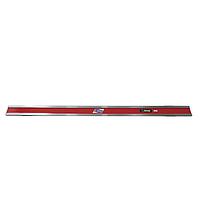
Another form is the triangle type straight edge, which offers stable handling and a geometry suited to workshop and inspection use. This design can be practical when users need a robust reference with good rigidity for repeatable checks across different part sizes.
Because straightness inspection varies by workpiece and tolerance expectation, shape and size matter as much as material quality. A compact model may be ideal for small parts and local checks, while a longer straight edge is better suited to larger surfaces or longer travel paths.
Featured brands and representative products
This category includes examples from established metrology manufacturers such as MOORE & WRIGHT and Obishi. Their products illustrate the range of straightness tools available, from fine knife-edge inspection tools to rigid triangular straight edges for workshop measurement.
Representative MOORE & WRIGHT models include the MW900 series, with sizes such as MW900-01 at 50 mm, MW900-04 at 125 mm, MW900-06 at 200 mm, and MW900-08 at 400 mm. These knife straight edges are described with hardened alloy steel construction and a 30º knife form, which suits precise line contact and visual checking.
Obishi models such as 211-ET103, 211-ET104, 211-ET105, and 211-ET106 show a triangular straight edge format in sizes from 100 mm to 300 mm. In practical terms, this gives buyers options for matching instrument length to inspection span, handling preference, and straightness control requirements.
How to choose the right straight edge
Selection usually begins with the size of the surface or feature being checked. A straight edge should be long enough to span the relevant area without becoming awkward to position. Small tools are convenient for local inspection, while longer models help reveal deviations over a greater distance.
Material and form are also important. Hardened alloy steel is commonly chosen for durability, wear resistance, and dimensional stability in workshop conditions. Knife-edge designs are well suited to precision visual checks, while triangular bodies may be preferred when rigidity and handling stability are priorities.
It is also helpful to consider the inspection method itself. If the tool will be used with light-gap observation, surface blue, or comparative checking on a fine reference surface, the edge geometry becomes critical. If the wider task involves checking angular relationships as well, users may also explore a protractor as part of the same inspection setup.
Typical applications in industry
Straightness measuring tools are widely used in machine shops, maintenance departments, calibration rooms, and production quality control. Typical tasks include checking machine tables, slideways, fixture faces, ground plates, and machined component edges before assembly or further processing.
They are also useful in incoming inspection and maintenance work, where operators need a fast and reliable reference to identify distortion, wear, or setup issues. In these cases, a straight edge can support troubleshooting without requiring a complex measurement system.
For higher consistency, the tool should be used on clean surfaces and handled carefully to avoid edge damage. Good inspection practice often includes proper storage, controlled contact with the workpiece, and periodic verification of the reference tool itself.
Why straightness tools remain relevant in modern workshops
Even in facilities that use digital measurement systems, straight edges remain valuable because they are direct, fast, and easy to apply. They help users make practical judgments during setup, maintenance, and in-process inspection, especially when immediate feedback is more important than generating full measurement data.
They also fit well into layered inspection routines. A technician may first use a straight edge to identify whether a problem exists, then move to more specialized instruments for deeper analysis. This makes the category highly relevant for both routine workshop use and more controlled precision environments.
Where broader geometry inspection is required, buyers often combine straightness tools with related categories such as straight measuring instruments in this section and other level or angle tools to build a more complete inspection workflow.
Practical buying considerations
When comparing products, focus on the relationship between tool length, form factor, and the actual inspection task. A larger instrument is not always the better choice if the work involves tight access or small precision parts. Likewise, a compact model may be insufficient for checking longer guide surfaces or larger machine components.
Brand preference may also depend on existing standards inside your workshop. Some buyers prioritize familiar metrology brands, while others focus on the available format and size range. In this category, MOORE & WRIGHT and Obishi provide useful examples of how straightness tools can serve different inspection styles without overcomplicating the selection process.
If your application also involves broader dimensional control, it can be helpful to review adjacent measuring tools and build a consistent set of references across the inspection bench. That approach often improves repeatability and reduces operator uncertainty during routine checks.
Final thoughts
A well-chosen straight edge supports dependable straightness and flatness checks across manufacturing, maintenance, and quality inspection work. Whether the requirement is a compact knife-edge tool for precision components or a triangular straight edge for stable workshop use, the right choice depends on part size, inspection method, and handling preference.
Explore the available range in this category to compare sizes, forms, and brand options that align with your measurement routine. A simple reference tool, when matched correctly to the task, can make everyday inspection faster, clearer, and more consistent.
Get exclusive volume discounts, bulk pricing updates, and new product alerts delivered directly to your inbox.
By subscribing, you agree to our Terms of Service and Privacy Policy.
Direct access to our certified experts