Optical microscope
Careful visual inspection is still one of the most practical ways to evaluate small parts, surfaces, assemblies, and materials in workshops, laboratories, and quality control environments. When direct observation is not enough, an optical microscope gives operators a clearer view of edges, coatings, solder joints, fibers, structures, and surface defects without adding unnecessary complexity to the inspection process.
This category covers optical microscope solutions used for routine observation, stereo viewing, transmitted-light work, metallurgical inspection, and image-supported analysis. It is suitable for users comparing different microscope formats, reviewing available accessories, or selecting a system that fits their working distance, lighting method, and documentation needs.
Where optical microscopes fit in technical inspection
Optical microscopes are widely used where magnification must be combined with clear visual contrast and reliable operator control. In industrial settings, they support inspection of machined parts, PCB assemblies, tool edges, coatings, and small components. In laboratory environments, they are also used for sample observation under reflected or transmitted light, depending on the specimen and the inspection goal.
Compared with simple handheld magnification, microscope systems give better stability, more controlled illumination, and a viewing geometry that is easier to repeat. For applications that require on-screen viewing, image capture, or digital measurement, users may also want to explore electronic measuring microscope solutions alongside conventional optical setups.
Common microscope types in this category
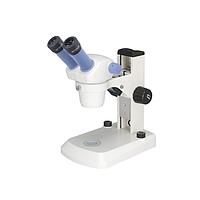
Not every optical microscope is designed for the same task. Stereo microscopes are often chosen when depth perception, easier hand movement, and observation of larger objects are important. They are useful for assembly work, rework, inspection of mechanical parts, and general bench-top examination.
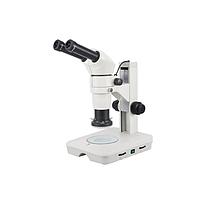
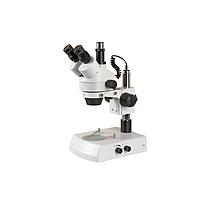
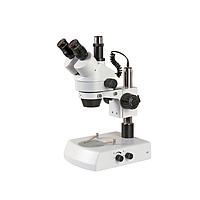
Examples in this category include the KERN OSF 438 stereo microscope and the MOORE & WRIGHT MWT-7200 Stereo Microscope, both aimed at practical binocular observation. For users who need zoom capability and expanded flexibility, the KERN OZL 468 Stereo Zoom Microscope provides a wider operating range for examining parts with different sizes and detail levels.
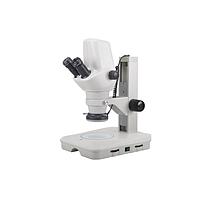
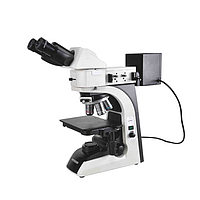
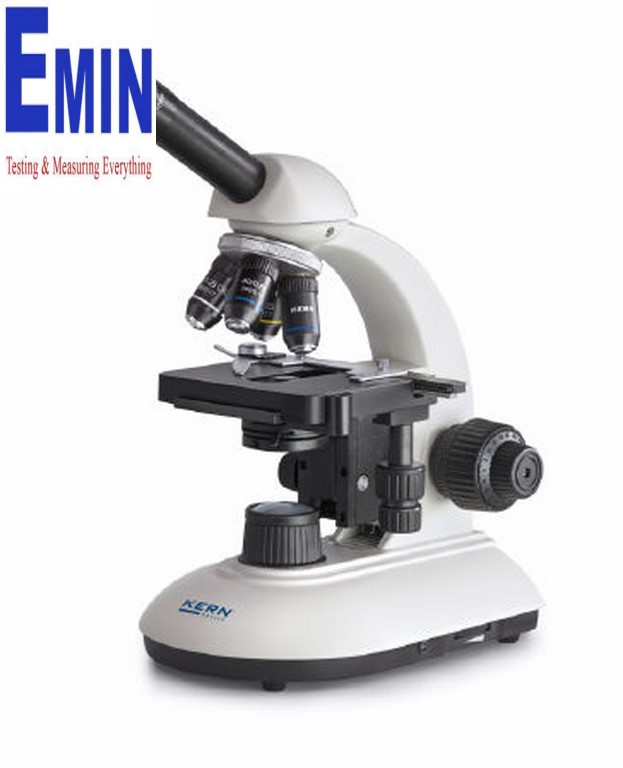
Other systems are more specialized. A transmitted-light microscope such as the KERN OBE 134T241 is suited to samples that need light passing through them, while the KERN OLM 170 Metallurgical Microscope is intended for reflective inspection of opaque materials and prepared surfaces. Video-based options such as the MOORE & WRIGHT MWT-7100 bridge visual inspection and digital display, which can be useful in shared workstations or training environments.
Key selection points before you buy
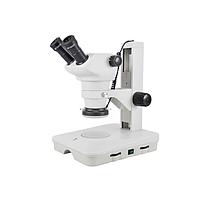
One of the first things to check is the viewing method: binocular, trinocular, or video output. Binocular heads are a practical choice for direct operator use, while trinocular configurations are better when a camera needs to be added for recording, documentation, or display. If your inspection process includes reporting or image archiving, camera compatibility becomes an important part of the selection process.
Magnification range should be matched to the actual size of the feature being inspected, not simply pushed as high as possible. In many industrial workflows, working distance, field of view, and ease of focusing matter just as much as magnification. A system with moderate zoom and stable lighting may be more efficient than a higher-magnification setup that narrows the field too much for routine use.
Illumination is another critical factor. Reflected light is typically used for opaque components such as metals, electronics, and assembled parts, while transmitted light is used for transparent or semi-transparent samples. Models in this category include both lighting approaches, and some combine upper and lower LED illumination for broader application coverage.
Optics, lighting, and ergonomics in daily use
A microscope that performs well on paper still needs to be comfortable and practical at the bench. Tube angle, interpupillary adjustment, head rotation, and stand design all influence operator fatigue during repetitive inspection. Features such as independently adjustable LED lighting or a stable coarse focus mechanism help improve consistency during day-to-day work.
For example, stereo models in this range offer configurations with upper and lower illumination, while trinocular systems can support both direct viewing and camera integration. These details matter in production and quality environments where several users may work on the same station and need predictable setup behavior.
If your system needs expansion over time, it is also worth considering the surrounding ecosystem, including objectives, adapters, and imaging parts. Related items can be found in microscope accessories, which is useful when planning upgrades rather than replacing the complete microscope.
Examples of products and accessories in this range
This category includes complete microscope systems as well as supporting optical components. On the microscope side, KERN and MOORE & WRIGHT are represented by practical inspection models for stereo, trinocular, and video-based workflows. The available range covers routine bench inspection through to more application-specific transmitted-light and metallurgical observation.
On the accessory side, products such as the KERN Ras Auxiliary Objective (2.0×) and several KERN C-mount camera adapters show how microscope systems can be adapted for different magnification needs or imaging configurations. These parts are especially relevant for trinocular microscopes where a camera path is required for live viewing or documentation.
For buyers standardizing by manufacturer, this category also aligns naturally with brands such as KERN and MOORE & WRIGHT, both of which appear in the featured products listed here. Other recognized microscope brands are available across the broader catalog, but product suitability should always be matched to the actual inspection task, sample type, and operator workflow.
When an optical microscope is the right choice
An optical microscope is often the right answer when users need immediate visual feedback, reliable contrast, and a straightforward inspection process without the overhead of more complex imaging systems. It is especially effective for incoming inspection, assembly verification, failure checks, and general laboratory observation where the operator benefits from direct control of focus, lighting, and positioning.
For simpler and more portable viewing tasks, a magnifier or loupe may be sufficient. However, when the application requires a stable stand, controlled illumination, interchangeable optics, or camera integration, a microscope-based setup becomes the more practical long-term solution.
Choosing a system that matches your workflow
The best way to narrow the selection is to start with the sample type, the size of the feature you need to inspect, and whether observation is visual only or also needs image capture. From there, it becomes easier to choose between stereo, trinocular, transmitted-light, metallurgical, or video microscope formats. Accessory compatibility should also be checked early if future upgrades are likely.
This optical microscope category is designed to support that comparison process with a mix of complete systems and useful add-ons. Whether the requirement is general stereo inspection, reflected-light examination of surfaces, or a microscope that can be integrated with a camera path, the available range provides a practical starting point for industrial and laboratory users.
Get exclusive volume discounts, bulk pricing updates, and new product alerts delivered directly to your inbox.
By subscribing, you agree to our Terms of Service and Privacy Policy.
Direct access to our certified experts