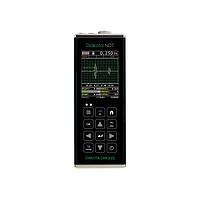
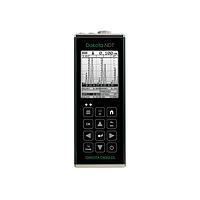
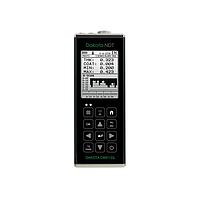
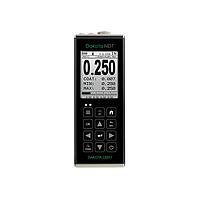
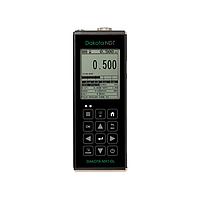
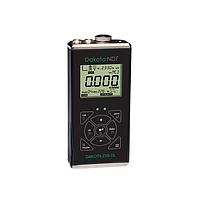
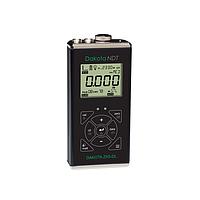
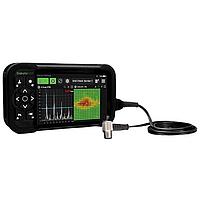
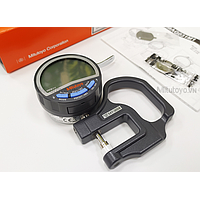
Thickness meter
Material thickness is a critical variable in manufacturing, incoming inspection, coating control, and maintenance work. Whether you need to verify thin sheet material with a contact gauge or measure wall thickness on parts where only one side is accessible, choosing the right Thickness meter helps improve consistency, reduce rework, and support reliable quality records.
This category brings together instruments used for direct thickness checking across different measurement tasks. It includes both traditional mechanical thickness gages and ultrasonic solutions, along with selected accessories that support calibration and probe-based measurement workflows.
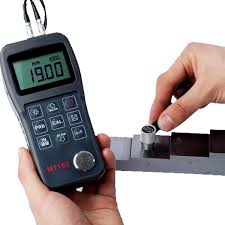
Where thickness measurement is used
Thickness control appears in many industrial processes, from metalworking and fabricated parts inspection to plastics, rubber, films, paper, and coated components. In some cases, the goal is to confirm product dimensions during production. In others, the priority is checking wear, corrosion allowance, or wall loss during maintenance and field inspection.
The right method depends mainly on the material, the accessible surfaces, and the level of precision required. For users comparing related dimensional tools, categories such as callipers or dial indicators may also be relevant when the application involves broader dimensional verification rather than thickness alone.
Mechanical and ultrasonic approaches
A practical way to view this category is by separating contact thickness gages from ultrasonic thickness measurement. Mechanical models are commonly used when the material can be accessed directly and a simple, repeatable contact method is suitable. They are often chosen for sheet materials, soft materials, or routine shop-floor checks where fast manual measurement is needed.
Ultrasonic instruments are more suitable when only one side of the test piece is accessible or when non-destructive wall thickness inspection is required. This is especially useful for pipes, tanks, structural parts, and formed components where cutting or sectioning the material is not acceptable. If your requirement is specifically probe-based non-destructive testing, the dedicated ultrasonic thickness gages section can help narrow the selection.
Representative products in this range
For mechanical measurement, examples from MITUTOYO include the 7301A Thickness gauge and the 7321A Dial Thickness Gage, both designed for routine thickness checks in a metric range up to 10 mm. For finer applications, the MITUTOYO 7327A Dial Thickness Gage offers a narrower range with higher resolution, which is useful when small variation matters more than a wide measuring span.
From ELCOMETER, the E124---3MC Metric Thickness Gauge provides a contact-based option for direct measurement, while the ELCOMETER T920CALSTD-SET1 Calibration Standard Set supports verification and setup for thickness measurement workflows. Calibration standards are especially important when measurement traceability and repeatability need to be maintained across operators or shifts.
For ultrasonic systems, KERN accessories in this category illustrate how probe selection changes measuring capability. Models such as the ATU-US02 are suited to thinner test materials, while the ATU-US01 is intended for thicker samples and rougher surfaces such as cast iron. Accessories like the ATB-US03 ultrasound contact gel also play a practical role in helping the transducer couple effectively to the test surface.
How to choose the right thickness meter
Selection usually starts with the material and inspection method. If you are checking soft sheet, film, rubber, paper, or thin formed parts with direct access, a mechanical thickness gage may be the most straightforward choice. If you need to inspect wall thickness without damaging the part, especially from one side only, an ultrasonic instrument and the correct sensor configuration are generally more appropriate.
The next step is to review measuring range, resolution, and expected accuracy in relation to your tolerance window. A wide range instrument is not always the best fit for fine measurement, and a very high-resolution model is not always necessary for routine acceptance checks. Probe diameter, frequency, and surface condition also matter in ultrasonic applications, because thin materials, curved surfaces, and rough cast structures may require different sensor characteristics.
It is also worth thinking about workflow. Some users need a portable tool for shop-floor spot checks, while others need a repeatable setup for QC benches or maintenance programs. If your inspection process includes multiple handheld dimensional tools, you may also want to review the broader micrometer selection for applications where external dimension measurement and thickness control overlap.
The role of probes, accessories, and calibration
In thickness measurement, the instrument body is only part of the solution. For ultrasonic systems, the sensor often determines whether the setup is suitable for thin materials, thicker sections, or rough surfaces. That is why this category includes external sensors such as KERN ATU-US09, ATU-US10, ATU-US12, ATU-US02, and ATU-US01, each representing a different measurement scenario rather than interchangeable accessories.
Calibration and coupling accessories are just as important in daily use. A calibration standard set helps confirm that the instrument responds correctly across known thickness values, while contact gel supports stable ultrasonic transmission between probe and workpiece. These details directly affect measurement reliability, especially when results are used for inspection records, maintenance decisions, or product release documentation.
Common industrial applications
Thickness meters are used in production quality control to verify incoming materials and finished parts before assembly or shipment. They are also common in maintenance environments where inspectors need to monitor wall loss, wear, or corrosion on assets over time. In these situations, consistent measurement method and proper accessory selection are often just as important as the nominal instrument specification.
Another common use case is process validation. Operators may compare batches, confirm material consistency, or document thickness at specific checkpoints during fabrication. When measurements must be quick and repeatable, a simple contact gauge may be enough; when accessibility is limited or destructive testing is not possible, ultrasonic measurement becomes the more practical route.
Choosing by brand and application fit
This category includes products and accessories associated with manufacturers commonly specified in industrial metrology and inspection environments. MITUTOYO is a familiar choice for precision mechanical measurement, while ELCOMETER appears in both measurement and calibration-related items. KERN products shown here highlight the ecosystem around ultrasonic measurement, where matching the correct sensor to the task is essential.
Depending on your project, you may also compare broader supplier ranges from brands such as Mahr, Olympus, Waygate Technologies, DEFELSKO, EXTECH, or JFE where application requirements extend into precision inspection or non-destructive testing workflows. The most suitable option depends less on brand name alone and more on measurement method, material condition, and the level of control your process requires.
Final considerations before ordering
Before selecting a thickness meter, it helps to confirm four basic points: material type, access to one or both sides, expected thickness range, and the level of measurement detail needed for your process. This quickly narrows the choice between mechanical gauges, ultrasonic instruments, and the accessories needed to support stable operation.
A well-matched solution should fit the real inspection task rather than just the broad product category. By comparing instrument type, measuring range, resolution, and accessory compatibility, buyers can choose a thickness measurement setup that is easier to use, easier to maintain, and more reliable in daily industrial work.
Get exclusive volume discounts, bulk pricing updates, and new product alerts delivered directly to your inbox.
By subscribing, you agree to our Terms of Service and Privacy Policy.
Direct access to our certified experts