Walkie-talkie
Clear voice communication is still essential in many industrial and field environments, especially where mobile phones are impractical, coverage is unstable, or teams need instant group coordination. In these situations, walkie-talkie systems remain a reliable choice for site operations, security, maintenance, logistics, events, and mobile field work.
This category brings together handheld and mobile radio equipment for professional communication needs, with options covering both VHF and UHF bands, analog and digital operation, and different power levels depending on the working environment. Whether you are equipping a small team or expanding a larger radio network, the selection here helps narrow down practical devices for day-to-day use.
Where walkie-talkies are commonly used
Two-way radios are widely used anywhere communication must be immediate, simple, and shared across a team. Typical examples include factory floors, warehouses, building management, construction sites, security patrols, transportation, hospitality, and outdoor operations.
Compared with consumer communication tools, professional radios are designed around operational continuity. A dedicated push-to-talk workflow reduces delays, makes group calls easier, and supports coordination in noisy or fast-moving environments where short, direct instructions matter most.
Choosing between handheld and mobile radio formats
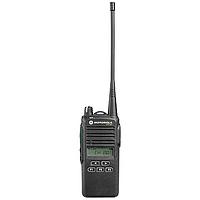
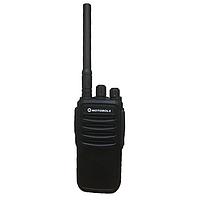
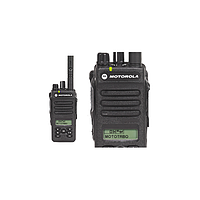
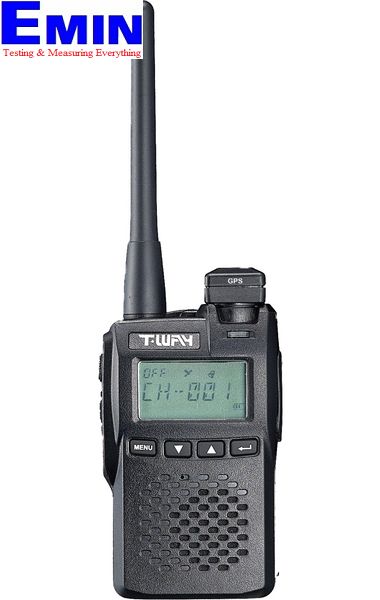
Most buyers begin with handheld units because they are portable and easy to deploy. Models such as the MOTOROLA GP 6688 Plus Walkie Talkie, MOTOROLA CP1300 VHF Portable Radios, and the T-Way T-2UHF4.8W South Korea Walkie-talkie UHF 4.8W are typical examples of compact radios intended for staff who move throughout a site.
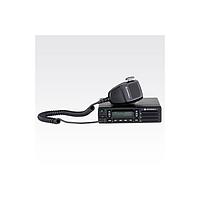
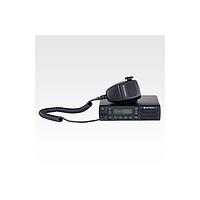
For vehicle-based or fixed-position communication, mobile radios may be more appropriate. Products such as the Motorola XiR M3688 VHF Digital Portable Radio and Motorola XiR M3688 UHF Digital Portable Radio are better suited to vehicles, dispatch points, or control rooms where higher output and an external power source are useful.
If you are comparing broader radio options, you can also explore this walkie-talkie category alongside related communication setups from specific brands and product lines.
Understanding VHF and UHF in practical terms
Band selection has a direct effect on real-world usability. VHF radios are often preferred in more open outdoor areas, while UHF models are commonly chosen for indoor spaces, built-up facilities, and environments with more walls, structures, or obstacles. The right choice depends on the physical site rather than on a universal rule.
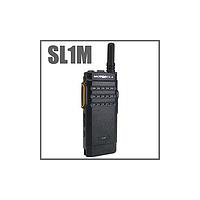
Within this category, both ranges are represented. For example, MOTOROLA CP1300 VHF Portable Radios and MOTOROLA XiR SL2M Portable Radio (136-174MHz; VHF 3W) fit VHF-oriented needs, while MOTOROLA XiR SL2M Portable Radio (403-470MHz; UHF 3W), MOTOROLA XiR P6620i Portable Radio (UHF/4W; 403-480MHz), and ICOM IC-F6023H - UHF Portable Radio reflect UHF-focused deployment.
When the site includes mixed indoor and outdoor zones, it is often worth evaluating coverage, antenna setup, and user movement patterns before standardizing a band. That decision affects not only range, but also compatibility across teams and future system expansion.
Analog, digital, and special-use radio options
Many organizations still use analog radio because it is familiar, easy to operate, and suitable for straightforward voice communication. At the same time, digital platforms are increasingly selected where users want improved audio consistency, higher channel capacity, or more structured network features.
Examples in this category include the MOTOROLA XiR SL2M series and XiR P6620i models, which illustrate how digital handheld radios can support modern professional communication environments. For higher-risk areas, the MOTOROLA XiR P6620i TIA Portable Radio is particularly relevant because it is presented as an explosion-proof option, making it suitable for applications where equipment selection must consider hazardous conditions.
For buyers looking across brands, the available manufacturer pages such as MOTOROLA, ICOM, and T-Way can help compare communication ecosystems and product styles without limiting the evaluation to a single model family.
What to evaluate before selecting a radio
A good purchasing decision usually starts with the operating environment. Consider whether users work indoors or outdoors, how large the coverage area is, whether teams operate on multiple floors, and if the radio will be used on foot, in vehicles, or at fixed stations. These basic questions often matter more than headline power figures alone.
It is also important to review practical details such as battery capacity, charging method, channel requirements, physical size, and environmental protection. In this product group, you can already see meaningful variation: some handheld units emphasize compact form and daily portability, while others focus on channel capacity, longer battery operation, or stronger resistance to dust and water ingress.
- Frequency band: choose VHF or UHF based on site conditions.
- Form factor: handheld radios for mobile staff, mobile units for vehicles or dispatch positions.
- Operating mode: analog for simple deployment, digital for more advanced communication structure.
- Durability: look at ingress protection and suitability for industrial or outdoor use.
- Power and battery: align runtime and output with the shift pattern and communication distance.
Representative products in this category
The listed products cover a practical spread of use cases. The MOTOROLA GP 6688 Plus Walkie Talkie and T-Way T-2UHF4.8W South Korea Walkie-talkie UHF 4.8W are suitable examples for general handheld communication. The MOTOROLA CP1300 VHF Portable Radios offer a VHF option for teams working across more open spaces.
For users moving toward digital radio, the MOTOROLA XiR SL2M Portable Radio in both VHF and UHF variants provides a slimmer handheld profile with broader channel capability. Where a more rugged industrial handheld is needed, the MOTOROLA XiR P6620i line is relevant, including the TIA version for environments with stricter safety requirements.
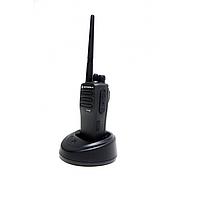
On the mobile side, the Motorola XiR M3688 VHF and UHF radios, along with ICOM IC-F6023H and ICOM IC-F6013H, illustrate radio solutions for vehicle installation or fixed-point operation. The T-Way SAC charger also shows the importance of accessories in keeping a radio fleet ready for daily use.
Related equipment and category navigation
Communication equipment is often selected alongside other field and measurement technologies, especially in mobile operations and survey-related workflows. Depending on the application, teams may also review related categories such as speed sensors or hydrography and oceanography survey equipment when building out a wider operational system.
This kind of cross-category evaluation is useful when radios are only one part of a larger deployment that includes navigation, monitoring, inspection, or field measurement tools.
Finding the right fit for your operation
The right radio is the one that matches the site, the users, and the communication workflow—not simply the one with the highest output or the longest feature list. A compact handheld may be ideal for retail security or maintenance teams, while vehicle-mounted or higher-capacity digital units are often more suitable for transport fleets, industrial campuses, or larger coordinated operations.
By comparing band type, form factor, operating mode, and durability requirements, buyers can shortlist equipment more effectively and reduce the risk of deploying radios that do not fit actual working conditions. This category is designed to support that process with a practical range of professional walkie-talkie options for business and industrial use.
Get exclusive volume discounts, bulk pricing updates, and new product alerts delivered directly to your inbox.
By subscribing, you agree to our Terms of Service and Privacy Policy.
Direct access to our certified experts