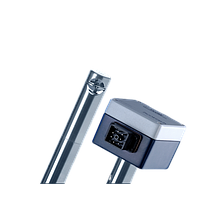
Combined flow meter (Gas, Water,...)
Choosing one instrument for different process media can simplify both engineering and maintenance, especially when a plant handles liquids, gases, utility lines, and hygienic production streams in parallel. In that context, combined flow meters are relevant because they support a broader range of measurement tasks than single-purpose devices, helping teams standardize installation concepts, communication interfaces, and service routines.
This category brings together flow measurement solutions used across gas, water, and other industrial fluids, from compact low-flow applications to larger process lines. Depending on the measuring principle, these instruments can support direct mass flow measurement, density-related process insight, or local visual indication for routine monitoring and control.
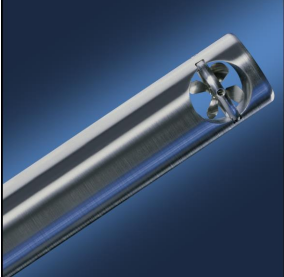
Where combined flow meters fit in industrial use
In real production environments, the same facility may need accurate flow monitoring for clean liquids, compressed gases, dosing lines, solvents, CIP systems, or utility water. A broad category like this is useful for engineers who are comparing technologies rather than searching for only one measuring principle. It supports early-stage selection when the medium, range, hygienic requirement, or installation condition still needs to be matched carefully.
Some applications prioritize mass flow accuracy, while others need a simple local reading, manual adjustment, or compatibility with existing piping and control systems. That is why this range can include Coriolis meters for advanced process measurement as well as glass tube variable area meters and manual flow controllers for simpler or lower-flow duties.
Typical technologies found in this category
A large part of this category is represented by Coriolis flow meters from Anton Paar. Coriolis technology is often selected when users need direct mass flow measurement and, in many cases, additional density information. This makes it suitable for applications where volumetric flow alone is not enough, such as concentration-sensitive processes, batching, or quality-critical transfer.
For example, the Anton Paar L-Cor 4000 and L-Cor 8000 series illustrate how this technology can cover a wide measuring span, from relatively small process flows to very high-capacity lines. The L-Cor 6000 Hygienic Flow Meter is especially relevant where clean process connections and hygienic design matter, while models such as L-Cor 8100, 8200, and 8300 show that temperature range, density capability, and flow span can vary significantly depending on the process.
This category also includes solutions from Brooks Instrument, such as manual flow controllers and glass tube VA flow meters. These are often useful where operators need straightforward indication, local adjustment, or compact low-flow handling rather than a more complex digital mass flow platform.
How to choose the right meter for gas, water, or mixed process duties
The first step is to define the medium and the measurement goal. If the main requirement is high-accuracy mass flow measurement for liquids or gases, a Coriolis meter may be the better fit. If the process mainly needs visual confirmation of flow or basic manual control, a variable area meter or manual controller can be more practical and cost-efficient for the task.
Flow range is equally important. Some instruments in this category cover extremely low flow rates, while others are intended for heavy industrial throughput. A mismatch here can reduce usable accuracy at the low end or create unnecessary installation cost at the high end. It is also important to check whether the process involves liquid only, gas only, or both, since not every model is specified in the same way for both media.
Engineers should also review temperature, material compatibility, connection style, and communication needs. Hygienic connections such as tri-clamp, high-temperature process conditions, or hazardous-area approvals can quickly narrow the selection. For broader comparison with other technologies used in conductive liquids, it can also be helpful to review electromagnetic flow meters.
Representative product directions in this range
The Anton Paar L-Cor family demonstrates the upper end of multifunction process measurement. The L-Cor 4000 Coriolis Mass Flow Meter supports general process duties across a wide capacity range, while the L-Cor 6000 Hygienic Flow Meter is better aligned with sanitary environments where cleanability and product-contact considerations are important. The L-Cor 8300 can be relevant for smaller flows and demanding temperature conditions, while the L-Cor 8200 and 8100 serve larger process lines with different operating envelopes.
On the Brooks side, the FCA8744 and FCA8912 manual flow controllers are suitable examples of low-flow handling where manual adjustment remains appropriate. Brooks 1630, 1634, 1640, and 1644 glass tube VA flow meters are useful references for applications that rely on local indication and a simple mechanical principle. In many plants, these devices are not replacements for high-accuracy digital transmitters, but they remain practical in support systems, pilot setups, and utility service points.
Selection factors that matter in B2B purchasing
For industrial buyers, the decision is rarely based on measuring range alone. A good selection process considers process stability, maintenance expectations, integration with PLC or DCS infrastructure, and whether the meter will be part of a control loop or only used for monitoring. Output types and digital communication options can be especially important when the instrument needs to fit into a larger automation architecture.
Mechanical details also affect long-term performance. Wetted materials, pressure class, mounting orientation, and available transmitter versions can influence reliability and serviceability. In lower-complexity systems, a simpler indicating meter may be easier to deploy, while more advanced installations may require a meter with richer diagnostics and signal options. If the application also needs mechanical regulation elements around the measurement point, related flow valves may be part of the overall solution.
When a simpler or alternative flow solution may be better
Not every process needs a high-end mass flow instrument. In utility circuits, laboratory benches, skid-mounted service panels, or low-cost monitoring points, visual devices and manual controllers may be entirely adequate. That is where indicating meters continue to be relevant, particularly when operators want a direct reading without extra electronics. For related options focused on visual readout, you can also explore indicating flow meters.
Likewise, some applications are better served by technology chosen specifically for the fluid properties and installation method. Conductive liquids, pulsed flows, or compact insertion-style setups may lead users toward other meter types. The benefit of reviewing a combined category first is that it gives a clearer picture of whether the requirement is truly multi-purpose or whether a more specialized solution will perform better.
Why this category is useful for system comparison
Instead of limiting the search to one narrow product family, this category helps buyers compare different measurement approaches for gas, water, and other media in one place. That is valuable during concept design, retrofit planning, and replacement projects where the existing instrument may not have been the best technology choice in the first place.
It also supports comparison across operating styles: advanced digital Coriolis measurement, manual low-flow control, and mechanical visual indication. This makes the category practical for machine builders, process engineers, integrators, and maintenance teams who need to evaluate not just a meter, but the broader measurement strategy for the application.
Final considerations
A suitable combined flow meter should match the medium, operating range, installation constraints, and control objective without adding unnecessary complexity. In this category, that can mean choosing a Coriolis model for precise process measurement, a hygienic version for sanitary production, or a simpler Brooks Instrument device for low-flow indication or manual control.
By comparing measurement principle, process conditions, and system integration needs together, buyers can narrow the shortlist more effectively and select an instrument that fits real operating demands rather than just nominal specifications.
Get exclusive volume discounts, bulk pricing updates, and new product alerts delivered directly to your inbox.
By subscribing, you agree to our Terms of Service and Privacy Policy.
Direct access to our certified experts