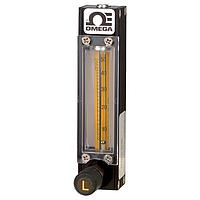
Flow Switch
Reliable flow confirmation is often just as important as measuring flow itself. In HVAC ducts, cooling loops, water treatment skids, and process utility lines, a Flow Switch helps operators detect whether media is moving, whether a minimum flow threshold has been reached, and whether an alarm or control action should be triggered before equipment is damaged or performance drops.
This category brings together devices used to monitor flow presence or flow threshold conditions in air and liquid systems. Instead of delivering a continuous reading like a meter, flow switches are typically used for straightforward control logic such as fan proving, pump protection, low-flow alarm, or interlock functions in industrial and commercial installations.
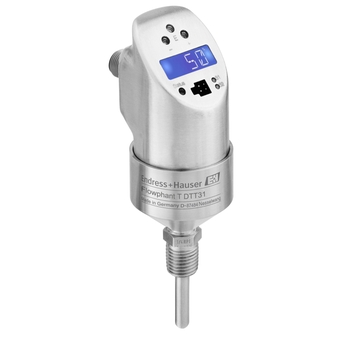
Where flow switches are used
Flow switches are common in systems where a simple on/off signal is more useful than a full measurement value. Typical applications include duct airflow verification in HVAC, fan and filter monitoring, cooling water circulation, equipment protection in heat exchangers, and liquid flow confirmation in process or utility piping.
They are especially valuable when control systems need a clear switching output to confirm safe operating conditions. For example, a duct-mounted switch can verify airflow before electric heaters are enabled, while a liquid flow switch can shut down a pump or generate an alarm if circulation falls below an acceptable level.
Air flow switches for ducts and ventilation systems
For air handling and ventilation applications, mechanical paddle and electronic air flow switches are both relevant depending on installation requirements. Models such as the Dwyer 530 and Dwyer AAFS are designed for horizontal duct flow monitoring, making them suitable for proving airflow in HVAC systems and other air-moving equipment.
The Dwyer 530 uses a vane-based switching principle and supports selectable SPDT switching logic, which can be useful where installers need either normally open or normally closed behavior. The Dwyer AAFS offers adjustable switching in duct applications and an IP65-rated enclosure, making it a practical option where environmental protection and flexible set point adjustment matter.
For applications that require an electronic approach, the Dwyer AVFS-1 and AVFS-2 provide adjustable airflow detection for ducts with repeatability information available in the product data. Their LED indication and configurable response behavior can help during commissioning and troubleshooting, particularly in systems where airflow conditions may fluctuate during startup.
Liquid flow switches for water and cooling circuits
In liquid systems, flow switches are often selected to protect equipment rather than to quantify exact consumption. This is common in cooling water circuits, recirculation loops, and equipment skids where a missing-flow condition can quickly lead to overheating, poor heat transfer, or unplanned downtime.
The Dwyer P3 series illustrates this type of use well. Models such as P3-41, P3-42, P3-43, P3-44, P3-45, P3-34, and P3-35 are intended for water and cooling system duty, with different actuation set points to match lower or higher required flow thresholds. In practice, that range helps engineers choose a switch that better fits the expected operating window of the system rather than relying on a one-size-fits-all setting.
If your application needs continuous indication rather than a switching output, it may also be useful to review indicating flow meters for visual monitoring alongside control functions.
Flow indication, alarm, and proving functions
Not every application needs a hardwired control switch alone. Some installations benefit from a local alert function that makes abnormal conditions obvious to maintenance staff without requiring a full control panel integration. The Dwyer DAFA-1 is an example of this approach, combining airflow indication and alarm behavior for radon mitigation systems with visible battery and no-flow status indication.
This type of device can be useful where the goal is to verify that airflow is present and to warn users if it stops. In systems where operator awareness is critical, a local audible or visual alert may offer a practical layer of protection in addition to the main system controls.
How to choose the right flow switch
Selecting the right device starts with the media type. Air and gas applications usually require duct-mounted or insertion-style airflow switches, while water and compatible liquid systems call for switches built around wetted materials and connection styles suitable for the piping layout.
The next factor is the required actuation point or switching range. Some applications only need proof of flow, while others depend on a more defined threshold. A model intended for low-flow cooling circuits will be very different from one used to detect air velocity in a ventilation duct.
Engineers should also review enclosure protection, electrical output type, supply requirements, mounting orientation, and process temperature. Mechanical and electronic designs each have advantages: mechanical switches are often straightforward and robust, while electronic types may offer better visibility, response configuration, or repeatability depending on the application.
Integration with broader flow systems
Flow switches are often part of a larger instrumentation and control strategy. In some systems, they are used as permissive devices next to valves, transmitters, or meters. In others, they serve as a secondary safeguard that confirms real movement of media even when a pump or fan is commanded on.
For more advanced monitoring, users may combine switches with products from categories such as electromagnetic flow meters or paddlewheel flow meters, depending on media compatibility and the level of process feedback needed. Where installation or maintenance support components are required, flow measurement accessories can also help complete the setup.
Brands and product options in this category
This category includes solutions from recognized industrial instrumentation manufacturers, with Dwyer represented by multiple airflow and liquid flow switching options in the current product mix. Other established brands associated with flow and control instrumentation in this broader space include Autonics, Honeywell, OMEGA, and TE Connectivity.
When comparing products, it is usually more useful to focus on switching method, media compatibility, installation format, and set point behavior than to compare by brand name alone. The right selection depends on how the switch will interact with the rest of the system, the environment it will operate in, and the consequence of a missed flow condition.
Choosing with application fit in mind
A good flow switch selection supports reliable operation without adding unnecessary complexity. Whether the priority is duct airflow proving, cooling loop protection, or a simple local alarm for flow loss, the key is matching the device to the media, operating range, mounting method, and control logic of the installation.
Review the available models in this category with those practical factors in mind. That approach makes it easier to narrow down the right option for HVAC, water, gas, or utility flow monitoring while keeping the system safe, responsive, and easier to maintain over time.
Get exclusive volume discounts, bulk pricing updates, and new product alerts delivered directly to your inbox.
By subscribing, you agree to our Terms of Service and Privacy Policy.
Direct access to our certified experts