Pressure Controllers and Valves
Maintaining stable pressure is critical in gas handling, test benches, process skids, and HVAC-related control loops. When a system needs more than simple indication, Pressure Controllers and Valves help combine measurement, switching, and control actions into a more usable solution for automated equipment and industrial monitoring.
This category is suited to applications where pressure must be monitored and acted on in real time, whether the goal is protecting equipment, maintaining differential pressure, triggering alarms, or feeding a control signal into a broader automation system. It is especially relevant where repeatable control logic and reliable electrical integration matter as much as the pressure reading itself.
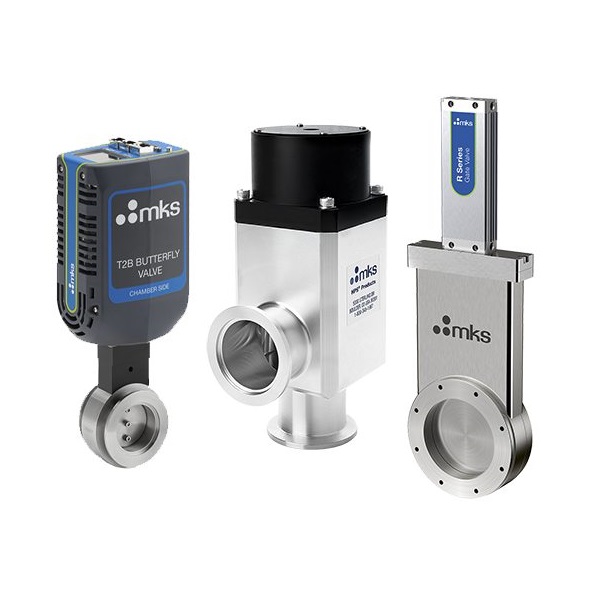
Where pressure controllers and valves fit in a control system
In many industrial setups, pressure is not just a variable to display. It is a process condition that can determine whether fans are balanced correctly, filters are loading up, enclosures remain protected, or gas delivery stays within the required operating window. A pressure controller adds decision-making capability by combining sensing with outputs such as relays, analog signals, or digital communication.
Compared with a basic gauge, these devices are more useful when the system must react automatically. That may include energizing a relay at a defined set point, sending a 4-20 mA signal to a PLC, or integrating through a field interface. If the application is centered on maintaining a defined pressure range through dedicated regulation hardware, related options such as pressure regulators may also be relevant.
Common applications for differential pressure control
A large portion of this category supports differential pressure measurement and control, which is essential when comparing two pressure points rather than measuring one point against atmosphere. This approach is widely used across filter monitoring, cleanroom and building pressure balancing, duct pressure supervision, and low-pressure gas systems.
In these environments, the controller is often expected to do more than indicate pressure. It may need to switch alarms when pressure drifts outside limits, provide a continuous output for trending, or connect to supervisory control platforms. For vacuum-focused processes, a more specialized vacuum gauge controller can be a better fit when the measurement and control strategy is centered specifically on vacuum conditions.
Representative products in this category
Several featured models in this range are from Dwyer, including the Digihelic® differential pressure controller family. Examples such as the DHII-002, DHII-004, DHII-006, DHII-007, DHII-008, DHII-010, DHII-012, DHII-014, DHII-015, DHII-016, and DHII-017 illustrate how this category can serve both low-range and higher-range differential pressure applications within a common product platform.
Across these models, the core concept is consistent: a digital pressure controller with local display, configurable set points, switching capability, analog output, and communication support. This makes them useful in systems where local operator visibility and remote integration are both required. Product selection usually depends less on appearance and more on the needed pressure range, control outputs, and installation environment.
Key features buyers typically evaluate
For industrial users, the most important selection criteria usually start with the pressure range and whether the application requires bidirectional differential measurement or a positive-only range. A controller that is too broad may reduce useful resolution for low-pressure work, while one that is too narrow may not tolerate process variation.
Output and integration options are equally important. In this category, common decision points include relay outputs for alarm or switching functions, analog current output for signal transmission, and serial communications such as Modbus RTU over RS485 for connection to a PLC, BMS, or SCADA layer. Buyers should also review enclosure protection, electrical supply compatibility, and response behavior, especially in systems exposed to dust, washdown, or electrical noise.
Environmental compatibility matters as well. For gas service, the media type, mounting orientation, operating temperature, and connection style can affect long-term reliability and commissioning effort. In many projects, choosing the right controller is really about matching the device to the broader control architecture rather than comparing one specification in isolation.
How to choose the right controller or valve
A practical way to narrow the options is to define the control task first. Ask whether the device needs to monitor only, switch at one or more thresholds, transmit a process signal, or communicate digitally with another controller. From there, confirm whether the pressure being measured is gauge, differential, or vacuum-based, and whether the process is steady or subject to rapid fluctuations.
Next, match the instrument to the installation context. Panel and field installations can have very different needs for enclosure rating, wiring method, display visibility, and service access. If the process requires a broader combination of pressure actuation hardware and control elements, you can also review the wider range of pressure control and valve solutions available in this section.
Manufacturers and solution coverage
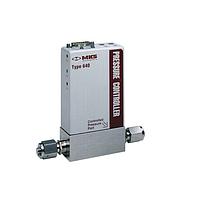
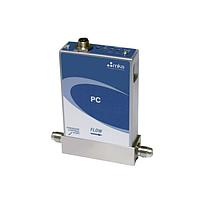
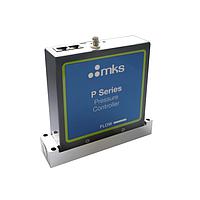
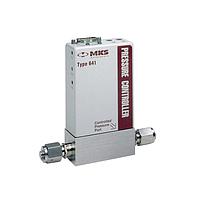
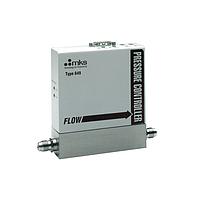
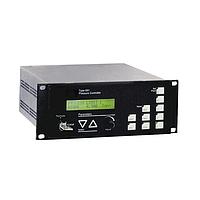
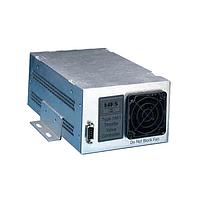
This category includes products associated with established instrumentation suppliers such as Dwyer, while the broader pressure and flow control ecosystem may also involve names like Brooks Instrument, MKS, and Aalborg depending on the process requirement. Each manufacturer tends to be selected for particular use cases, such as compact instrument integration, gas handling, or higher-level process control architectures.
Rather than choosing by brand alone, most B2B buyers benefit from comparing how a device fits the application: control method, output requirements, environmental protection, and compatibility with the target gas or system design. That approach usually leads to a more reliable selection than focusing only on headline specifications.
Why integrated control functions matter
A standalone gauge can show whether pressure is high or low, but an integrated controller can help the system respond immediately. That may mean energizing alarms, controlling auxiliary equipment, or feeding process data upstream to automation software. In practice, this reduces the need for separate components and can simplify wiring, panel design, and troubleshooting.
For OEMs, machine builders, and maintenance teams, this integration is often the main value of the category. A single device that combines display, switching, analog output, and communications can support cleaner system architecture and more straightforward commissioning, especially in distributed or panel-based installations.
Final considerations
Choosing among pressure controllers and valves is ultimately a matter of application fit. The right product should align with the required pressure range, control logic, available outputs, communication needs, and installation conditions without adding unnecessary complexity.
If your process depends on reliable switching, differential monitoring, or integration with a larger control system, this category offers a practical starting point. Reviewing representative models and related pressure control products can help narrow the options to a device that supports stable operation and easier system integration over time.
Get exclusive volume discounts, bulk pricing updates, and new product alerts delivered directly to your inbox.
By subscribing, you agree to our Terms of Service and Privacy Policy.
Direct access to our certified experts