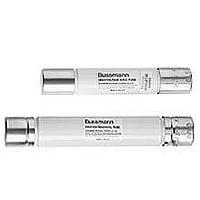
Specialty Fuses
Protecting industrial and power circuits often requires more than a standard fuse. In applications with high inrush current, semiconductor sensitivity, or strict interruption requirements, Specialty Fuses help engineers match protection behavior to the real electrical conditions of the system rather than relying on a one-size-fits-all component.
This category brings together fuse types used in control panels, power distribution, drive systems, and equipment where response speed, mounting style, voltage rating, and breaking capacity all matter. Whether the priority is safeguarding semiconductor devices, handling time-delay requirements, or selecting a panel-mount replacement for an existing design, the right choice depends on the protection objective as much as the current rating itself.

Where specialty fuses fit in industrial protection
Specialty fuses are commonly used where circuit conditions are more demanding than those addressed by general-purpose protection. That can include equipment with transient current peaks, semiconductor switching stages, compact panel assemblies, or systems that require a defined fuse class for compliance with an existing design standard.
In practice, these products are selected to protect specific parts of a system: power supplies, motor-related circuits, semiconductor assemblies, control cabinets, and industrial equipment exposed to higher fault levels. Compared with more generic options, the key differentiators are often blow characteristic, voltage rating, interrupting capacity, and physical format.
Common fuse characteristics in this category
One of the first selection points is the operating response. Fast-acting types are typically chosen where downstream components need quick fault clearing. Time-delay versions are useful when a circuit has temporary startup surges that should not cause nuisance opening during normal operation.
This category also includes semiconductor-oriented designs such as Class aR fuses. These are intended for applications where very fast fault interruption is important to limit damage to sensitive power electronics. For buyers comparing options across broader protection strategies, it may also be useful to review HRC fuse solutions when high breaking capacity is a key requirement in the wider system design.
Examples from leading manufacturers
Available products in this category include solutions from Eaton and Bourns, covering both industrial/power protection and semiconductor-focused fuse applications. These manufacturers are frequently specified in control, power conversion, and industrial electronics environments where replacement compatibility and predictable protection behavior are important.
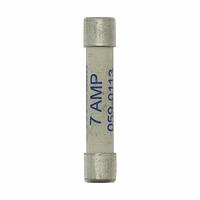
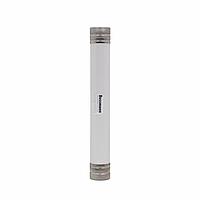
For example, Eaton BK-GLR-8 and Eaton BK-GLR-10 represent panel-mount fast-acting options for 300 VAC applications, while Eaton BK-GRF-7 and Eaton BK-GMF series parts illustrate time-delay protection for circuits that may experience temporary inrush. On the semiconductor side, Bourns PF-MB1-125 and Bourns PF-FB2-250 show how very fast-acting Class aR devices support high-current protection in more demanding power electronics environments.
How to choose the right specialty fuse
A practical selection process starts with the electrical basics: normal operating current, system voltage, expected surge behavior, and the available fault current at the installation point. A fuse with the correct current rating but the wrong response profile can lead either to nuisance failures or insufficient protection for the load.
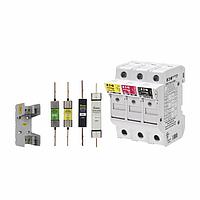
Mounting method is equally important. This category includes panel-mount, bolt-on, and through-hole formats, each suited to different equipment layouts and maintenance practices. Buyers should also verify dimensional compatibility, especially when replacing an installed fuse in legacy equipment or in applications where the fuse holder or mechanical spacing is fixed.
Where semiconductor devices are involved, very fast operation and suitable interrupting performance often take priority over general-purpose behavior. In more conventional industrial power circuits, a time-delay fuse may be preferred if startup current is part of normal operation. If the application instead calls for reusable overcurrent protection in low-power electronics, resettable fuse options may be worth comparing for a different protection approach.
Industrial and power applications supported by this range
Specialty fuses are used across a wide variety of installations, including control panels, industrial machinery, power supplies, converters, and subassemblies that require targeted overcurrent protection. Their role is not only to interrupt faults, but also to do so in a way that supports the behavior and survivability of the protected circuit.
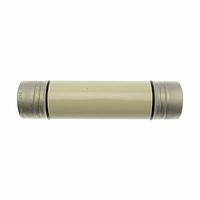
For example, fast-acting panel-mount products are often suitable for branch or equipment-level protection where rapid isolation is preferred. Time-delay versions can help avoid unnecessary service interruptions in circuits with temporary startup loads. Bolt-on semiconductor fuses are more closely aligned with high-energy power conversion stages where fault clearing speed is critical to protecting expensive devices.
Selection details that matter in B2B sourcing
In industrial purchasing, the right part is usually defined by more than a single ampere value. Engineers and buyers often need to confirm the exact combination of current rating, voltage class, fuse family, mounting style, and performance curve to maintain consistency with drawings, maintenance standards, or approved vendor lists.
That is why product family references such as GLR, GRF, GMF, GMQ, PF-M, PF-F, and PF-H can be helpful during sourcing. They give context around the intended application and physical style without forcing buyers to scan every product manually. In compact electronics or PCB-focused designs, some projects may instead require SMD fuse formats, which are better suited to space-constrained assemblies.
Finding a suitable option for replacement or new design
For replacement purchases, start by matching the existing fuse marking and then confirm the critical parameters: current, voltage, response type, mounting, and any application-specific class. This reduces the risk of selecting a mechanically similar part that behaves differently under fault or startup conditions.
For new designs, it is usually better to define the protection target first: cable protection, semiconductor protection, equipment protection, or coordination with upstream devices. From there, the shortlist becomes clearer and easier to evaluate across the available specialty fuse ranges. This approach supports both technical accuracy and smoother procurement.
Final considerations
Choosing from a range of specialty fuse types is ultimately about matching protection behavior to the realities of the circuit. A well-selected fuse helps improve equipment safety, reduce unnecessary downtime, and protect costly components without overcomplicating the design.
If you are comparing options in this category, focus on the combination of current rating, voltage rating, mounting style, and response characteristic rather than any one value in isolation. That makes it easier to identify a suitable fuse for industrial maintenance, panel building, and power electronics applications alike.
Get exclusive volume discounts, bulk pricing updates, and new product alerts delivered directly to your inbox.
By subscribing, you agree to our Terms of Service and Privacy Policy.
Direct access to our certified experts