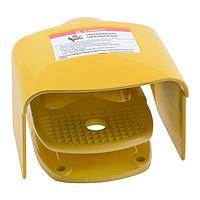
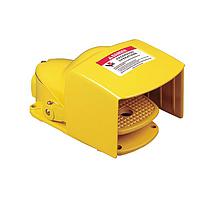
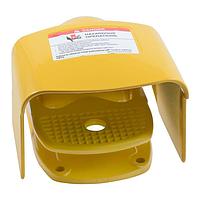
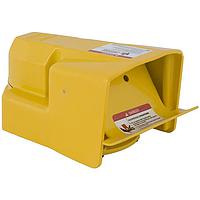
Foot Switches
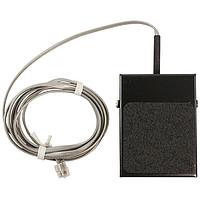
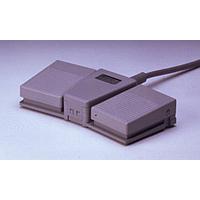
Hands-free machine control is often the simplest way to improve operator workflow, especially when both hands need to stay on a tool, fixture, or workpiece. In these environments, Foot Switches help transfer control to the operator’s foot, making start/stop actions, cycle triggering, or momentary switching more practical in production, assembly, test, and industrial workstations.
Within industrial automation, this type of switch is commonly selected when ergonomics, repeatability, and quick access matter. A well-matched foot-operated switch can support safer operation, reduce unnecessary hand movement, and fit naturally into equipment layouts where manual pushbuttons are less convenient.
Where foot switches fit in industrial switching systems
Foot-operated switches are part of the broader industrial switching landscape, but they serve a very specific role. Instead of asking an operator to reach for a panel device, they enable activation directly from the floor position, which can be helpful in semi-automatic machines, packaging stations, bench assembly, inspection setups, and other repetitive processes.
They are often considered alongside other operator interface devices depending on how a machine is used. For example, applications that require panel-mounted actuation may be better served by control switches, while applications focused on rapid shutdown logic may also involve emergency stop switches as part of the overall safety concept.
Typical applications for foot-operated control
Foot switches are commonly used when an operator must keep both hands free for the task itself. This can include material positioning, clamping, cutting, welding support operations, test procedures, or bench processes where a brief signal is needed to initiate a machine function.
In many cases, the switch is not the primary control element for the whole machine, but a local operator input device integrated into a larger control system. That makes selection less about appearance and more about how the switch will be used: the actuation frequency, the required contact behavior, the work environment, and the way the operator stands or moves during the process.
What to consider when selecting foot switches
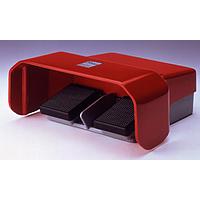
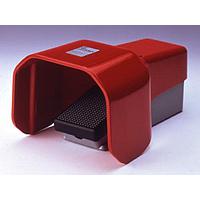
The first consideration is the intended switching function. Some applications need a simple momentary action, while others may require maintained operation or guarded actuation to reduce accidental triggering. The right choice depends on the machine logic and on how critical it is to prevent unintended activation.
It is also important to think about the physical environment. Industrial floors may expose equipment to dust, moisture, debris, oil, or repeated mechanical impact. In these conditions, buyers typically evaluate enclosure style, pedal feel, cable routing, mounting stability, and how easily the switch can be positioned at the workstation.
Another key factor is operator ergonomics. A foot switch should be easy to access without causing awkward posture or unnecessary fatigue over long shifts. In practical terms, that means considering pedal size, resistance, tactile response, and whether the operator will use the device occasionally or continuously throughout the day.
Integration with machine safety and control architecture
Although foot switches are often straightforward devices, they should always be evaluated in the context of the complete machine design. A foot-operated input may trigger a cycle, enable a tool, or send a control signal to a PLC or relay logic, but the surrounding circuit still needs to reflect the application’s required safety and operating philosophy.
For systems that require dedicated isolation or power interruption functions, engineers may also review related devices such as disconnect switches. The point is not to substitute one product type for another, but to make sure the foot switch is used appropriately within the broader control and protection scheme.
Manufacturer options and product ecosystem
This category may be relevant to buyers working across a range of industrial and electrical platforms. Brands such as SCHNEIDER, SIEMENS, Littelfuse, Square D, Cole Hersee, Molex, Panduit, TE Connectivity, and Raychem - TE Connectivity are often associated with broader industrial control, connectivity, and electrical component ecosystems.
That broader ecosystem matters because foot switches are rarely chosen in isolation. In real projects, they are usually specified alongside terminals, wiring accessories, control hardware, enclosures, and other switching devices. Looking at compatible components from established manufacturers can make sourcing and system standardization easier, especially for OEMs, panel builders, and maintenance teams.
How foot switches compare with related switch types
Not every application that involves floor-level or operator-triggered switching should automatically use a foot pedal. If the goal is a pull-activated stop command along a conveyor or extended machine zone, cable pull switches may be a better fit. If the switching task relates to signal routing rather than operator actuation, a completely different category may be more appropriate.
That is why application context matters. Foot switches are best suited to direct human interaction at a workstation, where controlled, repeated foot actuation supports the process. Understanding that distinction helps avoid overengineering and leads to a more practical device selection.
Buying considerations for B2B users
For OEM, MRO, and industrial procurement teams, the most useful approach is to start with the machine function and operating conditions rather than the product name alone. Define whether the switch is for cycle initiation, hold-to-run behavior, tool enablement, or general control input, then review how it will be installed and how operators will interact with it in real use.
It is also worth considering maintenance and replacement planning. Standardized switching components can simplify service procedures, reduce downtime, and support more consistent spare parts management across multiple machines or workstations. For facilities with several types of operator controls in use, choosing devices that align with existing electrical and automation practices can save time over the long term.
Choosing the right foot switch for your application
The best fit usually comes from balancing control function, working environment, and operator comfort. A foot switch that is appropriate for a clean bench process may not be ideal for harsher industrial areas, and a switch used occasionally may be selected differently from one used continuously during production.
By reviewing the application carefully and comparing the role of the switch within the wider machine system, buyers can narrow the options more effectively. This category is intended to help you identify foot-operated switching solutions that make sense for practical industrial use, whether you are specifying new equipment or replacing an existing control device.
Get exclusive volume discounts, bulk pricing updates, and new product alerts delivered directly to your inbox.
By subscribing, you agree to our Terms of Service and Privacy Policy.
Direct access to our certified experts