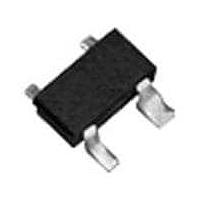
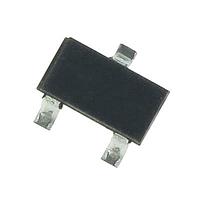
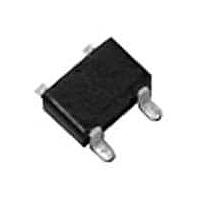
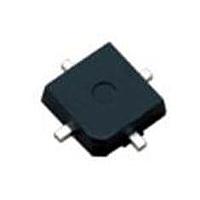
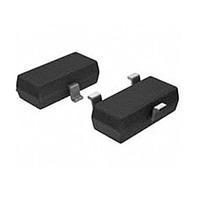
RF Transistors
Power amplification, signal switching, and front-end efficiency all depend heavily on choosing the right semiconductor devices for the intended RF band and operating conditions. In many wireless designs, the transistor is not just a basic building block; it directly influences gain, thermal behavior, linearity, and long-term reliability across communication, industrial, and specialist RF systems.
RF Transistors in this category support a wide range of high-frequency design needs, from amplification stages to power handling applications where standard low-frequency devices are not suitable. For engineers, buyers, and design teams, this page brings together relevant options used in wireless and RF semiconductor workflows, with examples from established manufacturers and product families commonly selected for demanding applications.
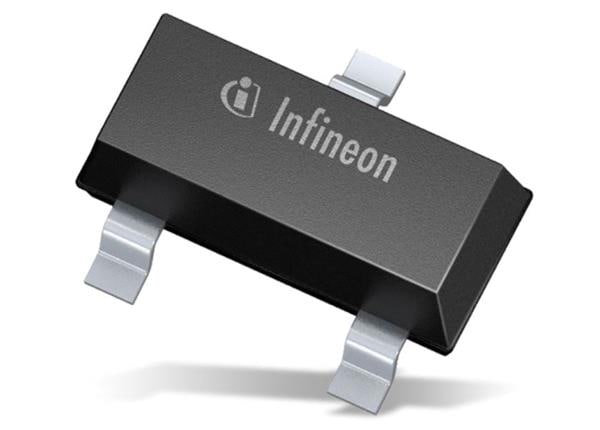
Where RF transistors fit in wireless system design
An RF transistor is typically chosen for operation at frequencies where parasitics, package behavior, matching networks, and thermal management become much more critical than in general-purpose switching designs. These devices are often used in transmit chains, power amplifier stages, driver stages, and other RF signal paths that require controlled performance across specific frequency ranges.
In practical system design, selection does not happen in isolation. Engineers often evaluate the transistor together with supporting components such as isolators or impedance-control elements elsewhere in the RF chain. That broader context matters because gain, reflected power tolerance, and matching stability can all affect final circuit behavior.
Key selection factors for RF transistor applications
The most important starting point is the operating frequency range. An RF transistor that performs well in one band may not be appropriate in another, especially when the design target includes narrowband amplification, pulsed operation, or high-power continuous-wave use. Voltage handling, current capability, package style, and thermal dissipation should also be reviewed together rather than one by one.
Another major factor is mounting and mechanical integration. Some designs benefit from surface-mount packages for compact layouts, while others require screw-mount or flange-style formats to improve heat transfer in higher-power assemblies. The right choice depends on the full electrical and thermal design, not just headline power figures.
For teams comparing broader device options, it may also be useful to review related wireless and RF integrated circuits when deciding whether a discrete transistor or a more integrated front-end approach better suits the project.
Examples from Infineon and Microchip
This category includes representative devices from Infineon and Microchip that illustrate different RF transistor use cases. On the Infineon side, parts such as PTVA123501FCP2, PTVA123501ECP2, PTVA101K02EV P1, and PTVA120501EA P1 show how RF FET devices are positioned for frequency-specific power applications. The listed examples suggest suitability for design work where RF power handling and band-focused operation are central considerations.
Microchip examples in this category include ARF460AG, ARF463BG, ARF1500, ARF1501, VRF2944, VRF2933MP, and VRF2944MP. These parts help illustrate the variety available within RF FET and RF power transistor selection, from devices intended for compact integration to options better aligned with higher dissipation or mechanically robust mounting approaches.
When reviewing individual products, it is worth comparing not only the transistor technology but also the intended frequency window, package construction, and thermal path. Those details usually have a direct impact on matching network design, heatsinking strategy, and system efficiency.
Frequency, power, and thermal considerations
At RF, transistor selection is closely tied to the balance between output power, efficiency, and heat removal. Even when two devices appear similar at a category level, differences in dissipation capability, maximum drain-source voltage, or allowable junction temperature can lead to very different design outcomes once the amplifier is driven near its intended operating region.
For example, some listed parts indicate suitability for relatively specific RF bands, while others point to broader high-power FET usage. That distinction is important in applications such as industrial RF generation, communication transmitters, and specialist amplification systems where stability across the target band matters as much as raw power capability.
Thermal management should therefore be treated as part of transistor selection from the start. Package style, PCB layout, mounting pressure where relevant, and heatsink interface quality all influence whether the device can deliver repeatable RF performance in real operating conditions.
How RF transistors relate to other RF semiconductor categories
In many architectures, RF transistors work alongside components that control signal direction, protect sensitive stages, or improve front-end stability. Depending on the application, designers may combine them with RF circulators in power transmission paths, especially where reflected energy management is important.
There can also be overlap in how users search for these devices. Some buyers look specifically for discrete RF transistor products, while others begin with a broader search around RF semiconductors and only later narrow the choice by transistor type, power class, or frequency range. That is why category-level comparison remains useful during early sourcing and specification review.
What buyers and engineers should review before ordering
For procurement teams, part selection is usually easier when the electrical target is already clear: required frequency band, expected output power, biasing approach, and acceptable thermal envelope. Without those inputs, comparing parts only by package or part number can lead to mismatched selections and longer design validation cycles.
For engineering teams, it helps to verify the complete operating context: load conditions, matching network assumptions, duty cycle, cooling method, and board or fixture constraints. If the design may evolve toward a different architecture, a broader look at Microchip or other manufacturer portfolios can also help identify adjacent device families for future revisions.
Application fit matters more than choosing the most powerful-looking device on the page. A well-matched RF transistor typically delivers better efficiency, easier integration, and more predictable performance than an oversized part that complicates layout and thermal design.
Finding the right option for your RF project
This category is intended for users who need discrete transistor solutions for wireless and RF designs, whether for new development, part comparison, or sourcing support. The available products from manufacturers such as Infineon and Microchip provide a practical starting point for evaluating RF FET and RF power transistor options across different frequency and mechanical requirements.
When narrowing down choices, focus on the real operating band, power target, package style, and thermal design strategy first. That approach makes it easier to identify suitable RF transistors for stable, efficient performance and to build a more reliable RF signal chain around them.
Get exclusive volume discounts, bulk pricing updates, and new product alerts delivered directly to your inbox.
By subscribing, you agree to our Terms of Service and Privacy Policy.
Direct access to our certified experts