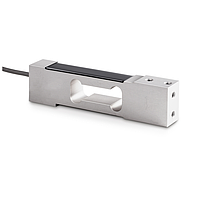
Load cell
Accurate force and weight measurement is essential in industrial automation, testing, batching, and process control. When a system needs to convert a physical load into a reliable electrical signal, load cell technology is often the practical foundation behind that measurement chain.
This category is intended for engineers, system integrators, maintenance teams, and technical buyers looking for sensing solutions used in weighing systems, force monitoring, material handling, and machine safety. Depending on the application, the right device is not only about capacity, but also about installation method, signal quality, environmental conditions, and how the sensor will interact with indicators, controllers, or data acquisition hardware.
Where load cells are used in industrial systems
A load cell is commonly selected when a machine or process must measure force, weight, tension, compression, or reaction load with repeatable output. Typical use cases include tank weighing, hopper and silo monitoring, checkweighing, press force verification, material testing, filling systems, and OEM equipment where mechanical load must be translated into actionable process data.
In many installations, the sensor is only one part of a larger measurement architecture. Signal conditioning, mounting hardware, calibration routines, and controller integration all influence overall performance. For this reason, buyers often compare not just the sensor itself, but also the surrounding sensing ecosystem, especially when the application sits alongside devices such as level sensors or other process instrumentation.
How load cells work in practice
Most load cells operate by converting mechanical deformation into an electrical signal that can be measured and scaled. In practical terms, when force is applied to the sensing element, the output changes in proportion to the load. That signal can then be interpreted by a transmitter, indicator, PLC input chain, or test instrument depending on the system design.
The quality of a measurement depends on more than the sensor principle alone. Mechanical alignment, mounting rigidity, overload protection, cable routing, and electrical noise control all affect stability and repeatability. In industrial environments, these factors are often just as important as rated capacity when choosing a suitable solution.
Key selection factors before you choose
Choosing the right load cell starts with understanding the actual loading condition. Engineers typically evaluate whether the application involves static weighing or dynamic force measurement, compression or tension, single-point or multi-point loading, and whether shock, vibration, or off-axis force may occur during operation.
Other important criteria include measurement range, required accuracy, available installation space, environmental exposure, and interface compatibility. If the sensor will be used outdoors or in washdown areas, sealing and long-term durability become more critical. If it will be used inside automated machinery, response behavior and electrical integration may matter more than enclosure style alone.
Signal type also affects system design. Some installations prioritize straightforward analog integration, while others focus on compatibility with higher-level control and monitoring platforms. In broader instrumentation projects, load cells may be specified alongside environmental sensors to correlate force or weight data with ambient operating conditions.
Common application groups and system context
In weighing applications, load cells are often used under tanks, platforms, conveyors, or dosing assemblies to provide process feedback. In test and measurement setups, they may support fixture validation, material characterization, or force verification during production and quality control. In automation, they can help identify jams, monitor tension, or confirm that a commanded mechanical action actually occurred.
Application context matters because the same nominal force range can behave very differently depending on structure and motion. A packaging line, for example, may need fast and stable signal response under repetitive cycles, while a storage vessel may prioritize long-term drift resistance and robust mounting. Where the process also depends on fluid behavior or air movement, related categories such as flow sensors & pitot tubes may be part of the same system-level specification.
Manufacturers commonly considered in this category
This category includes solutions associated with established industrial and sensing brands such as Honeywell, OMEGA, TE Connectivity, SIEMENS, Alps Alpine, Omron Automation and Safety, Panasonic Industrial Automation, Qorvo, and Honeywell Test & Measurement. Brand choice is often driven by application fit, documentation quality, integration preferences, and existing standards within a plant or OEM design environment.
Rather than selecting by brand alone, it is usually more effective to compare product families by intended duty, mounting concept, signal characteristics, and support for the target control architecture. This is especially relevant in B2B procurement, where replacement compatibility, maintenance planning, and lifecycle considerations can matter as much as the initial specification.
Installation and measurement considerations that affect performance
Even a well-chosen load cell can deliver poor results if the mechanical setup is not controlled. Side loading, uneven supports, poor foundation stiffness, cable strain, and thermal expansion can all introduce error. In multi-sensor systems, matching and proper junction handling are also important to maintain consistent measurement across the structure.
Calibration and mounting quality should therefore be treated as part of the measurement solution, not an afterthought. For engineering teams working across multiple sensing functions, it may also be useful to review adjacent technologies such as color sensors for inspection tasks or other transducers used within the same automated line.
How to evaluate load cells for purchasing and integration
For technical purchasing, the most useful approach is to begin with the operating scenario: what load must be measured, how it is applied, what accuracy is required, and what constraints exist in the machine or structure. From there, the shortlist can be narrowed by output compatibility, installation method, protection level, and expected maintenance conditions.
For integration teams, it is worth checking the complete signal path in advance. That includes the sensor, cabling, signal conditioning, controller input, and any display or supervisory software used to interpret the data. A strong specification process reduces commissioning time and lowers the risk of selecting a device that fits on paper but performs inconsistently in the actual operating environment.
Final considerations
Load cells support a wide range of industrial measurement tasks, from straightforward weighing to force-based machine feedback and process verification. The most suitable choice depends on how the load is applied, how the sensor will be mounted, and how the output will be used inside the broader control or test system.
When comparing options in this category, focus on application conditions and integration requirements rather than capacity alone. A well-matched load cell can improve measurement reliability, help stabilize process control, and support more predictable system performance over time.
Get exclusive volume discounts, bulk pricing updates, and new product alerts delivered directly to your inbox.
By subscribing, you agree to our Terms of Service and Privacy Policy.
Direct access to our certified experts