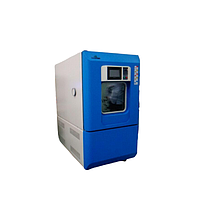
Pharmaceutical equipment
Reliable pharmaceutical workflows depend on more than one instrument. In practice, quality control, formulation studies, stability programs, and visual inspection all require equipment that can maintain controlled conditions, deliver repeatable test results, and support documented laboratory procedures. This is why choosing the right Pharmaceutical equipment category matters for laboratories, manufacturers, and regulated production environments.
Within this range, buyers can typically focus on equipment used for drug stability testing, tablet and capsule inspection, dissolution analysis, and supporting analytical checks. The goal is not simply to fill a lab with devices, but to build a workflow where each instrument supports product quality, consistency, and traceable testing.
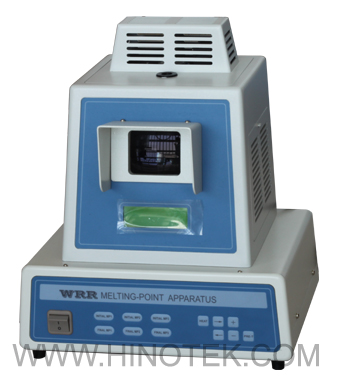
Equipment used across pharmaceutical testing and quality control
Pharmaceutical laboratories often need instruments for both environmental simulation and product performance evaluation. Controlled chambers are commonly used for long-term or accelerated stability work, while dissolution testers help assess how solid dosage forms behave in testing conditions designed for method development or routine QC. Inspection systems add another layer by helping detect visible defects or dimensional issues in tablets and capsules.
For users who also work with broader laboratory measurement tasks, complementary analytical brands such as Mettler Toledo and KRUSS may be relevant in adjacent workflows. In a pharmaceutical setting, this broader ecosystem is important because product quality usually depends on both dosage-form testing and supporting lab verification.
Drug stability chambers for controlled environmental studies
One of the most important equipment groups in this category is the drug stability test chamber. These systems are used to maintain controlled temperature and humidity conditions for studies related to shelf life, packaging performance, and formulation stability. In regulated environments, stable chamber performance and reliable monitoring are essential because environmental variation can affect test validity.
Several representative models from Bonnin illustrate the range of chamber capacities available, including the Bonnin LHH-120SDP, LHH-225SDP, LHH-400SDP, LHH-500SDP, and LHH-800SDP. Across these examples, the general focus is on controlled temperature and humidity operation, data recording, alarm functionality, and chamber construction suited to routine laboratory use.
When comparing stability chambers, buyers usually look at usable internal volume, shelf configuration, controller interface, alarm and data export functions, and how easily the unit fits into existing validation or documentation procedures. Capacity should match the sample load and test schedule, while controller stability and record keeping often matter just as much as chamber size.
Dissolution testing for tablets and solid dosage forms
Dissolution testing plays a central role in evaluating tablet performance, formulation consistency, and batch-to-batch behavior. It is commonly used in product development, process verification, and quality control, especially where release characteristics need to be monitored under controlled test conditions.
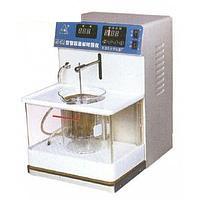
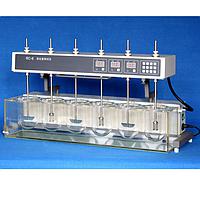
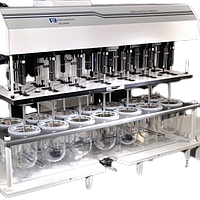
The Bonnin RCZ-6N and Bonnin RCZ-8N tablet dissolution testers are examples of instruments designed for multi-position testing. Based on the provided data, these systems support controlled rotation speed, temperature management, and repeated sampling over defined intervals. In practical terms, this helps laboratories run standardized dissolution procedures with repeatable operating conditions.
For selection, the key points are usually the number of vessels required, ease of parameter setting, temperature accuracy, and suitability for routine method execution. Labs running higher sample throughput may prefer more positions, while smaller QC rooms may prioritize compact layouts and straightforward operation.
Automated inspection for tablets and capsules
Visual and dimensional inspection remains an important step in pharmaceutical production, especially for solid dosage forms where surface defects, shape issues, or other appearance-related problems can affect downstream quality decisions. This is where inspection machines become highly relevant, particularly in environments aiming to improve consistency and reduce manual inspection load.
The NFA SELMA100 T tablet inspection machine, NFA SELMA100 C capsule inspection machine, NFA SELMA150 H, and NFA SELMA150 C show how this category can include camera-based systems for different product formats. From the available context, these machines are positioned for tablet or capsule inspection with multi-camera configurations, which supports broader visual coverage during automated checks.
When reviewing this type of equipment, it is useful to consider product format compatibility, inspection capacity, camera configuration, and how the machine fits into existing production or QA workflows. The right choice depends on whether the application focuses on tablets, hard gelatin capsules, or higher-throughput inspection demands.
Supporting checks and reagent-based verification
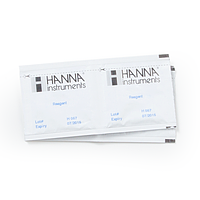
Not every pharmaceutical workflow depends only on large instruments. Some processes also require smaller supporting items for routine verification or water-related quality checks. In that context, products such as the HANNA HI719-25 Magnesium Hardness Checker HC Reagents can play a supporting role where hardness-related testing chemistry is part of a broader analytical routine.
This kind of item is best understood as part of the wider lab support ecosystem rather than a standalone pharmaceutical production machine. Buyers managing water quality, sample preparation, or lab verification tasks may also explore relevant analytical suppliers such as HANNA or broader instrument sources like PG instruments where appropriate for related laboratory applications.
How to choose pharmaceutical equipment for your application
The best selection process starts with the actual workflow. A stability study lab will have different priorities from a tablet QC room, and both differ from a production line focused on automated inspection. Before comparing models, it helps to define the dosage form, required throughput, environmental control needs, data handling expectations, and available installation space.
It is also worth reviewing whether the equipment will be used for research, method development, routine QC, or production support. For example, a chamber used in ongoing stability programs may require strong attention to logging and alarm functions, while an inspection system may be chosen mainly for throughput and product-format compatibility. A dissolution tester, in turn, is often evaluated around repeatability, vessel count, and ease of daily operation.
- Application fit: stability testing, dissolution work, visual inspection, or supporting analytical checks
- Capacity: chamber size, number of test positions, or inspection throughput
- Control and documentation: controller usability, alarms, data recording, and export options
- Installation conditions: footprint, power requirements, and integration into the lab or production area
- Product compatibility: tablets, capsules, or other dosage-form-specific needs
Building a practical pharmaceutical lab equipment setup
In many facilities, pharmaceutical equipment is selected as part of a broader laboratory system rather than as isolated purchases. A stability chamber supports sample conditioning and shelf-life programs, a dissolution tester supports release and formulation testing, and inspection machines help strengthen visual quality control. Together, these instruments create a more complete workflow for product evaluation.
Even where the category contains very different device types, they are linked by the same operational priorities: repeatability, controlled conditions, traceable records, and suitability for regulated or quality-sensitive environments. Choosing equipment with those priorities in mind usually leads to a more practical and scalable setup.
Final considerations
This Pharmaceutical equipment category brings together instruments that support key laboratory and production-side tasks in the pharmaceutical field, from environmental stability studies to dissolution analysis and automated inspection. Representative products from Bonnin, NFA, and HANNA show the range of applications covered, whether the need is chamber control, dosage-form testing, or supporting lab checks.
If you are comparing options, start with the test method or production task you need to support, then narrow the shortlist by capacity, control features, and workflow fit. That approach makes it easier to select equipment that not only matches a specification sheet, but also performs reliably in day-to-day pharmaceutical operations.
Get exclusive volume discounts, bulk pricing updates, and new product alerts delivered directly to your inbox.
By subscribing, you agree to our Terms of Service and Privacy Policy.
Direct access to our certified experts