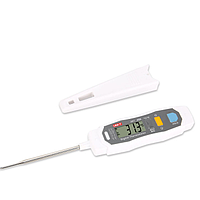
Temperature Measurement
Accurate temperature data is essential in maintenance, process control, building inspection, laboratories, and product quality verification. Whether the task involves checking a hot electrical connection, validating surface temperature, or monitoring a process with a probe, the right instruments help teams work more safely and make better technical decisions.
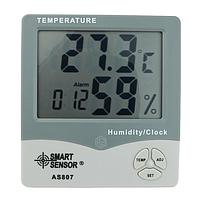
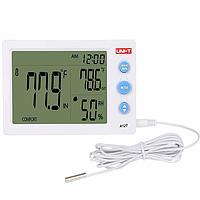
Temperature Measurement covers a broad range of tools for both contact and non-contact measurement. This category includes handheld infrared thermometers, thermal cameras, digital thermometers, and temperature probes for different materials, surfaces, and operating conditions. It is designed for professional users who need practical solutions for field diagnostics, troubleshooting, and routine inspection.
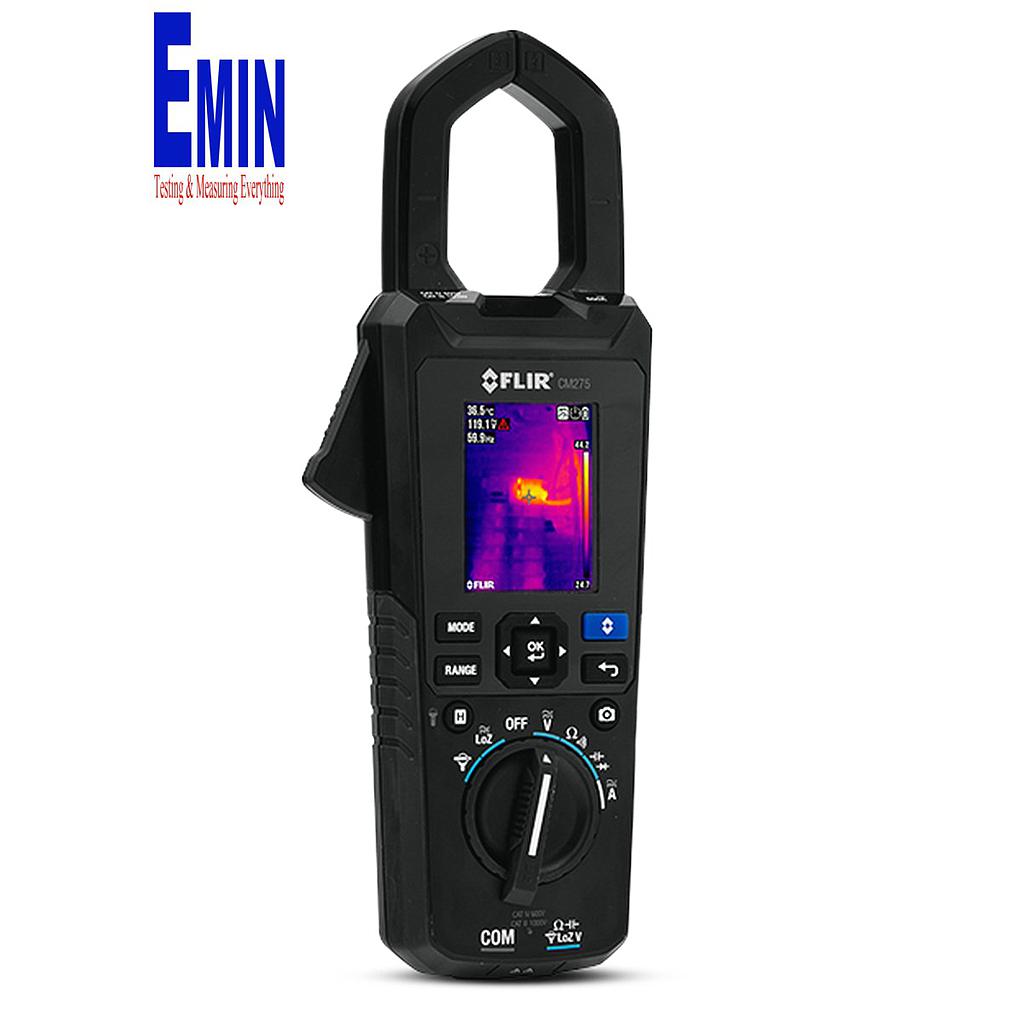
Choosing the right method for the application
In industrial and technical environments, temperature is not measured in just one way. The most suitable method depends on whether the target is moving, hard to access, electrically live, very hot, or requires direct sensor contact for better stability and traceability.
Non-contact measurement is typically preferred when speed and safety matter. Infrared thermometers and thermal cameras allow operators to check temperature from a distance, which is useful for electrical panels, rotating equipment, HVAC inspections, and hot surfaces. For applications that require direct sensing inside air streams, on pipes, or on product surfaces, contact measurement with thermocouples or resistance probes remains a practical choice.
Infrared thermometers for fast surface checks
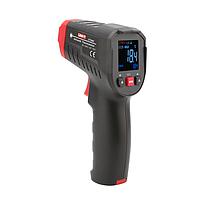
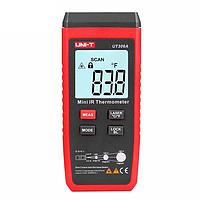
Infrared thermometers are widely used for quick spot measurements on accessible surfaces. They are especially useful when the object is too hot to touch or when the measurement needs to be taken without interrupting operation. In this category, models such as the Chauvin Arnoux CA 1860 Infrared Thermometer and the Chauvin Arnoux CA 1862 Infrared Thermometer illustrate the kind of handheld instruments commonly selected for maintenance and inspection work.
When comparing this type of device, users usually look at factors such as measurement range, distance-to-spot ratio, emissivity setting, response time, and environmental protection. Adjustable emissivity can be important when measuring different surface finishes, while a suitable optical ratio helps improve confidence when the target area is small or measured from farther away.
For buyers standardizing on one supplier, the Chauvin Arnoux product range is relevant here because it spans handheld infrared tools, thermal cameras, and probe-based instruments within the same ecosystem.
Thermal imaging for diagnostics and condition monitoring
When a single spot reading is not enough, thermal cameras provide a broader thermal picture of the scene. This helps users identify heat patterns, temperature distribution, and abnormal zones that may be missed with a basic point-and-shoot thermometer. Thermal imaging is commonly used for preventive maintenance, insulation checks, mechanical condition monitoring, and electrical inspection.
Examples in this category include the Chauvin Arnoux C.A 1954 DiaCAm2 Thermal camera and the Chauvin Arnoux C.A 1900 Thermal camera for measuring body temperature. These products represent different use cases within thermal imaging, from general diagnostic work to specialized screening applications. In practice, selection often depends on detector resolution, measurement range, image interpretation functions, storage workflow, and how the instrument fits into reporting requirements.
Where a visual thermal overview is the priority, many users may also want to explore the dedicated thermal imaging camera section for more focused options.
Contact thermometers and probes for direct measurement
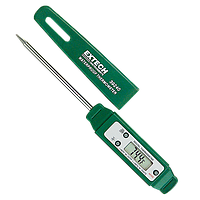
For applications where direct sensor contact is necessary, handheld thermometers and interchangeable probes offer flexibility across many tasks. This approach is common in laboratories, food-related checks, HVAC balancing, machine servicing, and industrial process verification where a probe must touch air, liquid, pipework, or a solid surface.
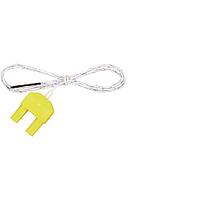
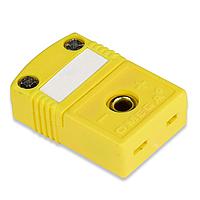
The Chauvin Arnoux TK 2002 Digital Thermometer is a good example of a portable instrument built around Type K thermocouple measurement. Probe compatibility is often just as important as the meter itself. Options such as the Chauvin Arnoux P03652903 Type K wire thermocouple probe, SK13 Temperature Probe, SK14 Temperature Probe, SK17 K Type Thermal Probe, and P03652921 K Type Thermal Probe show how different probe formats support different measurement tasks.
Users looking specifically for handheld direct-contact instruments can also review the portable contact thermometer category for related solutions.
Understanding common sensor and probe options
Probe selection affects response, durability, and suitability for the medium being measured. Type K thermocouples are frequently chosen because they cover a broad temperature range and are widely used in portable instruments. They are suitable for many maintenance and industrial field applications where versatility matters.
Resistance-based probes such as PT1000 sensors are often associated with stable, repeatable measurement in compatible instruments. The Chauvin Arnoux P01710070 PT1000 temperature probe illustrates this type of accessory within the broader temperature measurement ecosystem. Choosing between thermocouple and RTD-style probes generally depends on the instrument interface, expected range, required response characteristics, and the process environment.
What to consider before ordering
Before selecting a temperature measurement device, it is helpful to define the actual measurement task rather than starting from the instrument type alone. Surface, air, liquid, and body-related measurements do not use the same sensing approach. The expected temperature range, access distance, target size, ambient conditions, and required documentation all influence the decision.
In many industrial settings, protection rating, drop resistance, battery format, and accessory availability matter as much as core measurement performance. For example, field users may prioritize a rugged handheld infrared unit, while service teams may need a camera that supports image storage and reporting. Where accessories are required for power or integration, items such as the Chauvin Arnoux P01651533 power adapter can also play a supporting role in day-to-day operation.
For applications centered specifically on spot measurement from a distance, the infrared thermometer range can be a useful next step.
Typical use cases across industry
Temperature measurement tools are used in a wide variety of sectors. Maintenance teams rely on them to detect overheating terminals, bearings, motors, and panels. Building professionals use them to identify thermal bridges, insulation issues, and HVAC performance problems. In workshops and process environments, probes and handheld thermometers help verify equipment temperature, product conditions, and test points during operation.
Because no single instrument fits every job, many organizations combine methods. A thermal camera may be used to locate the anomaly, an infrared thermometer to confirm a quick surface reading, and a contact probe to verify the actual process temperature at the point of interest. This layered approach often improves both efficiency and measurement confidence.
Building a practical temperature measurement setup
A useful setup usually starts with the measurement principle that best matches the task, then expands with the right accessories and probes. Teams that perform mixed inspection work often benefit from having both non-contact and contact instruments available. This reduces compromise and allows the technician to choose the most suitable method on site.
Across this category, buyers can find instruments and accessories that support routine inspection, troubleshooting, and targeted verification. From handheld infrared devices to thermal imaging and probe-based measurement, the goal is the same: obtaining reliable temperature information in a form that suits the application, the environment, and the workflow.
When evaluating options, focus on the actual measurement scenario, required range, sensing method, and accessory compatibility. A well-matched temperature measurement solution is not just about reading a number; it supports safer maintenance, better diagnostics, and more informed technical decisions.
Get exclusive volume discounts, bulk pricing updates, and new product alerts delivered directly to your inbox.
By subscribing, you agree to our Terms of Service and Privacy Policy.
Direct access to our certified experts