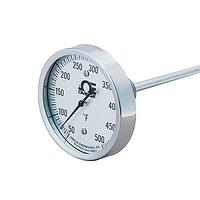
Dial Thermometer
When temperature needs to be checked quickly, locally, and without relying on a powered display, a dial thermometer remains a practical choice. In HVAC systems, hot water loops, process lines, and general industrial maintenance, analog temperature indication is often preferred for its simplicity, instant readability, and straightforward installation.
This category brings together mechanical temperature indicators designed for direct visual monitoring at the point of measurement. Whether you need a pipe-mount unit for surface readings or a hot water thermometer for routine system checks, these instruments are widely used where operators want a durable and easy-to-read temperature reference.
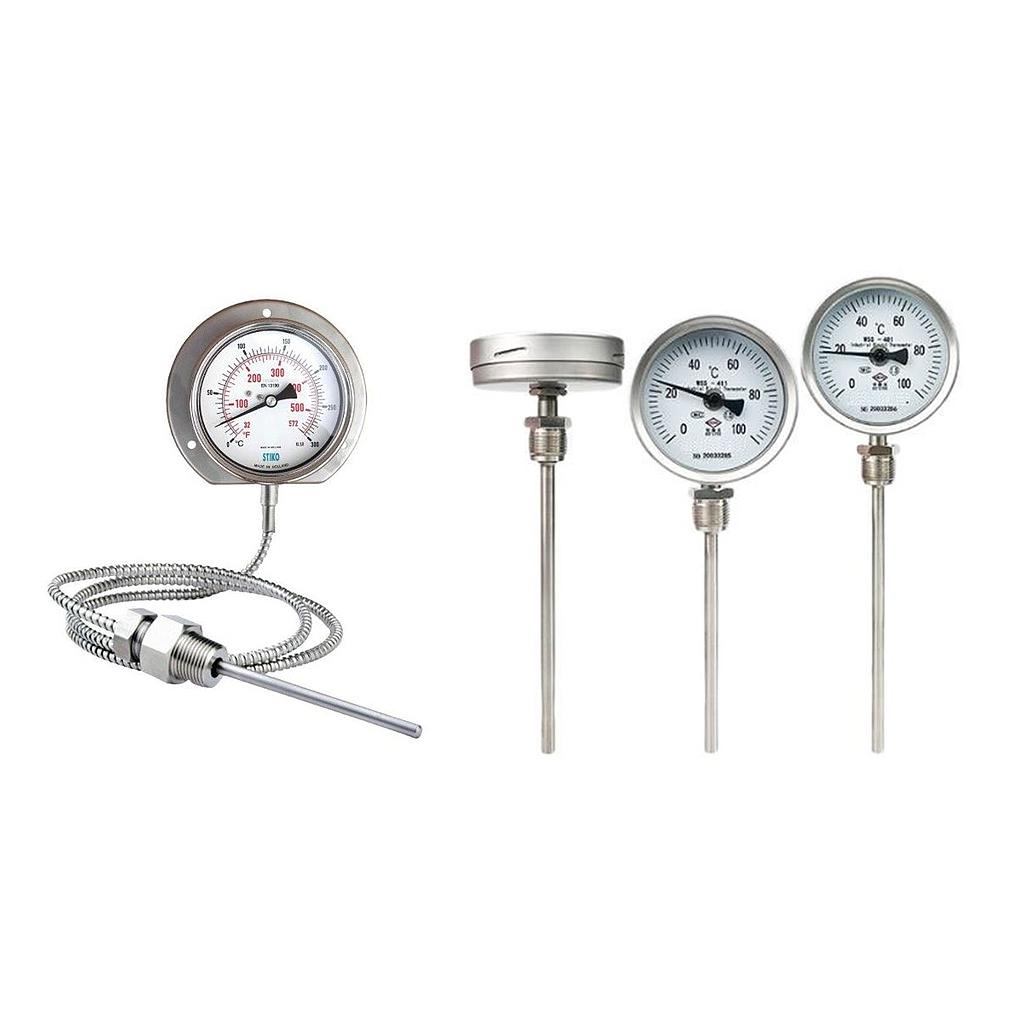
Where dial thermometers are commonly used
Dial thermometers are found across building services, boiler rooms, hydronic heating, chilled water networks, and light industrial processes. Because they provide a direct local reading, they are useful in locations where technicians need to verify temperature conditions during startup, balancing, inspection, or troubleshooting.
They are also a strong fit for systems where a simple mechanical device is more appropriate than an electronic indicator. In many facilities, dial-type instruments complement broader temperature meters and indicators by offering a visible checkpoint right at the pipe, vessel, or loop being monitored.
How a dial thermometer works
Most products in this category use a bimetal sensing element. As temperature changes, bonded metals with different expansion rates move in a predictable way, and that motion drives the pointer across the dial. This design allows the thermometer to indicate temperature without external power, making it suitable for routine field use.
The main advantages of this approach are reliability, ease of reading, and low maintenance. It is especially useful for operators who need fast confirmation of operating conditions rather than logged data or signal output. For applications requiring a broader temperature monitoring setup, related items such as temperature accessories can help complete installation or replacement needs.
Typical dial thermometer styles in this category
The current range is centered on practical industrial and HVAC-oriented formats. One example is the Dwyer HWT250, a bi-metal hot water thermometer with dual °F/°C scales and a calibration screw, which is useful where maintenance teams want convenient unit conversion and field-adjustment capability.
Another important group includes clip-on surface thermometers for pipe monitoring. Models such as the Dwyer STC351, STC352, STC361, STC362, STC371, STC441, STC451, STC461, STC462, STC471, and STC472 are designed for rapid surface readings in HVAC service and similar applications. These instruments are suited to checking pipe temperature without inserting a probe into the process.
What to consider when selecting a dial thermometer
The first factor is the measurement range. The selected thermometer should cover the expected operating temperature with enough margin for normal fluctuations, but it should not be excessively oversized if you want clear resolution around the target range. In this category, available models span both Fahrenheit and Celsius ranges, including versions suitable for lower-temperature water systems as well as hotter lines.
Mounting method is equally important. Pipe-mount thermometers need to match the outside diameter range of the pipe, while other dial thermometers may be intended for dedicated hot water indication. It is also worth checking whether dual scales are needed, especially in sites where both metric and imperial units are used.
Finally, think about the operating environment. Material construction, glass dial cover, and overall mechanical design matter in maintenance-heavy areas where instruments may be exposed to repeated handling, ambient temperature changes, or general plant conditions. If your application moves beyond point indication and requires non-contact scanning, a thermal imaging camera may be a better complement for broader diagnostics.
Dwyer models as practical examples
Dwyer is one of the most visible brands in this selection, particularly for mechanical thermometers used in HVAC and utility systems. The STC series illustrates a simple but effective approach: compact 2-inch dial thermometers with clip mounting for specific pipe size ranges, intended for fast local verification of surface temperature.
For example, the STC351 and STC352 support smaller pipe diameters and offer different Fahrenheit or Celsius ranges, while the STC461, STC462, STC471, and STC472 address higher ranges and larger pipe sizes. The HWT250, by contrast, is positioned more as a hot water thermometer with dual-scale readability. These examples show how selection typically depends less on brand alone and more on installation style, pipe size, and required temperature span.
When analog indication is the right choice
A dial thermometer is often the right fit when teams want a local visual reference that is easy to interpret during walk-through inspections. It is also useful where power is not available, where electronic instrumentation would be unnecessary, or where a simple check point helps validate process conditions without adding complexity.
That said, analog dial thermometers are usually chosen for on-site indication rather than remote transmission or advanced data logging. In systems that need trending, alarms, or integration with controls, they are commonly used alongside other temperature measurement devices rather than as a complete replacement.
Supporting a complete temperature measurement setup
In many facilities, dial thermometers are only one part of the wider maintenance toolkit. Surface-reading units help technicians verify pipe conditions quickly, while other products may be better for temporary checks, cable-based sensing, or irreversible over-temperature evidence. For example, temperature indicating labels can be useful where a visual record of heat exposure is needed.
This makes the category especially relevant for buyers who are building a practical mix of local indication, maintenance inspection, and routine operational monitoring. Choosing the right device usually comes down to where the temperature is measured, how the reading will be used, and whether the requirement is continuous viewing or occasional verification.
Conclusion
For straightforward, point-of-use temperature monitoring, dial thermometers continue to offer strong value in industrial and HVAC environments. They are easy to read, simple to install in the right configuration, and well suited to routine service work where dependable local indication matters.
As you compare options in this category, focus on the sensing style, mounting method, pipe size compatibility, scale format, and temperature range that best match your application. A well-matched dial thermometer can provide clear day-to-day visibility into system performance without adding unnecessary complexity.
Get exclusive volume discounts, bulk pricing updates, and new product alerts delivered directly to your inbox.
By subscribing, you agree to our Terms of Service and Privacy Policy.
Direct access to our certified experts