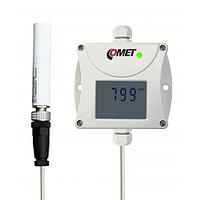
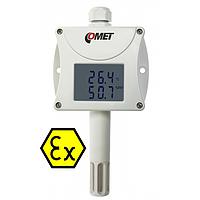
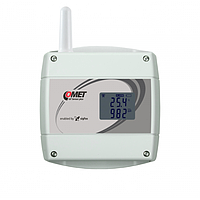
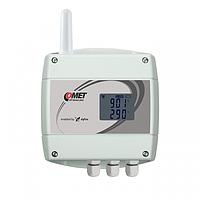
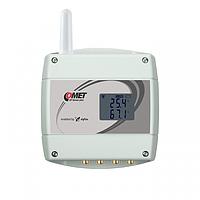
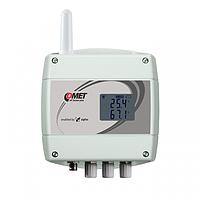
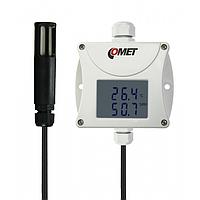
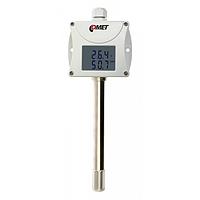
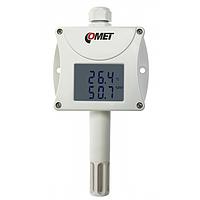
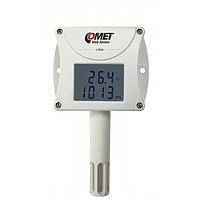
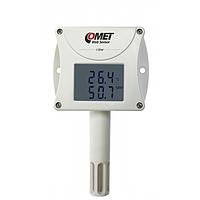
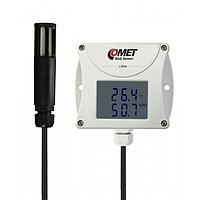
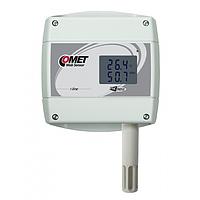
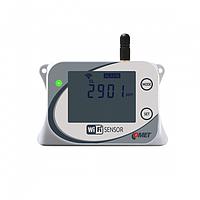
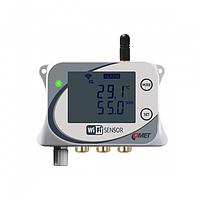
Hygro-Thermometer
Controlling ambient conditions is essential in warehouses, laboratories, HVAC work, food handling, electronics storage, and many other industrial settings. When both temperature and relative humidity affect product quality, process stability, or workplace conditions, a Hygro-Thermometer becomes a practical tool for fast on-site verification and routine environmental monitoring.
This category brings together handheld and probe-based instruments used to measure humidity and temperature in air, with some models also supporting values such as dew point or wet bulb temperature. The range is suitable for users who need anything from quick spot checks to more consistent measurement workflows across maintenance, quality control, and facility management.
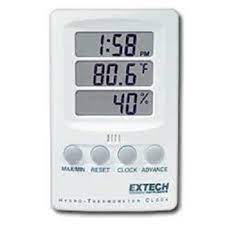
What a hygro-thermometer is used for in practice
A hygro-thermometer is designed to measure two key environmental variables at the same time: air temperature and relative humidity. This combination is important because humidity readings are only meaningful when interpreted together with temperature, especially in applications involving ventilation, storage conditions, condensation risk, or personnel comfort.
In real working environments, these instruments are commonly used to verify room conditions, inspect ducts and vents, monitor storage areas, and support preventive maintenance. For broader comparison with other handheld temperature tools, users may also review temperature meters and indicators when humidity is not the main parameter.
Common measurement needs covered by this category
Not every application requires the same form factor. Some users need a simple handheld meter for routine checks, while others need a sensor or probe arrangement that can reach tighter or more exposed locations. In this category, the product mix reflects that difference, from integrated portable meters to separate humidity and temperature sensors.
For example, the FLUKE-972B is a portable temperature and humidity meter with internal and external sensing capability, making it useful where both local ambient readings and extended-point measurements are needed. The FLUKE-972ES, by contrast, fits applications where an external sensor format is more appropriate for reaching the target point without placing the full meter body in the same location.
Key parameters to compare before selecting a model
When evaluating a hygro-thermometer, the first points to check are measurement range, accuracy, and resolution. Industrial users often need confidence not only in nominal room-condition readings but also in performance near lower or higher temperature limits, or at humidity extremes where sensor error can increase.
It is also useful to consider data handling and display functions. Some portable instruments in this category support basic memory storage, allowing users to save multiple measurement points during inspections. Features such as backlit displays, battery-powered operation, and portable housings are especially relevant for field technicians who move between plant rooms, storage zones, and service locations.
If your workflow depends on replaceable probes, sensor compatibility, or supporting parts, it may also be worth exploring temperature accessories for the wider measurement setup.
Examples of instruments and probes in the range
Several products in this category illustrate different usage scenarios. The FLUKE 971 and FLUKE-972B are representative handheld meters for combined humidity and temperature checks, with practical specifications for portable environmental measurement. These types of instruments are well suited to facility inspection, service work, and general-purpose monitoring where quick results matter.
From TESTO, the TESTO 625 Digital thermohygrometer shows the typical role of a dedicated portable device for routine ambient checks, while the TESTO 0572 2155 Humidity/Temperature probe supports users who work within a probe-based measurement ecosystem. Accessories such as the TESTO 0613 4611 Pipe Wrap Probe NTC are not humidity meters themselves, but they help extend temperature measurement capability around related HVAC or process checks.
This category context also includes products such as TESTO temperature strips and measuring points. These are better understood as supporting tools for surface or threshold indication rather than substitutes for continuous humidity-and-temperature measurement. If that type of solution is relevant, see temperature indicating labels for products intended specifically for irreversible or visual temperature indication.
Where humidity and temperature monitoring matters most
Combined monitoring is especially important in locations where moisture can affect materials, equipment, or compliance. Typical examples include warehouses storing paper, chemicals, components, or packaging; production areas sensitive to condensation; and HVAC inspection points where comfort and ventilation performance need to be checked together.
In laboratories and quality-controlled environments, users often track humidity and temperature as part of a broader environmental verification routine. Even where process heat is the main issue, ambient moisture can still influence calibration stability, sample handling, or storage conditions. For non-contact thermal surveys of equipment surfaces or hot spots, a thermal imaging camera may complement a hygro-thermometer rather than replace it.
How to choose the right device for your workflow
If the main task is spot-checking room air in offices, warehouses, technical rooms, or service areas, a handheld integrated meter is usually the most straightforward choice. Look for a practical operating range, stable humidity accuracy in the expected band, and a display that is easy to read during field work. A model with memory can help when multiple rooms or inspection points need to be logged during one route.
If the measurement point is hard to reach or physically separated from the operator, a sensor-based or external-probe format may be more suitable. This setup can be helpful in ducts, enclosed spaces, or installations where the user needs to position the sensing element precisely while keeping the main instrument outside the area.
Users should also consider the environment around the measurement task. Battery life, instrument size, storage conditions, and housing protection can matter just as much as basic accuracy, especially when the instrument will be used regularly by maintenance teams or carried between multiple sites.
A practical category for environmental measurement
This hygro-thermometer range is intended for professionals who need dependable environmental readings without unnecessary complexity. Whether the requirement is a compact handheld meter, a dedicated humidity/temperature probe, or a supporting indicator product within the wider temperature measurement workflow, the category helps narrow down solutions based on actual use conditions.
By comparing sensing format, measurement range, and intended application, buyers can select instruments that fit daily inspection, facility monitoring, or technical service work more effectively. For most industrial and commercial users, the right choice is the one that matches the environment, the required level of accuracy, and the way measurements will be taken in the field.
Get exclusive volume discounts, bulk pricing updates, and new product alerts delivered directly to your inbox.
By subscribing, you agree to our Terms of Service and Privacy Policy.
Direct access to our certified experts