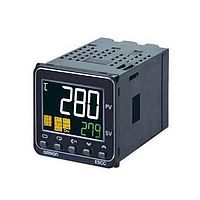
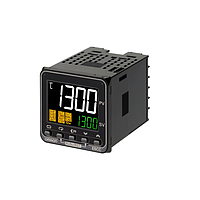
Temperature Controller
Stable temperature control is essential in ovens, dryers, packaging lines, HVAC equipment, plastic processing, and many other industrial systems. When a process depends on repeatable heating or cooling, the controller becomes the point where sensor input, control logic, alarms, and operator settings come together. This page brings together Temperature Controller solutions used to regulate thermal processes with practical options for panel mounting, sensor compatibility, and output selection.
Whether you are replacing an existing unit or building a new control panel, the right controller should match the sensor type, control method, mounting format, and communication needs of the application. In many cases, selection also depends on whether the process only needs simple switching or requires more refined PID control to reduce overshoot and improve stability.

Where temperature controllers are used
Temperature controllers are widely applied anywhere a measured temperature must be held near a setpoint. Typical examples include industrial ovens, heaters, chambers, food equipment, water tanks, drying systems, and general process machinery. In these environments, the controller reads a signal from a thermocouple or RTD, compares it to the target value, and adjusts the output to the heating or cooling device.
For basic applications, an ON/OFF controller may be enough. More demanding systems often benefit from PID control, especially when thermal inertia, fluctuating loads, or product sensitivity make precision important. If you also need local readout without active control, related temperature meters and indicators can help expand the overall monitoring setup.
Common controller formats in this category
This category includes several common panel sizes used in industrial enclosures, including 1/4 DIN and 1/8 DIN models. These form factors are popular because they fit standardized panel cutouts and are easy to integrate into OEM machines, utility panels, and retrofit projects.
Among the representative products shown here, the Dwyer 4C series focuses on temperature control with multi-input capability for RTD and thermocouple signals. The Dwyer 8C series is suited to temperature applications that need dual LED indication and configurable alarm behavior. For broader process requirements, the Dwyer 8B series adds support for temperature as well as DC voltage or DC current inputs, making it useful where thermal control is part of a larger process loop.
Input types and why they matter
One of the first selection points is sensor compatibility. Many industrial controllers in this category accept both thermocouple and RTD inputs, which gives more flexibility during installation or replacement. Thermocouples are often preferred for wide temperature ranges and rugged industrial use, while RTDs are commonly chosen when stable, repeatable measurement is a higher priority.
Some models also support process signals such as DC voltage or DC current. This is useful when the controller is not limited to direct temperature sensing, but instead receives a conditioned signal from a transmitter or another control device. In that case, the unit functions as a temperature or process controller rather than a temperature-only device.
Correct input selection affects not only compatibility, but also wiring method, displayed value, response behavior, and the practical temperature range available to the application. For sensor installation and extension needs, it may also be helpful to review temperature wire and cable options used alongside the control system.
Choosing the right output and control strategy
Output type should be matched to the final control element. Relay outputs are often used for switching contactors, alarms, or other discrete devices. Voltage pulse outputs are commonly paired with solid state relays in heating applications, while analog outputs such as 4 to 20 mA or linear voltage are relevant where the controller must drive a proportional device or retransmit a control signal.
Several examples in this category reflect those differences. The Dwyer 4C-3 uses a relay output for straightforward switching. The Dwyer 4C-2 provides a voltage pulse output, while the Dwyer 4C-5 offers current output capability. In the 8B series, models such as the Dwyer 8B-53 and 8B-63 combine process input flexibility with dual outputs, alarm functions, and RS-485 communication, which can be useful in more integrated control architectures.
When process conditions change frequently, a controller with auto-tuning and PID functionality can reduce manual setup time and improve loop performance. For simpler thermal loads with broad tolerance, ON/OFF operation may still be a practical and economical choice.
Communication, alarms, and panel integration
Modern temperature control often involves more than maintaining a setpoint. Communication interfaces such as RS-485 with Modbus can simplify connection to PLCs, HMIs, or supervisory systems for status monitoring and parameter management. This is especially useful in multi-zone equipment or distributed panels where operators need visibility across several heating points.
Alarm functions are equally important for process protection. Depending on the controller, alarms can be used for over-temperature indication, deviation alerts, sensor fault response, or general equipment interlocking. Units such as the Dwyer 8B series are designed for more complex use cases, with multiple alarm options and dual outputs that support broader process logic than a basic standalone controller.
If your installation also requires compatible sensors, mounting parts, or related hardware, browsing temperature accessories can help complete the system without mixing incompatible components.
Featured brands and example product families
This category includes solutions from established industrial suppliers, with brands such as Dwyer, Advantech, Autonics, Delta, Endress+Hauser, Fuji, and Honeywell represented in the broader temperature control landscape. Brand choice often comes down to preferred panel standard, control philosophy, communication requirements, and existing site conventions.
Within the featured products on this page, Dwyer provides a clear example of how controller families are structured for different needs. The 4C models are compact temperature controllers with multi-input support and common industrial outputs. The 8C models focus on PID temperature control with dual LED displays and custom alarm capability. The 8B range extends into temperature and process control with dual outputs, multiple alarms, and serial communication, making it suitable where a single controller must do more than basic thermal regulation.
How to narrow down your selection
For practical purchasing and engineering decisions, start with a few questions: What sensor are you using? What panel cutout is available? Do you need relay, pulse, current, or voltage output? Is PID required, and should the controller support auto-tuning? Will the unit operate as a local standalone controller, or does it need to communicate with a larger automation system?
It is also worth checking supply voltage, environmental protection, and display visibility for the actual installation environment. In many industrial panels, dual displays are useful because they show both process value and setpoint at the same time, improving operator clarity during startup and troubleshooting.
For broader temperature maintenance and verification tasks, some users also pair controllers with tools such as temperature indicating labels for quick visual confirmation in storage, transport, or maintenance workflows.
Support a more reliable temperature control system
A well-matched temperature controller helps improve consistency, protect equipment, and reduce unnecessary manual adjustment. The best fit is usually the one that aligns cleanly with your sensor type, required output, control complexity, and panel design rather than simply adding features that the process will never use.
Explore the available models in this category to compare panel size, input compatibility, output style, and communication features. If you are planning a new installation or replacing an older unit, choosing the right controller at the start can make commissioning easier and support more dependable operation over the long term.
Get exclusive volume discounts, bulk pricing updates, and new product alerts delivered directly to your inbox.
By subscribing, you agree to our Terms of Service and Privacy Policy.
Direct access to our certified experts