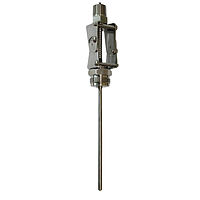
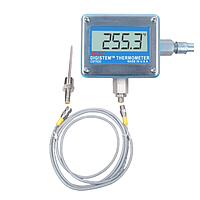
PT-100, PT-200, PT-500, PT-1000 Type Temperature Sensor
Accurate temperature feedback is critical in process control, HVAC, laboratory work, food handling, and machine monitoring. When stable resistance-based measurement is required over a wide operating range, PT-100, PT-200, PT-500, PT-1000 Type Temperature Sensor solutions are a practical choice for engineers who need repeatability, signal integrity, and compatibility with common transmitters, controllers, and data loggers.
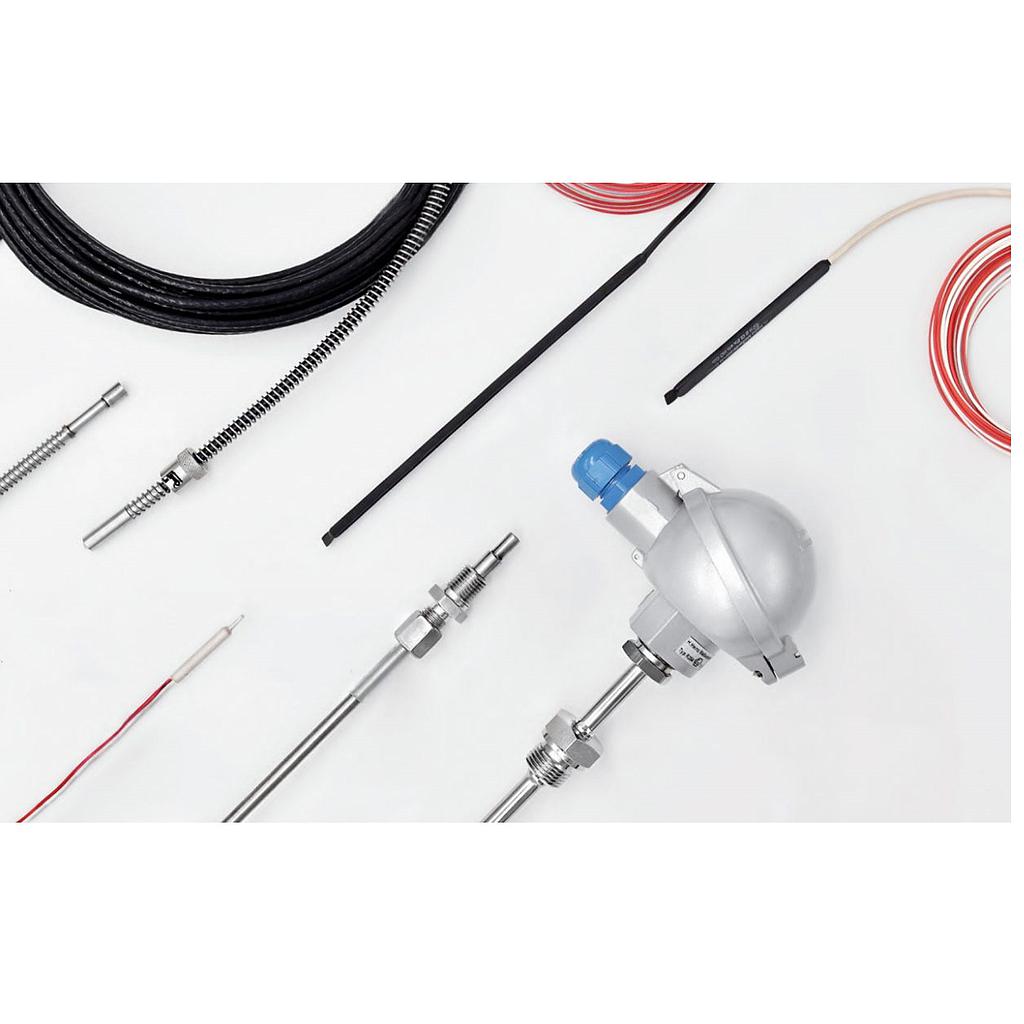
This category brings together resistance temperature sensors built around platinum RTD technology, including probe styles for immersion, penetration, surface contact, and transmitter-integrated installations. Whether the application needs a compact threaded RTD probe with analog output, a weatherproof immersion transmitter, or a Pt100/Pt1000 probe for handheld instrumentation, the selection supports a broad range of industrial and technical measurement tasks.
Why platinum RTD sensors remain widely used
Platinum resistance temperature detectors are valued for their predictable change in resistance as temperature varies. In practical terms, that means they are often chosen where measurement stability and traceable performance matter more than extremely fast low-cost sensing. PT-100 and PT-1000 are especially common because they are well supported by transmitters, meters, PLC input systems, and portable test equipment.
Compared with many general-purpose sensing options, these sensors are often preferred in applications that require reliable long-term monitoring, cleaner linearization behavior, and good interchangeability. If your project involves harsh plant environments or mounting into equipment and piping, it may also be useful to review related industrial temperature sensors for broader installation formats.
Understanding PT-100, PT-200, PT-500, and PT-1000 variants
The number in the sensor type typically refers to the nominal resistance value at 0°C. A PT-100 has 100 ohms at 0°C, while PT-1000 has 1000 ohms. Higher nominal resistance can be beneficial in some systems because it helps reduce the relative impact of lead resistance, especially in compact instruments or longer cable runs where signal quality is a concern.
Selection usually depends on the measuring instrument, wiring method, installation distance, and required accuracy class. In this category, Pt100 and Pt1000 examples are prominent, including direct probes and transmitter-based assemblies. For buyers comparing RTD technology with other resistive sensor options, the NTC-type temperature sensor range can provide a useful point of reference for different response and application characteristics.
Common sensor formats in this category
Not every RTD is packaged the same way, and the mechanical format often matters as much as the sensing element itself. Some devices are simple probes intended for connection to meters or loggers, while others combine the sensing element and signal conditioning electronics into a 4-20 mA transmitter for direct connection to control systems.
For example, the OMEGA M12TXSS-PT100-24MM-G1/8 integrates a stainless steel Pt100 RTD with a 4 to 20 mA analog output, making it suitable for applications where a compact threaded installation and transmitter-ready signal are preferred. Dwyer TTW series models such as TTW-104, TTW-106, TTW-108, TTW-112, and TTW-118 follow another practical format: weatherproof immersion temperature transmitters with Pt100 sensing, available in multiple probe lengths for HVAC-compatible and general field installations.
There are also probe-only options for portable and bench measurement. TESTO 0614 1272 is a waterproof immersion/penetration Pt100 probe, while TESTO 8711 0063 is designed for surface temperature measurement. For instrumentation compatibility, the Chauvin Arnoux P01710070 PT1000 temperature probe provides a connector-based approach intended for use with supported portable meters.
How to choose the right RTD sensor for your application
Application fit starts with the measurement point. Immersion and penetration probes are typically selected for liquids, semi-solids, ducts, and process insertion points. Surface probes are more appropriate when the target temperature is on a pipe, plate, housing, or machine surface. If the sensor will be installed permanently in an industrial loop, a transmitter-output design can simplify wiring to SCADA, PLC, or building management systems.
The next decision is environmental protection. Outdoor, washdown, or utility-area installations may call for weatherproof or high-ingress-protection housings. In that context, Dwyer immersion transmitters with IP66 and NEMA 4X style protection can be relevant for field use, while the stainless steel construction and compact threaded design of the OMEGA transmitter probe may suit tighter mechanical integrations.
You should also confirm the required temperature range, response expectations, probe length, and interface type. Portable instrumentation users may prioritize connector compatibility and handling comfort, while process engineers often focus on output signal type, mounting thread, and allowable operating temperature. If your system is built around resistance sensing but uses other RTD or sensor layouts, related categories such as board mount temperature sensors may help narrow the search for electronics-focused designs.
Representative brands and product examples
This category includes solutions from established instrumentation manufacturers such as OMEGA, Dwyer, TESTO, Rotronic, and Chauvin Arnoux. Each serves a slightly different need within the RTD ecosystem, from compact process probes to handheld-compatible accessories and specialized contact sensors.
Examples in the range illustrate that PT-based sensing is not limited to one installation style. The OMEGA M12TXSS-PT100-24MM-G1/8 addresses compact analog loop applications. Dwyer TTW models support weatherproof immersion measurement with multiple insertion lengths. TESTO offers application-specific probes for air, immersion, penetration, and surface measurement, while Rotronic AC1913-A shows how a thin Kapton foil temperature probe can support contact measurement on suitable surfaces. Chauvin Arnoux also adds portable test-oriented options, including the C.A 1823 resistance thermometer for Pt100 and Pt1000 measurement.
Typical use cases across industry and facilities
RTD temperature sensors are commonly used where process repeatability and measurement confidence are important. Typical examples include pipe and tank monitoring, HVAC water loops, clean utility systems, laboratory verification tasks, food process checks, environmental test work, and machine temperature supervision. Their versatility comes from the fact that the same basic sensing principle can be adapted to transmitter-based, portable, and surface-contact formats.
In maintenance and commissioning work, technicians may combine fixed RTD installations with handheld meters and accessory probes to verify system performance. In OEM equipment, compact Pt100 or Pt1000 probes are often selected where space is limited but stable measurement is still required. For applications that instead rely on thermocouple technology, especially at higher temperatures or where fast response is prioritized, the K-type temperature sensor category may be worth comparing.
What to check before ordering
Before selecting a model, confirm the sensing element type expected by your instrument or control input, such as Pt100 or Pt1000. Then verify the probe style, insertion length, cable or connector format, output signal, enclosure protection, and the temperature range of both the process and the surrounding environment. These points usually determine whether a probe will work reliably in the field, not just whether it can technically measure temperature.
It is also worth checking whether the application needs a raw resistance probe or a conditioned output such as 4-20 mA. That distinction can affect panel design, wiring distance, input card requirements, and maintenance procedures. For many B2B buyers, choosing correctly at this stage reduces installation changes later and improves measurement consistency across the system.
Conclusion
Choosing the right platinum RTD sensor is usually a matter of matching sensing element type, mechanical format, and system interface to the job at hand. This category is designed to support that process with options spanning compact transmitter probes, weatherproof immersion assemblies, portable instrument probes, and specialized contact sensors.
If you are comparing Pt100 or Pt1000 solutions for process integration, maintenance work, or instrumentation use, focus on the real operating conditions first: where the sensor is mounted, how the signal is read, and what level of protection the environment requires. That approach will help you identify a temperature sensor that fits the application cleanly and performs reliably over time.
Get exclusive volume discounts, bulk pricing updates, and new product alerts delivered directly to your inbox.
By subscribing, you agree to our Terms of Service and Privacy Policy.
Direct access to our certified experts