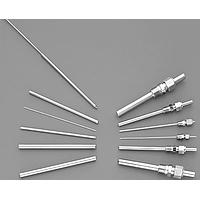
Protection Tubes
In demanding temperature measurement points, the sensor itself is often only part of the solution. Harsh process conditions such as high heat, mechanical stress, contamination, and corrosive exposure can shorten sensor life if the assembly is not properly protected. That is where Protection Tubes play an important role, helping isolate the sensing element from the process while maintaining reliable heat transfer.
For industrial users working with furnaces, kilns, heat treatment lines, and other elevated-temperature applications, the right tube material and dimensions can make a significant difference in both durability and measurement stability. This category brings together protection tube options suited for demanding service conditions, including ceramic-based designs used with temperature probes and related assemblies.
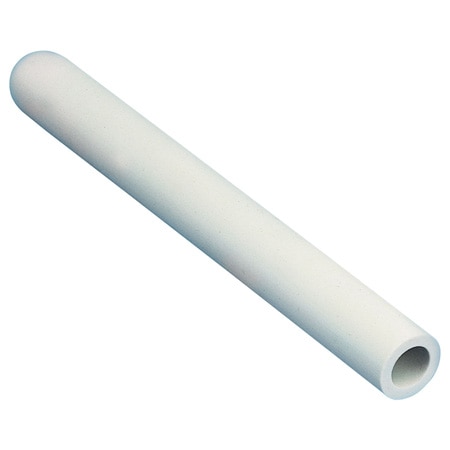
Why protection tubes matter in temperature measurement
A protection tube is designed to shield a thermocouple, RTD, or similar sensing element from direct contact with the process. In many installations, this added barrier helps reduce damage caused by abrasion, thermal shock, scale, or aggressive media, while also making maintenance easier when the sensor needs to be replaced.
Compared with leaving the sensing element exposed, a well-selected tube can improve service life and reduce unplanned downtime. In practice, selection depends on several factors, including operating temperature, tube geometry, required response behavior, and the type of process connection used in the installation.
Typical use cases for ceramic protection tubes
Protection tubes in this category are well suited to applications where high-temperature resistance and material stability are critical. They are commonly considered for industrial heating systems, laboratory furnaces, thermal processing equipment, and manufacturing environments where direct exposure would quickly damage an unprotected sensor.
The featured OMEGA OMEGATITE 650® models use silicon nitride and aluminum oxide tube material, a combination associated with strong mechanical performance and suitability for elevated-temperature service. With maximum operating temperatures listed up to 1250 °C, these products are relevant for users who need robust protection in hot process environments.
Range overview and example product configurations
This selection includes multiple dimensional formats to support different insertion depths and sensor sizes. Examples include OMEGA PTRS-612-450 and PTRS-612-600 for more compact inner and outer diameters, PTRS-916-300 and PTRS-916-600 for mid-range sizing, and larger options such as PTRS-1222-300, PTRS-1222-600, PTRS-1628-300, and PTRS-1628-600.
Length options in the listed products include 150 mm, 300 mm, 450 mm, and 600 mm, allowing users to match the assembly to installation depth and thermal profile. Some versions are supplied without a process connection, while others such as OMEGA PTRS-1628-300-NPT include an NPT male fitting for applications where a threaded mounting arrangement is required.
For buyers standardizing around a specific supplier, this category also aligns well with broader OMEGA instrumentation solutions used in industrial temperature measurement.
How to choose the right protection tube
The first step is matching the tube dimensions to the sensor and the installation point. Inner diameter must provide enough clearance for the sensing element, while outer diameter and overall length need to suit the mechanical layout, insertion depth, and expected stress on the assembly.
Next, consider the thermal and mechanical demands of the application. The listed products show features such as closed sensing ends, low porosity, and high hardness, all of which are relevant in severe environments. In high-temperature processes, users should also review how the selected material behaves under repeated heating cycles and whether the required response time is compatible with a protective barrier.
Connection style is another practical factor. A plain tube may fit systems where the mounting hardware is selected separately, while a version with threaded connection can simplify integration. If the installation requires a different protective approach around the process interface, it may also be useful to review related thermowell options.
Key characteristics to compare
When comparing models, it helps to focus on a few technical priorities rather than just the part number. Temperature capability is central, but so are dimensional fit, wall thickness, mechanical strength, and compatibility with the sensor assembly that will be inserted into the tube.
Across the representative products listed here, users can identify several recurring traits: ceramic-based construction, closed-end design, low porosity, and a range of inner and outer diameters for different sensor formats. These characteristics are especially important when the goal is to balance sensor protection with acceptable thermal transfer in a hot process.
- Choose length based on insertion depth and process reach.
- Match inner diameter to the sensing probe or element being installed.
- Check outer diameter and mounting arrangement for mechanical fit.
- Confirm maximum temperature against actual operating conditions.
- Consider whether a fitting is needed or if a plain tube is preferable.
Protection tubes within a complete sensor assembly
In many systems, a protection tube is only one part of the overall measurement assembly. Depending on the application, users may also need connection hardware, a terminal enclosure, or a different protective mounting style. Thinking in terms of the full installation can help avoid compatibility issues during procurement and commissioning.
For example, if wiring termination and connection space are part of the requirement, related protection heads may be relevant. If the process requires a more pressure-oriented or removable in-process fitting arrangement, standard protection tube configurations can also be compared within the broader category to refine the selection.
Who should consider these products
This category is relevant for maintenance teams, OEMs, panel builders, thermal process engineers, and purchasing departments sourcing components for high-temperature measurement points. It is particularly useful when sensor longevity is a concern and the process environment is too severe for an exposed sensing element.
Whether the requirement is a compact 150 mm tube, a longer 600 mm version, or a model with a threaded process connection, the available range helps support practical selection by size and installation method. Reviewing a few representative products side by side is often the fastest way to narrow down the right option.
Final considerations
Selecting the right protection tube is ultimately about matching process conditions, sensor dimensions, and mounting requirements with a material that can withstand the application. A tube that is too small, too short, or not suited to the thermal environment can affect both service life and measurement performance.
By focusing on operating temperature, geometry, and assembly compatibility, buyers can identify the most suitable protection solution for their measurement point. If you are comparing ceramic tube formats for industrial temperature sensing, this category provides a solid starting point for evaluating practical, high-temperature protection options.
Get exclusive volume discounts, bulk pricing updates, and new product alerts delivered directly to your inbox.
By subscribing, you agree to our Terms of Service and Privacy Policy.
Direct access to our certified experts