Cables
Reliable signal transmission and clean equipment integration often depend on details that are easy to overlook. In test, measurement, and automation environments, the right cables help maintain stable connections between instruments, switching hardware, controllers, and supporting accessories while also improving day-to-day usability in the lab or on the production floor.
This category brings together cable-related accessories used in professional measurement setups, with examples from NI and Tekbox. The selection is relevant for users building or maintaining test benches, connecting modular systems, or organizing wiring around sensitive instruments where fit, cable type, and installation context all matter.
Where cable accessories fit in a measurement system
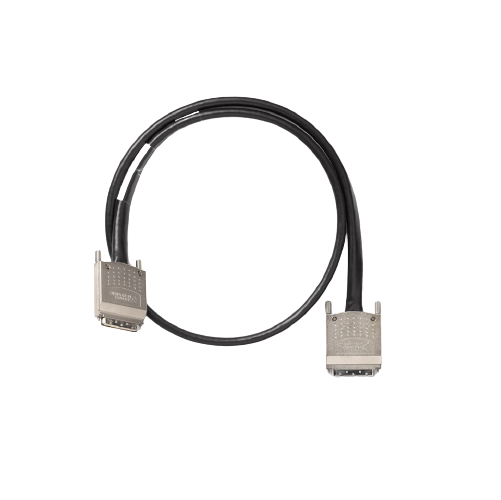
In B2B measurement applications, cables do more than connect one device to another. They influence workflow, bench organization, portability, and the practical reliability of a complete setup. A Thunderbolt cable used for high-speed communication, a switch cable in a test assembly, or a power cable for instrument supply each serves a very different role, so selection should start with the actual interface and operating environment.
This is especially important when equipment is moved between benches, integrated into rack systems, or used in repeated validation routines. Choosing the proper accessory can reduce connection errors, simplify maintenance, and support cleaner routing alongside related items such as power accessories when a system includes both data and power connections.
Typical cable types in this category
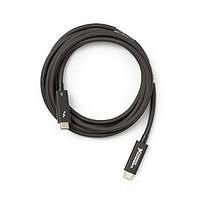
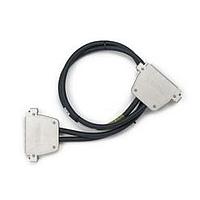
The products highlighted here show that this category is not limited to one cable format. For example, the NI 192795-0R2 Switch Cable is intended for switching-related test connections, while the NI 785607-02 Thunderbolt Cable, NI 785608-02 Thunderbolt Cable, and NI 787580-0R8 Thunderbolt Cable address high-speed instrument connectivity in different lengths and transmission formats.
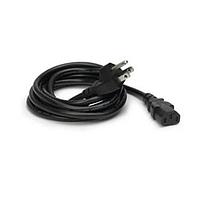
There is also a practical infrastructure side to cable selection. The NI 763067-01 Power Cable (240V, 10A, Euro, Right Angle) illustrates how power connectivity can be just as important as signal transport, particularly where space constraints or connector orientation affect installation. When users need a broader overview of related connection products, the dedicated cable accessories range can help narrow the search by application.
Choosing the right cable for your interface and workflow
A good selection process usually begins with interface compatibility. Connector type, supported communication standard, cable length, and physical routing requirements should be checked before comparing anything else. In instrument control or data acquisition setups, even small differences in cable design can affect how easily devices are deployed on a bench, inside an enclosure, or between portable systems.
Users should also consider whether the cable will be part of a fixed installation or a frequently reconfigured setup. Passive and active data cables, right-angle power connections, and dedicated switch cable assemblies all suit different workflows. In environments where systems include transducers or front-end measurement elements, it can also be useful to review related sensors and transducers to ensure the full measurement chain is planned consistently.
Supporting accessories that improve cable management
Not every important item in a cable ecosystem is a cable itself. Accessories such as holders, supports, and mounting hardware can improve repeatability and reduce mechanical stress on connections. This is particularly relevant in EMC work, test benches with frequent rewiring, or setups where cable position influences measurement consistency.
Tekbox provides useful examples in this area. The Tekbox TBCH1 Cable Holders and Tekbox TBCH2 Cable Holders are designed to help organize and guide cables in a controlled way, while the Tekbox TBTP1 Tripod can support accessory placement as part of a broader test arrangement. These products are best understood as supporting components within the measurement workspace rather than as standalone primary instruments.
NI and Tekbox in practical test environments
NI products in this category are especially relevant for users working with modular instrumentation, automated test systems, and high-performance PC-connected measurement platforms. In such environments, cable choice is often tied directly to the architecture of the test system, whether the requirement is switching, high-speed host connectivity, or standard power input.
Tekbox, on the other hand, adds value through bench-level accessories that help manage physical cable layout and accessory positioning. For engineers concerned with repeatable setup conditions, reduced clutter, and easier test preparation, these mechanical support items can be just as useful as the electrical connection itself.
What to check before ordering
Before selecting from this category, it is worth confirming a few basic points: the connector format on both ends, intended use case, required cable length, mounting or routing constraints, and whether the item is a signal cable, power cable, or cable-management accessory. This avoids mismatches and helps ensure the product fits naturally into the rest of the system.
- Verify the exact interface or connector family required by your instrument or module.
- Check whether the application needs data transfer, switching, or power delivery.
- Consider installation details such as cable path, bend space, and connector orientation.
- Include cable holders or support hardware when repeatable layout is important.
For technical teams managing multiple stations, these checks can save time during deployment and reduce avoidable replacement purchases later.
Finding the right fit for your setup
This category is most useful when approached as part of the wider measurement ecosystem rather than as a simple list of accessories. Some users need a Thunderbolt connection for high-speed communication, others need a dedicated switch cable, and many also benefit from holders or mounting components that keep the installation organized and easier to maintain.
By matching the cable or support accessory to the actual instrument interface, working environment, and routing needs, buyers can build a cleaner and more dependable setup. Whether the priority is connectivity, power, or cable management, a focused selection process will make the overall test system easier to operate and scale.
Get exclusive volume discounts, bulk pricing updates, and new product alerts delivered directly to your inbox.
By subscribing, you agree to our Terms of Service and Privacy Policy.
Direct access to our certified experts