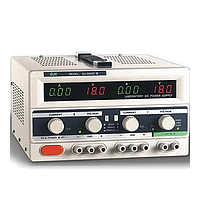
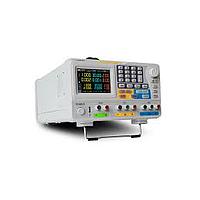
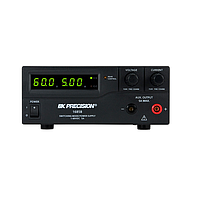
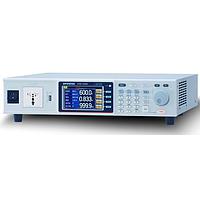
AC, DC Power supply
Stable, controllable power is a basic requirement in electronics design, production testing, repair, and laboratory validation. Whether the task involves powering a prototype board, characterizing semiconductor behavior, simulating operating conditions, or supplying a high-current load, the right AC, DC Power supply helps improve repeatability, protection, and measurement confidence.
This category brings together power sources used across R&D, industrial testing, education, and service environments. The range covers compact programmable DC supplies, multi-channel bench models, higher-voltage outputs, and higher-power units suited to more demanding loads, giving engineers and buyers a clearer path to matching supply capability with application needs.
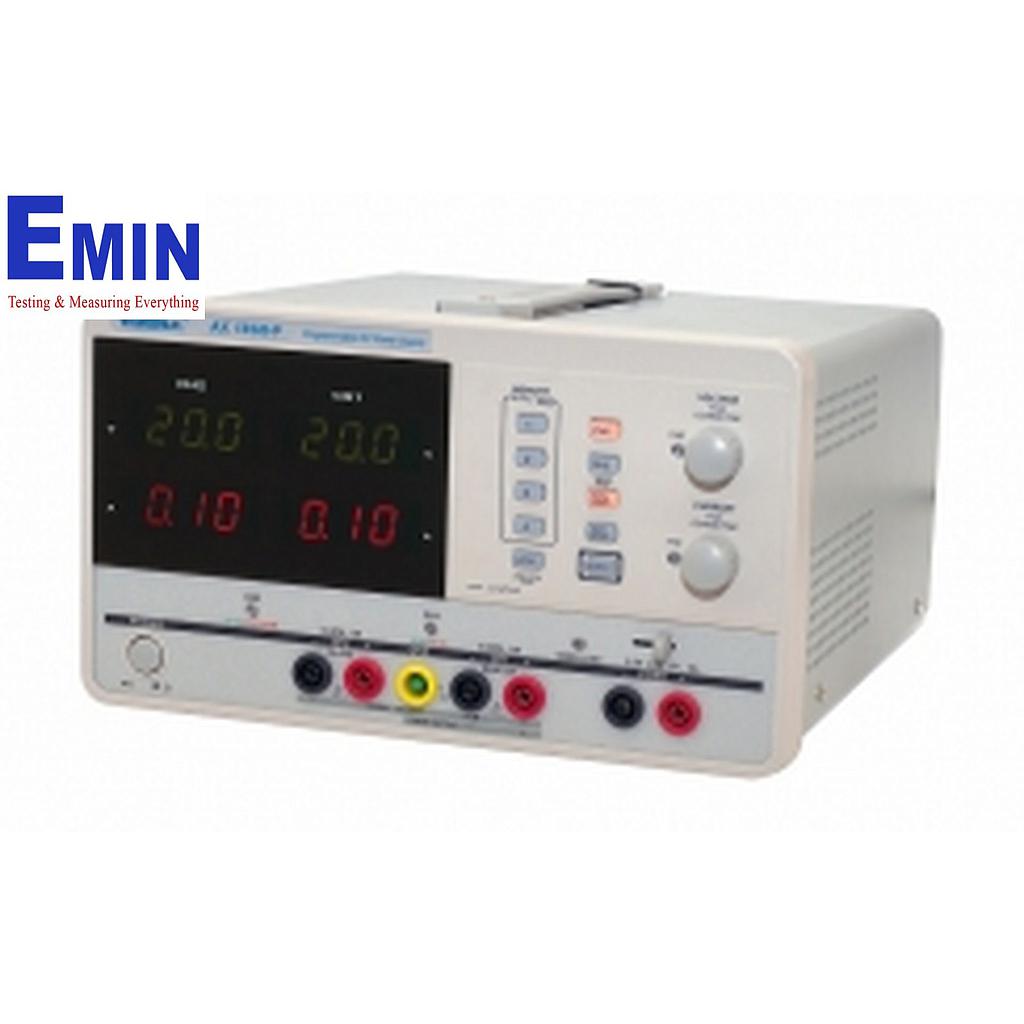
Where AC and DC power supplies are used
Power supplies are used anywhere a device, circuit, module, or subsystem needs a defined electrical source during development or verification. In practical workflows, they support PCB bring-up, sensor testing, embedded system debugging, battery-related experiments, LED and motor driver evaluation, and production line functional checks.
In a broader measurement setup, a supply rarely works alone. Engineers often combine it with a multimeter for voltage and current verification, or use it alongside SMU semiconductor test equipment when sourcing and measurement accuracy must be tightly integrated for component characterization.
Common configurations in this category
One of the first selection points is output type and channel architecture. A single-output programmable supply is often suitable for general bench use, while triple-output units can power analog and digital rails at the same time. This is especially useful when a design needs separate channels for core voltage, auxiliary logic, and control circuits.
Several representative models in this category illustrate that variety. The KEITHLEY 2200-30-5 and KEITHLEY 2200-60-2 are typical examples of programmable single-output DC supplies for bench and integration work. For users who need multiple rails from one instrument, models such as the KEITHLEY 2231A-30-3 Triple Channel DC Power Supply and KEITHLEY 2230G-30-1 provide multi-channel capability with fine setting resolution and low output noise.
What to evaluate when choosing a power supply
The most important criteria usually start with voltage range, current capacity, and total output power. These define whether the supply can handle the expected load under normal and transient conditions. For low-voltage digital or control electronics, a moderate-power unit may be enough, while power electronics, automotive modules, or burn-in tasks may require substantially higher output capability.
After basic capacity, buyers should look at regulation, ripple, noise, and programming resolution. Low ripple and stable regulation matter when testing sensitive circuits, analog stages, communication modules, or precision assemblies. Fine voltage and current setting steps also help during validation work where incremental changes are needed to observe behavior under controlled conditions.
Communication interfaces are another practical factor. USB, RS232, or GPIB support can simplify remote control, automated test sequences, and data logging. In production or lab automation, this can reduce manual setup time and improve repeatability across test benches.
Examples from the current product range
For general-purpose laboratory use, the KEITHLEY 2230-30-3 and KEITHLEY 2230-30-6 fit common bench requirements where multiple outputs and programmable control are useful. These types of supplies are often selected for embedded boards, communication hardware, educational labs, and service applications where operators need flexibility without moving to very high power levels.
When a project calls for remote sensing and accurate output control at the load, the KEITHLEY 2200-30-5 is a relevant example. Remote sensing is particularly helpful when cable resistance would otherwise affect the voltage seen by the device under test, which is a common issue in fixtures and longer wiring runs.
For higher power or more demanding DC output conditions, the KEITHLEY 2260B series shows a different profile. The KEITHLEY 2260B-80-40 supports high current at lower voltage, while the KEITHLEY 2260B-250-4 and KEITHLEY 2260B-800-2 extend capability into higher-voltage applications. These are better aligned with power conversion development, component stress testing, and systems that require wider operating envelopes.
Why programmable control matters
A modern programmable DC power supply is more than a source of fixed voltage. Programmable operation allows users to define output setpoints, current limits, protection thresholds, and timed sequences. This becomes important in engineering validation, where repeatable power-up conditions and controlled fault scenarios are part of the test plan.
Programmable supplies can also support automated workflows, especially when integrated into larger test systems. For example, the KEITHLEY 2230-60-3 and related programmable models are well suited to applications where remote commands, stored settings, or repeated test profiles reduce operator involvement and speed up throughput.
If the requirement expands beyond sourcing power into combined source-and-measure workflows, it may be worth reviewing source-measure solutions as a complementary category for device characterization and semiconductor evaluation.
Brand landscape and application fit
This category includes products from established manufacturers used in electronic measurement and industrial power applications. Depending on the specific task, buyers may compare options from KEITHLEY, CHROMA, Advanced Energy, Ametek, Delta, Eaton, and other recognized suppliers listed in this range.
Different brands may be preferred for different environments: compact bench testing, automated rack systems, high-power conversion work, or specialized power simulation. The right choice usually depends less on brand alone and more on output architecture, interface needs, protection features, and how the supply fits the larger test ecosystem.
Selection tips for procurement and engineering teams
For B2B purchasing, it helps to define the use case before comparing part numbers. Start with the nominal operating voltage and current of the load, then allow margin for startup behavior, future test scenarios, and safety limits. If multiple rails are required, a multi-channel unit may reduce bench clutter and simplify operator setup.
Also consider whether the supply will be used manually on a bench or integrated into automated equipment. Bench users may prioritize display clarity and quick front-panel access, while system integrators may focus more on interface support, repeatable programming behavior, and protection functions such as overtemperature or overcurrent control.
For troubleshooting workflows, pairing a stable power source with a digital multimeter often gives a practical foundation for verifying load behavior, checking voltage drop, and isolating power-related faults.
Choosing the right power supply for long-term use
The right supply is usually the one that matches your real operating range without excessive oversizing, while still leaving room for test margin and future projects. In many labs, that means a mix of compact programmable units for day-to-day bench work and higher-power or higher-voltage systems for specialized validation tasks.
Across this category, users can compare solutions for low-noise bench testing, multi-output development work, and more demanding DC sourcing requirements. A careful review of voltage, current, power, interface options, and control features will help narrow the shortlist and make the selected power supply more effective in both present and future test setups.
Get exclusive volume discounts, bulk pricing updates, and new product alerts delivered directly to your inbox.
By subscribing, you agree to our Terms of Service and Privacy Policy.
Direct access to our certified experts