MultiFunction Calibrators
When maintenance teams need to verify multiple signal types without carrying several dedicated instruments, a multifunction platform becomes the practical choice. MultiFunction Calibrators help technicians source, simulate, and read common process signals used in commissioning, troubleshooting, and routine calibration work across industrial plants, utilities, laboratories, and OEM service environments.
On this page, the focus is on handheld and portable calibrators suited to temperature and related process verification tasks. These instruments are especially useful where thermocouple, RTD, millivolt, and combined read/source functions need to be handled quickly in the field or on the bench.
Why multifunction calibrators matter in industrial calibration work
A multifunction unit reduces the need to switch between separate devices for measurement, simulation, and loop checks. That can save time during startup, shutdown, and preventive maintenance, while also lowering the risk of wiring mistakes or inconsistent readings between instruments.
In many applications, the real value is flexibility. A technician may need to verify a thermocouple transmitter in one area, check an RTD input in another, and confirm millivolt behavior at a panel or controller. For broader signal coverage across process tasks, it can also be useful to compare this range with dedicated temperature calibrators or other specialized calibration tools.
Typical signal types covered in this category
This category is centered on devices designed to handle common temperature-related process signals. That includes thermocouple types used in industrial heating, ovens, furnaces, and process lines, as well as RTD simulation and measurement for more stable and precise temperature control loops.
Millivolt capability is also important because many temperature sensors and transmitters rely on low-level voltage signals. A calibrator that can both read and source mV signals supports faster diagnostics when validating instrument chains from sensor input through transmitter, controller, and display.
Common product formats and use cases
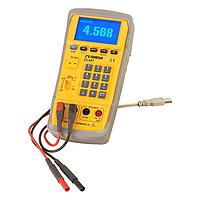
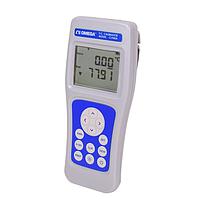
Some models in this range are designed primarily for thermocouple calibration. Examples include the OMEGA CL541-PLUS for core thermocouple and millivolt tasks, the OMEGA CL542-PLUS for broader thermocouple type support, and the OMEGA CL945A for users who need extended battery life and fine resolution in portable work.
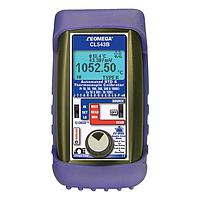
Other models extend into RTD applications. The OMEGA CL514-PLUS and OMEGA CL515-PLUS are relevant where RTD read or source functions are needed, while the OMEGA CL543B combines thermocouple, millivolt, and RTD capability in a more versatile field instrument. For users comparing wider process signal coverage, our pressure calibrator range may also be relevant when pressure loops are part of the same maintenance workflow.
How to choose the right multifunction calibrator
The first selection point is the required signal family. If your work is mainly on thermocouple transmitters, a model focused on thermocouple and mV functions may be sufficient. If you regularly service temperature controllers, RTD probes, or mixed sensor installations, a device with both read and source capability across multiple input types is usually the better long-term choice.
Next, consider the operating environment. Field service often favors portable instruments with strong battery life, clear displays, and protection against misconnection or over-voltage. Accuracy matters as well, but the required level depends on whether the instrument is used for quick maintenance checks, production support, or more demanding calibration procedures.
It is also worth checking the number of supported thermocouple types and whether the unit handles single or multiple RTD curves. In mixed facilities, broader support can reduce the need for additional equipment and simplify technician training.
Examples from Dwyer and OMEGA
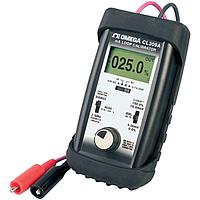
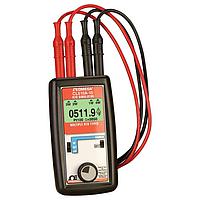
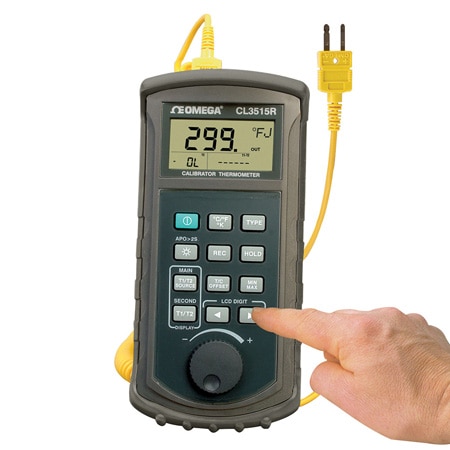
OMEGA is strongly represented in this category with handheld calibrators covering thermocouple, RTD, and millivolt verification. Models such as the CL3515R and CL3512A are useful for thermocouple-oriented applications, while the CL510A-1 and CL510A-10 fit scenarios where RTD simulation is part of maintenance or instrument setup.
Dwyer appears here with the GCK-200CO-2000CO2 gas calibration kit, which serves a different but related role in the calibration ecosystem. Rather than functioning as a general handheld multifunction calibrator, it supports gas transmitter verification and helps illustrate how calibration requirements can vary by sensing technology and process variable.
Where these calibrators are commonly used
Portable multifunction calibrators are widely used in process manufacturing, HVAC and building systems, food and beverage operations, energy facilities, pharmaceutical environments, and maintenance departments supporting OEM machinery. They are especially valuable where technicians need to validate instrument performance directly at the point of installation.
Typical tasks include confirming sensor input response, simulating known values into transmitters or controllers, checking wiring integrity, and isolating faults between sensor, transmitter, and receiving device. In plants with a mix of calibration needs, teams often pair these instruments with other calibration equipment categories to build a more complete maintenance toolkit.
Practical buying considerations for B2B users
For engineering teams and procurement specialists, the best choice is not simply the model with the broadest function list. It is the one that fits the actual maintenance scope, technician skill level, and documentation requirements of the site. A simpler thermocouple calibrator may be ideal for routine temperature checks, while a combined RTD and thermocouple unit can improve efficiency in mixed-process environments.
It is also sensible to review supported sensor types, source and measurement functions, display readability, portability, and expected runtime before standardizing on a model. Where calibration procedures are audited or tightly controlled, users may also prioritize instruments supplied with recognized calibration documentation or features that support repeatable field work.
Finding the right fit for your calibration workflow
This category is best approached as a selection of tools for real maintenance and verification tasks rather than a simple list of instruments. Whether the priority is thermocouple simulation, RTD verification, millivolt measurement, or a more flexible multifunction calibration workflow, choosing the right device starts with the signals you work with every day and the level of portability and accuracy your process demands.
If you are narrowing down options, compare the supported input types, read/source functions, and practical field features across the available models. That approach usually leads to a better fit than selecting by specification headlines alone, especially in environments where reliability, repeatability, and service efficiency matter most.
Get exclusive volume discounts, bulk pricing updates, and new product alerts delivered directly to your inbox.
By subscribing, you agree to our Terms of Service and Privacy Policy.
Direct access to our certified experts