ladder
Working safely at height often depends on choosing the right access equipment for the job. For maintenance teams, construction crews, facility staff, and installation contractors, an aluminum ladder is valued not only for reach, but also for portability, setup flexibility, and easier storage compared with heavier traditional designs.
This ladder category brings together practical options for everyday industrial, commercial, and technical use. Whether you need a compact folding model for indoor service work, a multi-position design for changing jobsite conditions, or a retractable ladder for transport convenience, the main selection criteria usually come down to working height, load capacity, ladder form, and how often the equipment needs to be moved.
Why aluminum ladders are widely used in technical and construction work
Aluminum remains a common material choice because it offers a strong balance of low weight and structural rigidity. In practical use, this helps technicians carry, reposition, and store the ladder more easily, especially when work involves moving between rooms, floors, or multiple service points in a single day.
Another advantage is versatility across different environments. Aluminum ladders are commonly used for electrical and mechanical maintenance, finishing work, warehouse access, signage installation, cleaning tasks, and light construction support. In many workflows, they also complement other hand tools such as repair kit solutions or general assembly tools used on site.
Common ladder formats in this category
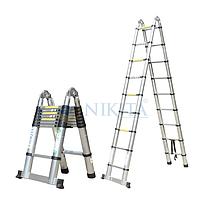
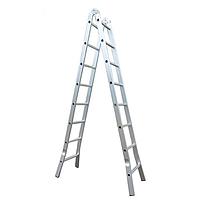
Not every task requires the same ladder structure. A-frame models are often selected for jobs where self-supporting placement is important, such as indoor maintenance, painting, basic inspection, or installation work in open floor areas. They are convenient when there is no wall or vertical support available.
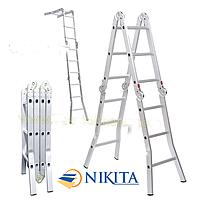
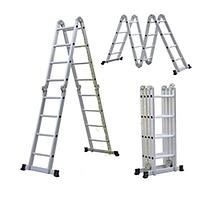
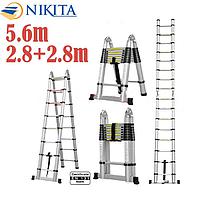
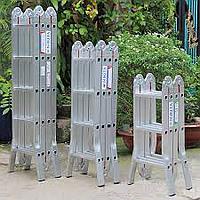
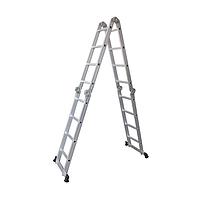
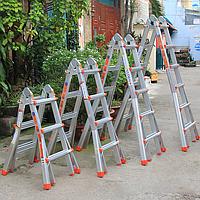
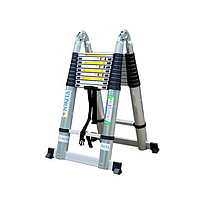
Folding and multi-position ladders are useful when the workspace changes frequently. These designs can support different working postures and may be used in A-shape or extended I-shape configurations depending on the model. This makes them suitable for contractors and service teams that need one ladder to cover several use cases.
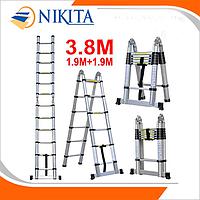
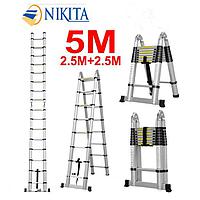
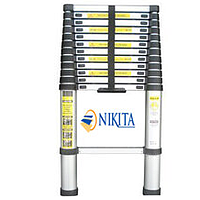
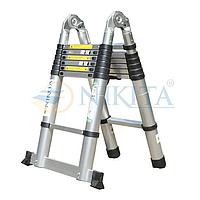
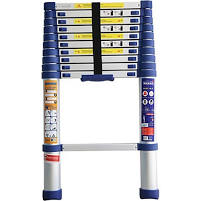
Retractable ladders are typically chosen where transport and storage matter most. Their compact folded size helps when equipment is carried in service vehicles or stored in limited spaces. For narrow access routes, frequent travel between jobs, or temporary setup at varying heights, this format can be especially practical.
Representative products and how they fit different needs
Several products in this category illustrate the range of use cases well. The ADVINDEQ range includes models such as AML44B, a multi-position aluminum ladder designed for flexible deployment, and the AV305, AV306, and AV307 series in 10-step, 12-step, and 14-step formats. These are relevant for users who want a straightforward selection by step count and working size while keeping a consistent load class.
The ADVINDEQ AML44B is particularly suitable when a single ladder needs to adapt to multiple configurations. Meanwhile, the AV305, AV306, and AV307 lines are easier to match to expected reach requirements. Across these examples, a load capacity of up to 150 kg appears in several models, which is useful context for professional users comparing ladder stability with the weight of tools and materials carried during normal work.
For buyers looking at transport-friendly options, the Hyundai LS-44 Versatile Retractable Aluminum Ladder is a relevant example of a retractable format that can support compact storage while still offering extended reach. The Poongsan OA-8 Aluminum ladder is another option that reflects the practical appeal of aluminum construction for general access and maintenance applications.
How to choose the right ladder for your application
The first step is defining the working height realistically. Buyers often focus only on the ladder’s overall length, but actual usable height depends on ladder type, safe standing position, ceiling clearance, and the nature of the task. For example, an indoor technician changing fixtures may not need the same setup as a team performing exterior finishing or façade access.
Next, review the load capacity together with the ladder’s own weight. A lightweight unit is easier to move, but it still needs to support the user plus tools and small equipment carried during the job. Models in this category show different balances between portability and carrying capability, so it helps to compare usage frequency, operator handling, and typical working conditions rather than just looking at dimensions alone.
It is also worth considering the operating environment. A retractable or folding design can save space in service vehicles and maintenance rooms. A larger A-frame or multi-joint ladder may be more appropriate where the ladder will be repositioned often on stable floor surfaces. If work is part of a broader toolkit setup, related hand tools such as a socket wrench set or a hammer may also influence how much equipment the operator carries while climbing.
Safety and usage considerations
No ladder selection is complete without basic safety review. Even a well-built model should be used on level, stable ground and within its intended configuration. Uneven placement, overreaching from the side, or using a ladder beyond the recommended standing position can create avoidable risk, regardless of material or brand.
For professional environments, it is useful to check details such as step spacing, locking mechanisms on folding or retractable designs, and any referenced standards shown on product pages. Some models in this category mention EN131, EN14183, or CE-related information, which can help purchasing teams compare products more consistently when reviewing documentation and site requirements.
Routine inspection also matters. Before use, operators should confirm that hinges, locking points, feet, and steps are free from deformation or visible damage. This is particularly important for ladders that are frequently transported, folded, or used across multiple locations.
Typical users and buying scenarios
In B2B purchasing, ladder selection often depends on the workflow rather than on a single specification. Facilities teams may prefer compact units for routine building maintenance. Contractors may prioritize adaptable designs that can switch between A-shape and extended configurations. Warehouses and service departments may value a ladder that is easy to carry, quick to deploy, and simple to store after use.
Multi-site service teams usually benefit from ladders that balance low weight with fast setup. By contrast, buyers equipping a workshop or a fixed maintenance area may focus more on step count, platform stability, and repeated daily use. Looking at representative products such as ADVINDEQ AV305, AV306, AV307, Hyundai LS-44, and Poongsan OA-8 can help clarify which format best aligns with actual operating conditions.
Find a ladder that matches the job, not just the height
A good ladder choice supports safer movement, more efficient setup, and better day-to-day usability. In practice, the best option is usually the one that fits the working environment, expected reach, handling frequency, and load needs without adding unnecessary bulk or complexity.
Browse this category to compare aluminum ladders by format, step count, and intended use. If you are selecting for maintenance, construction support, or general technical access, starting with the job conditions first will make it much easier to narrow down the right model.
Get exclusive volume discounts, bulk pricing updates, and new product alerts delivered directly to your inbox.
By subscribing, you agree to our Terms of Service and Privacy Policy.
Direct access to our certified experts