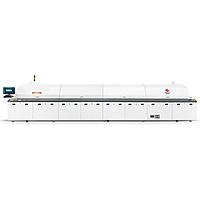
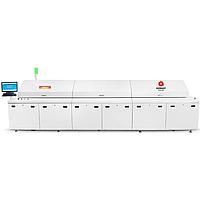
Curing Ovens
Thermal processing is a critical step in electronics manufacturing, especially when coatings, adhesives, inks, or solder-related materials need controlled heating to reach consistent results. On this page, Curing Ovens are presented as part of a broader SMT and electronic assembly workflow, where temperature stability, conveyor handling, and process repeatability all directly affect product quality.
Depending on the application, the right system may be used for infrared curing, UV curing, reflow-style thermal processing, or selective soldering steps that sit nearby in the same production environment. That is why buyers often evaluate not only oven size, but also heating method, throughput, board dimensions, and how easily the equipment fits into an inline or benchtop process.
Where curing ovens fit in SMT and electronics assembly
In practical production lines, curing equipment is commonly used after dispensing, coating, printing, or bonding operations. The goal is not simply to heat a PCB or assembly, but to apply the correct thermal energy profile so the material cures evenly without damaging surrounding components or creating unwanted variation between batches.
For this reason, curing ovens are often selected alongside related process equipment such as soldering stations for manual work cells or hot air rework systems for localized repair. On higher-volume lines, inline curing becomes especially valuable because it helps maintain stable cycle times and more predictable process control.
Common curing technologies in this category
This category includes systems that reflect different thermal curing approaches used in electronics manufacturing. IR curing ovens are designed for compact inline operation and are often chosen when manufacturers need rapid heating for heat-curable coatings, adhesives, and inks. UV curing systems, by contrast, are used when the process depends on ultraviolet energy rather than conventional heat alone.
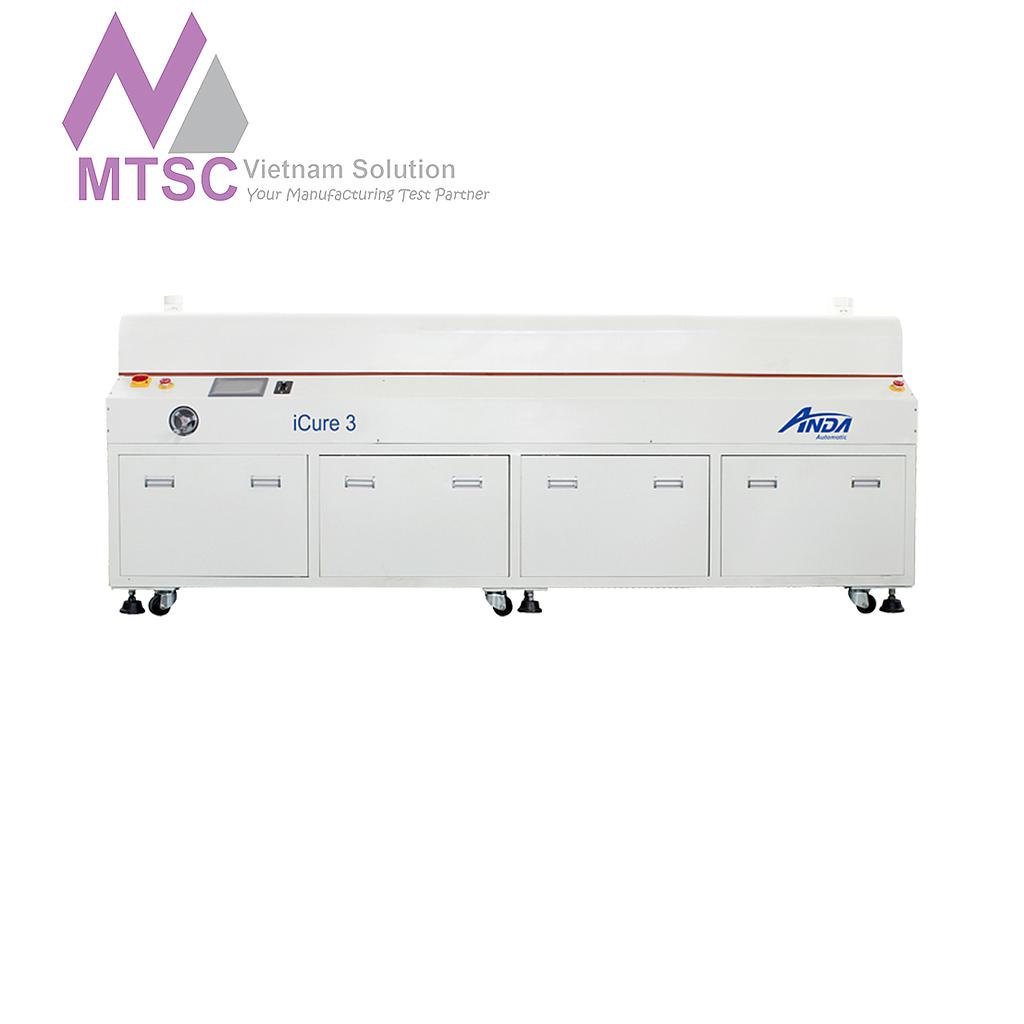
From the products shown here, the Anda iCure series illustrates the inline IR curing approach, while the Anda iCure-2UV represents a dedicated UV curing system. Other thermal equipment in the broader selection, including reflow and selective soldering platforms, helps show how curing ovens are positioned within a complete assembly ecosystem rather than as isolated machines.
Examples of equipment available
For inline infrared processing, models such as the Anda iCure-2, iCure-3, and iCure-4 provide compact conveyor-based curing solutions with two heating zones, adjustable transport width, and operating temperatures suitable for many heat-curable materials. These systems are designed for continuous handling of boards or workpieces, which makes them relevant for manufacturers balancing footprint and throughput.
When UV-based curing is required, the Anda iCure-2UV offers a dedicated inline platform with pin-chain edge conveyor transport and specified UVA, UVB, and UVC intensity levels. This type of equipment is typically considered when the production process uses UV-curable coatings, adhesives, or inks and needs fast, high-intensity exposure in a controlled inline format.
For adjacent thermal processes, examples such as the Malcom RDT-165CP-A, RDT-165CP-N, and RDT-250C reflow ovens, as well as the MANNCORP MC-301N benchtop batch reflow oven, provide useful reference points for buyers comparing heating style, chamber size, and process scale. In wave-selective applications, Nordson systems such as the Integra 508.3, Integra 508.4, and Cerno 508.1 highlight how preheating and board transport are managed in more complex soldering workflows.
Key selection factors before you choose a curing oven
The first decision is usually the curing method. If your material requires thermal energy, an IR curing oven may be appropriate. If the process is based on photochemical reaction, a UV curing system is the more relevant option. This choice affects not only machine type, but also line speed, heat exposure, fixture design, and safety considerations.
The second factor is board or workpiece handling. Width adjustment range, conveyor style, transfer direction, and working height all matter when integrating a new system into an existing line. For example, inline systems such as the Anda iCure models support continuous transport, while a benchtop unit like the MANNCORP MC-301N fits lower-volume or process-development environments where batch flexibility is more important than line automation.
A third point is process window. Buyers should review temperature range, heating zone layout, warm-up behavior, and accuracy requirements in relation to the material being cured. In electronics assembly, stable thermal delivery is often more important than simply reaching a high maximum temperature, because repeatability affects adhesion, coating performance, and long-term reliability.
Inline production versus batch and lab-scale processing
Inline curing ovens are typically preferred when throughput, repeatability, and reduced operator intervention are priorities. Conveyor-based handling allows manufacturers to connect curing directly to upstream dispensing or coating steps, which can help reduce bottlenecks and improve line consistency. This is especially relevant for operations processing a broad mix of boards within a defined size range.
Batch-style equipment, or compact thermal platforms used in engineering, prototyping, or service environments, can still be the right choice when flexibility is more valuable than continuous flow. In those cases, buyers may also compare curing equipment with nearby categories such as BGA rework systems or desoldering stations, depending on whether the application is production, repair, or process validation.
Why heating control and material compatibility matter
Not every assembly responds the same way to heat or UV exposure. PCB thickness, component density, shielding, underfill, conformal coating chemistry, and adhesive type can all influence the curing result. That is why engineers usually look beyond headline power ratings and focus on how evenly energy is delivered across the working area.
Examples in this category show several control approaches, from PLC and touch screen interfaces in the Anda systems to dedicated software environments in Malcom and Nordson equipment. While each platform serves a different process, the broader lesson is the same: a well-matched oven should support repeatable setup, stable operation, and a process profile aligned with the actual material on the board.
Typical applications and buying context
Manufacturers shopping this category may be working with conformal coating lines, adhesive bonding processes, printed inks, encapsulation materials, or UV-curable compounds. In these environments, curing ovens are not selected in isolation; they are part of a chain that may include dispensing, placement, soldering, inspection, and repair. Choosing the right equipment therefore depends on both the material and the production flow around it.
Brand preference can also matter when a facility wants consistency across multiple process stations. Options from Malcom, Nordson, MANNCORP, and Anda reflect different equipment philosophies, from selective soldering and reflow-related thermal processing to compact inline curing. The best fit usually comes from matching process type, board size, automation level, and maintenance expectations rather than comparing one specification in isolation.
Final considerations
A suitable curing oven should support the real production requirement: the right energy source, the right transport method, and the right process stability for the material being used. Whether the application calls for a compact inline IR system, a UV curing platform, or neighboring thermal equipment used in SMT assembly, careful selection helps reduce defects and improve repeatability across the line.
Use this category to compare curing-related solutions in a practical way, then narrow the shortlist based on curing method, handling format, board dimensions, and integration needs. That approach will usually lead to a more reliable equipment choice than focusing on temperature or power figures alone.
Get exclusive volume discounts, bulk pricing updates, and new product alerts delivered directly to your inbox.
By subscribing, you agree to our Terms of Service and Privacy Policy.
Direct access to our certified experts